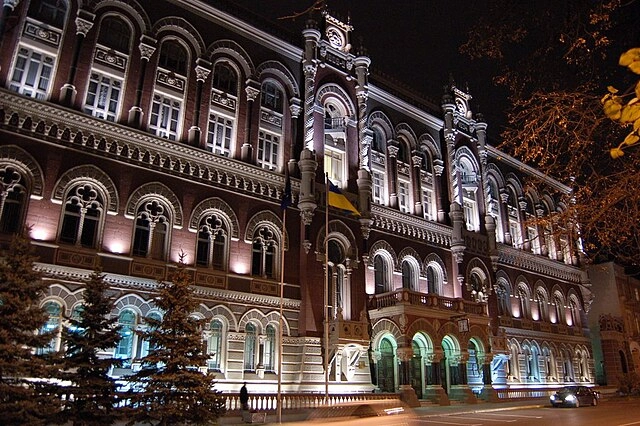
Ukraine’s central bank, the National Bank of Ukraine (NBU), on Tuesday lifted a previously imposed Hr.150,000 ($3,700) monthly limit on outgoing transfers between users via bank cards, also known as peer-to-peer (P2P) transactions.
The previously imposed restrictions applied to outgoing transfers via all accounts opened in the same bank by the same individual.
JOIN US ON TELEGRAM
Follow our coverage of the war on the @Kyivpost_official.
The measure, temporary and set to last for half a year, was intended to tackle tax evasion by limiting incomes disguised as personal transactions. The NBU has now decided not to extend the measure, according to NBU’s Tuesday press release.
“The temporary limit on P2P transfers was introduced by the NBU on 01.10.24 for a period of six months. Thus, since it was not extended, the restrictions ceased to apply as of 01.04.25,” the NBU’s press service told Kyiv Post.
The now-removed restrictions were discussed since May 2024 and have been a key measure for the NBU to fight against the so-called “drops.”
Similar to money laundering, “drops” refer to individuals who provide their bank account data to third parties to help reroute incomes and evade taxes by disguising them as personal transactions and receive rewards for doing so.
After half a year, the NBU is ostensibly satisfied with the results.
“The short-term trend of rapid growth in the number of open payment cards, which was recorded in September-October last year, has stopped,” NBU wrote in the press release.

US State Department Says Ukraine Is Currently Winning the War
Kyiv Post cannot verify the NBU’s claims via the latest statistics as data on card payments is published with a two-month delay and is only shown in quarterly timeframes. However, P2P transactions did ostensibly start to decrease in the fourth quarter of 2024.
Mykhailo Demkiv, a financial analyst from the ICU investment group. previously wrote in his Facebook post that P2P transaction growth was estimated to be 25% in the second and third quarters of 2024 but reduced to 4% in the fourth quarter.
The NBU has voiced concerns over the so-called “drop” cases in the second half of 2024, noting their impact on the country’s tax revenue.
In its Tuesday press release, the NBU said it tried to raise awareness of the issue and helped implement a set of policy measures during the second half of 2024:
- Amendments to the law that regulates financial services “which provides for an increase in the amount of fines for violators of payment legislation”
- Signing a memorandum that ensures transparency in payment services with “the absolute majority of banks serving retail clients and payment service providers”
- Improving “payment transaction monitoring systems”
The NBU also said law enforcement has initiated more investigations into “drop” cases.
“Law enforcement agencies are actively working to identify and stop criminal schemes. For example, the Bureau of Economic Security recently exposed a network that numbered over 4,000 drop system members,” NBU wrote.
The NBU also developed a policy proposal to have a database of potential drops, calling it “a register of persons requiring enhanced control of payment transactions.” It will submit the proposal to Ukraine’s parliament for discussions in April.
On Wednesday, Ukraine’s State Tax Service reported that the institution “received a new tool for controlling online sales.”
“From now on, the State Tax Service will permanently identify citizens and taxpayers who sell goods via the Internet and receive money transfers for it,” the press release said.
Online sales were often subject to drop schemes since some small businesses try to pay fewer taxes by not reporting actual revenues. However, the State Tax Service did not specify if the “new tool” is connected to the “drop” cases.
You can also highlight the text and press Ctrl + Enter

OPINION: Smoke Gets in Your Eyes