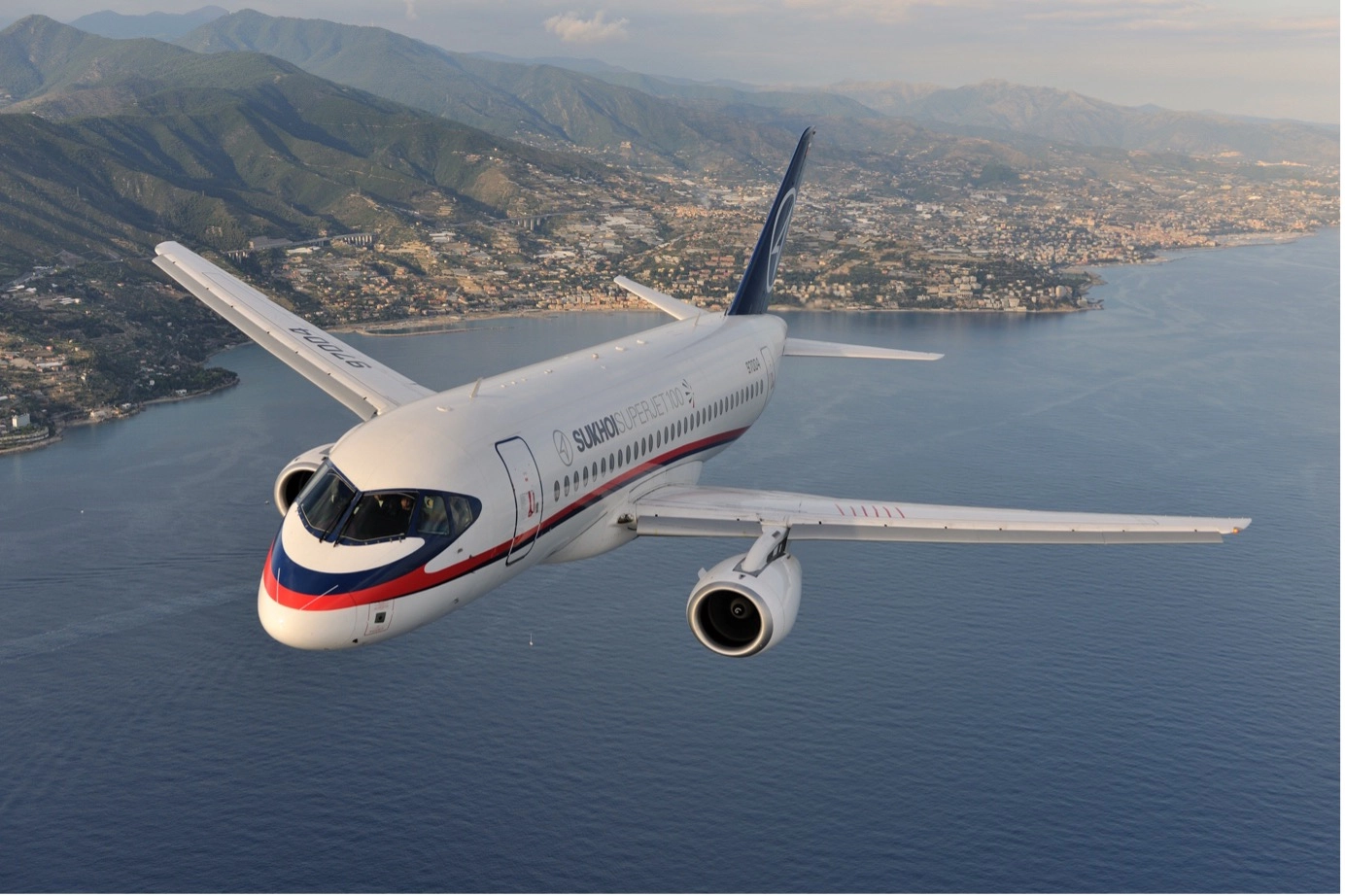
Rostec, Russia’s state technology conglomerate, announced in mid-March that it had successfully flown a Sukhoi Superjet 100 (SSJ-100) fitted with domestically produced PD-8 engines in mid-March. This was announced as the first step towards the flight of a fully “import-substitute equipped” aircraft planned for some time in April.
As the independent Russian news site The Insider pointed out that although the engines may have been new, the aircraft used for the test flight was seven years old and, as such, still contained many Western sourced parts that are currently unavailable because of sanctions.
JOIN US ON TELEGRAM
Follow our coverage of the war on the @Kyivpost_official.
The outlet added that not only have these new engines yet to be certified, which Rostec says is planned for later this year, but also the import substitutes for the 40 or so foreign components with which the SSJ-100 is fitted also need to be approved – a process that could take several years. It said that the state enterprise had not specified which of those had been manufactured, which were still being worked on, and when the work would be completed.
In March 2022 President Valdimir Putin decreed that Russia’s aviation industry was to become self-reliant and in December 2023 he set a target to build more than 1,000 domestically designed and built aircraft by 2030 to replace the Boeing, Airbus and other Western airframes that it currently relied on, and which have been hit by sanctions imposed following the 2022 full-scale invasion of Ukraine.
EU: No More Protection for Ukrainian Men?
As Kyiv Post previously reported, none of the aircraft planned to be built in the intervening period have materialized – the original target was for more than 100 by 2025. Along with this failure the ability of Russian airlines to use substitute parts and technicians to maintain its Western fleet have also failed, staggering from one “in-flight emergency” to the next.
According to Novaya Gazeta in 2023 and 2024 almost 400 air incidents involving Russian airlines were recorded.
The Insider says that the excuses for these failures are piling up and that Russian aviation should have no problems addressing its needs, but lack of funding and diversion of capability to keep feeding the insatiable demands of Russia’s war on Ukraine are exacerbating the situation.
In May 2024 Russia’s First Deputy Prime Minister Denis Manturov said the 2030 target had been reduced to 990 aircraft with the schedule to be reviewed again by the end of 2025 without specifying exactly what that meant.
Earlier that month Rostec CEO Sergey Chemezov said that they “hoped” to produce 200 aircraft to replace foreign airliners by 2030 – a fifth of the original target.
You can also highlight the text and press Ctrl + Enter
Russia Hit by 660-Drone Overnight Barrage Targeting Moscow, Crimea and Key Military Sites