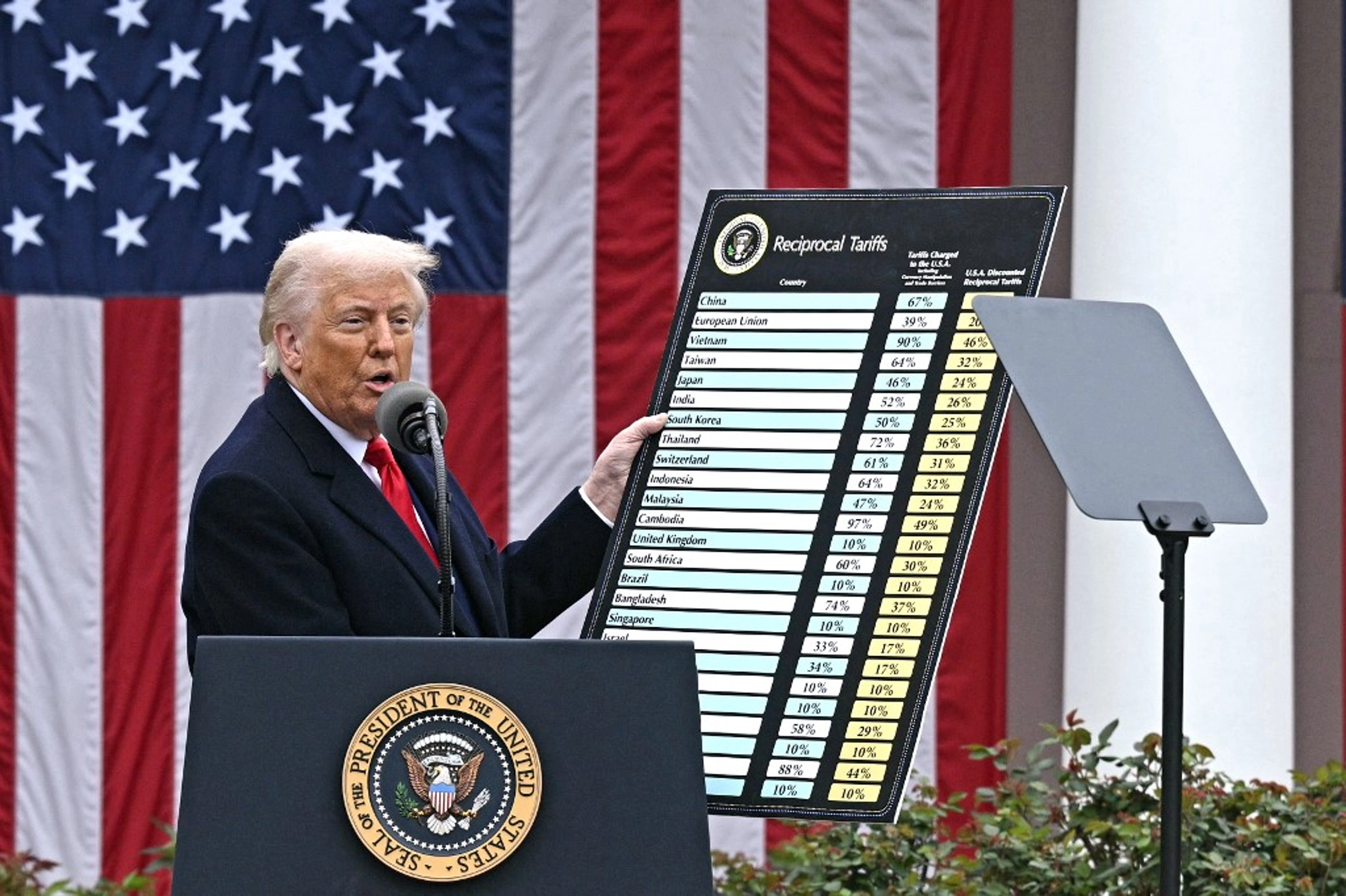
The European Union has voted to impose tariffs on a raft of U.S. imports in response to Donald Trump applying a 25% levy on steel and aluminum from the EU.
The European Commision announced on Wednesday that member states had passed the first set of countermeasures against American tariffs it described as “unjustified and damaging, causing economic harm to both sides, as well as the global economy.”
JOIN US ON TELEGRAM
Follow our coverage of the war on the @Kyivpost_official.
Some of the EU’s import duties of between 10% and 25% will come into force on April 15, with others taking effect in May and the remainder in December.
The commission added that the levies could be suspended at any time “should the U.S. agree to a fair and balanced negotiated outcome.”
“The EU has stated its clear preference to find negotiated outcomes with the US, which would be balanced and mutually beneficial,” officials said in a statement.
The list of U.S. goods subject to the EU duty was not made public but had been the subject of intensive horse trading between officials in Brussels and member states.
Ireland, France and Italy were successful in getting Bourbon and wine removed from the list after the American president said he would retaliate with a 200% tariff on liquor imported from the EU. Dairy products were also removed.
Hungary opposed
Hungary was the only one of the EU’s 27 member states to vote against the proposals.
The country’s foreign minister, Péter Szijjártó, posted on X earlier in the day that Budapest would oppose the measures on the grounds they would harm European economies and push up prices.

Hungary Rejects EU Plan to Exclude Ukrainian Men of Military Age From Temporary Protection
Today Hungary is voting against the @EU_Commission’s proposal to impose counter-tariffs on the US. Escalation is not the answer. Such measures would cause further damage to European economy and citizens by raising prices. The only way forward is negotiations, not retaliation.
— Péter Szijjártó (@FM_Szijjarto) April 9, 2025
Euronews reported that around €22 billion worth of U.S. goods would be affected annually compared to about €26 billion a year of EU metal imports to the U.S.
The U.S. imports to be affected by the EU’s measures include maize, wheat, barley, rice, motorcycles, poultry, fruit, wood, clothing and dental floss, according to a document seen by Reuters.
Escalating trade war
Wednesday’s levies are the EU’s first volley in an escalating global trade war with the U.S. which has seen Beijing and Washington lock horns, causing market volatility worldwide.
In addition to the 25% tariff on EU steel and aluminum, Trump added a further 20% duty on EU imports which came into force on Wednesday. This will affect 70% of the bloc’s exports to the U.S., or around €370 billion worth of goods a year, EU officials said.
The commission said on Tuesday it was working on a second round of retaliatory steps which are expected to be ready early next week. The Euractiv news service reported that formal proposals are expected to be tabled by mid-May if there is no negotiated settlement with Washington in the meantime.
Trump has shown no signs of backing down in his assault on trading partners and in February suggested he may cease trading with the EU altogether if it retaliated.
During his first cabinet meeting, Trump said the European Union was “formed in order to screw the United States.”
“They can retaliate, but it cannot be a successful retaliation, because we just go cold turkey,” he said. “We don’t buy anymore. And if that happens, we win.”
Recession fears
Trump’s rhetoric and reciprocal measures from a host of countries have fueled fears of an extensive global trade conflict impacting many economies, including the U.S.
JPMorgan Chase CEO Jamie Dimon, a prominent voice on economic matters, has said Trump’s tariffs would probably lead to a recession and defaults by borrowers.
Global markets have taken a pummeling, with the damage spreading beyond stock markets that have seen trillions of dollars in equity evaporate over the past week.
Oil prices have plunged to four-year lows, while investors have dumped U.S. Treasury bonds and the dollar, which are typically seen as safe-haven assets. The damage has rolled into corporate funding markets, raising the cost of borrowing for even lower-risk companies.
Japan and Canada have said they will cooperate to stabilize the global financial system—a task usually taken on by the United States during times of crisis.
Trump has shrugged off the market rout and offered investors mixed signals about whether the tariffs will remain in the long term, describing them as “permanent” but also boasting that they are pressuring other leaders to ask for negotiations.
“BE COOL! Everything is going to work out well,” he wrote on his Truth Social platform on Wednesday. “The USA will be bigger and better than ever before!”
Trump has said the tariffs will help rebuild an industrial base that has withered over decades of trade liberalization, though he says he is open to negotiating down those barriers with trading partners on a country-by-country basis. Administration officials say those talks could address foreign and military aid as well as trade barriers.
Trump has already spoken with leaders of Japan and South Korea, and a delegation from Vietnam is due to meet with U.S. officials on Wednesday.
“These countries are calling us up, kissing my ass,” he said on Tuesday.
You can also highlight the text and press Ctrl + Enter
EU Investigates von der Leyen Over Zelensky Chat
Baltic States Urge EU to Accelerate Russian Oil Ban