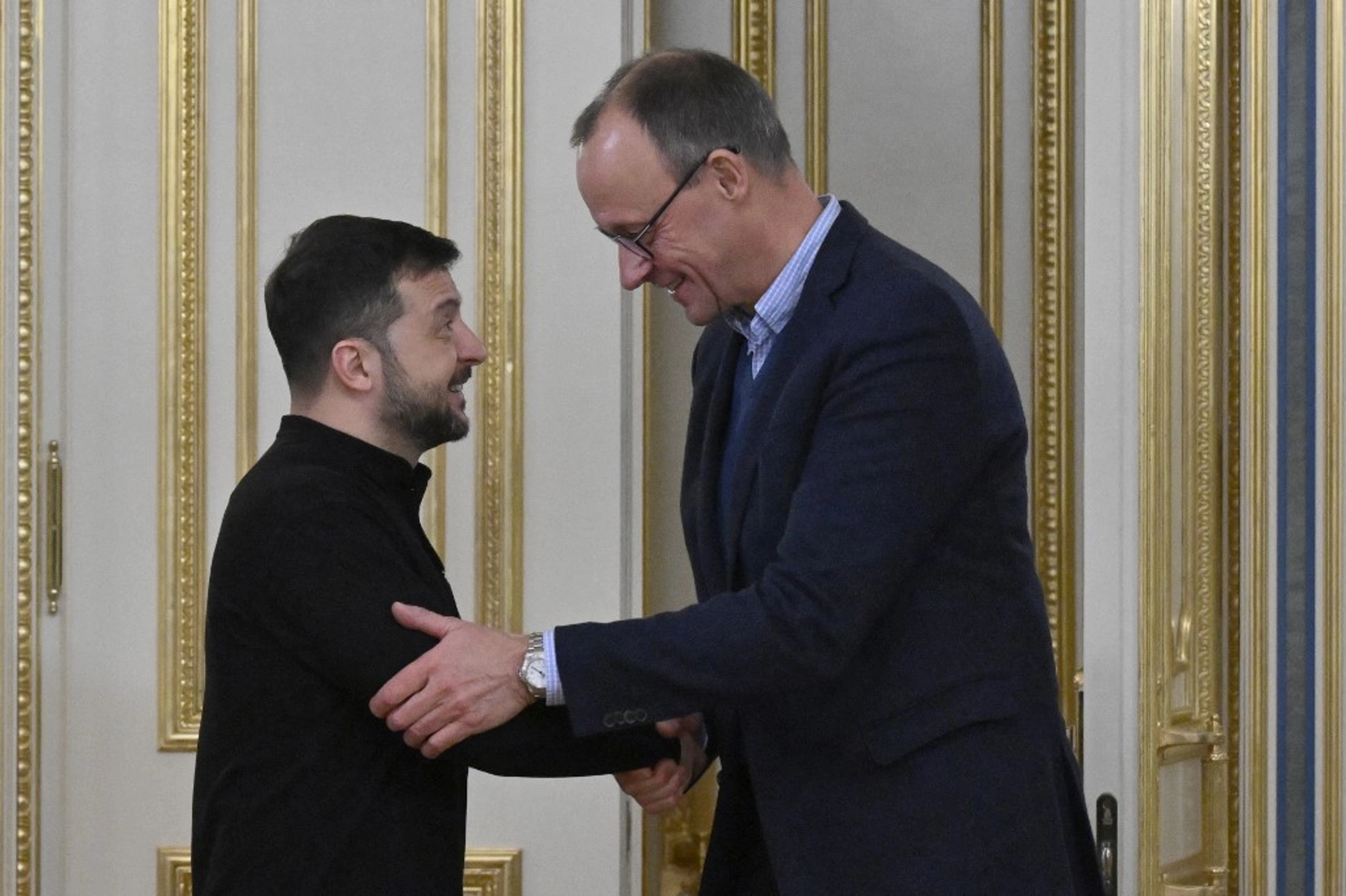
On April 9th the future chancellor Friedrich Merz (CDU) presented together with Lars Klingbeil (SPD) the plans of the new German coalition formed by the Christian Democratic Union of CDU/CSU and the social democratic SPD.
The coalition formation followed after the elections held in February, which were won by the Pro-Ukrainian Christian Democratic Union and where the pro-Russian radical right Alternative für Deutschland (AfD) came second.
JOIN US ON TELEGRAM
Follow our coverage of the war on the @Kyivpost_official.
Impact on Germany’s support for Ukraine
Germany is an important ally of Ukraine and ranks as Ukraine’s second-largest individual contributor according to the Kiel Institute. The two parties Union and SPD outlined their positions on Ukraine in their 144 page coalition agreement as follows:
- A strong, democratic and sovereign Ukraine is important for geopolitical stability and for Germany’s own safety
- Germany will continue to provide Ukraine financial, military and political support.
- Germany will develop a strategy with their partners to achieve a sustainable peace, where Ukraine has a position of strength. This strategy will include material and political security guarantees.
- Germany will participate in the reconstruction of Ukraine and seeks opportunities to economically utilize frozen Russian state assets for financial and military support to Ukraine.
- Germany stands by the NATO accession perspective for Ukraine, as reaffirmed at the NATO summit in Washington.
- Germany supports the establishment of a special tribunal to appropriately prosecute and punish the crime of aggression against Ukraine.
During his campaign, future Chancellor Friedrich Merz pledged support for Ukraine, a commitment reflected in the coalition agreement. The coalition agreement also contains plans to strengthen the German army. In March the German parliament already approved a military aid package for Ukraine of €3 Billion and a bill to increase funding of the German army.
The coalition agreement requires approval from SPD members and senior CDU/CSU representatives. Once approved, Merz is expected to be sworn in as chancellor by parliament in early May.
You can also highlight the text and press Ctrl + Enter