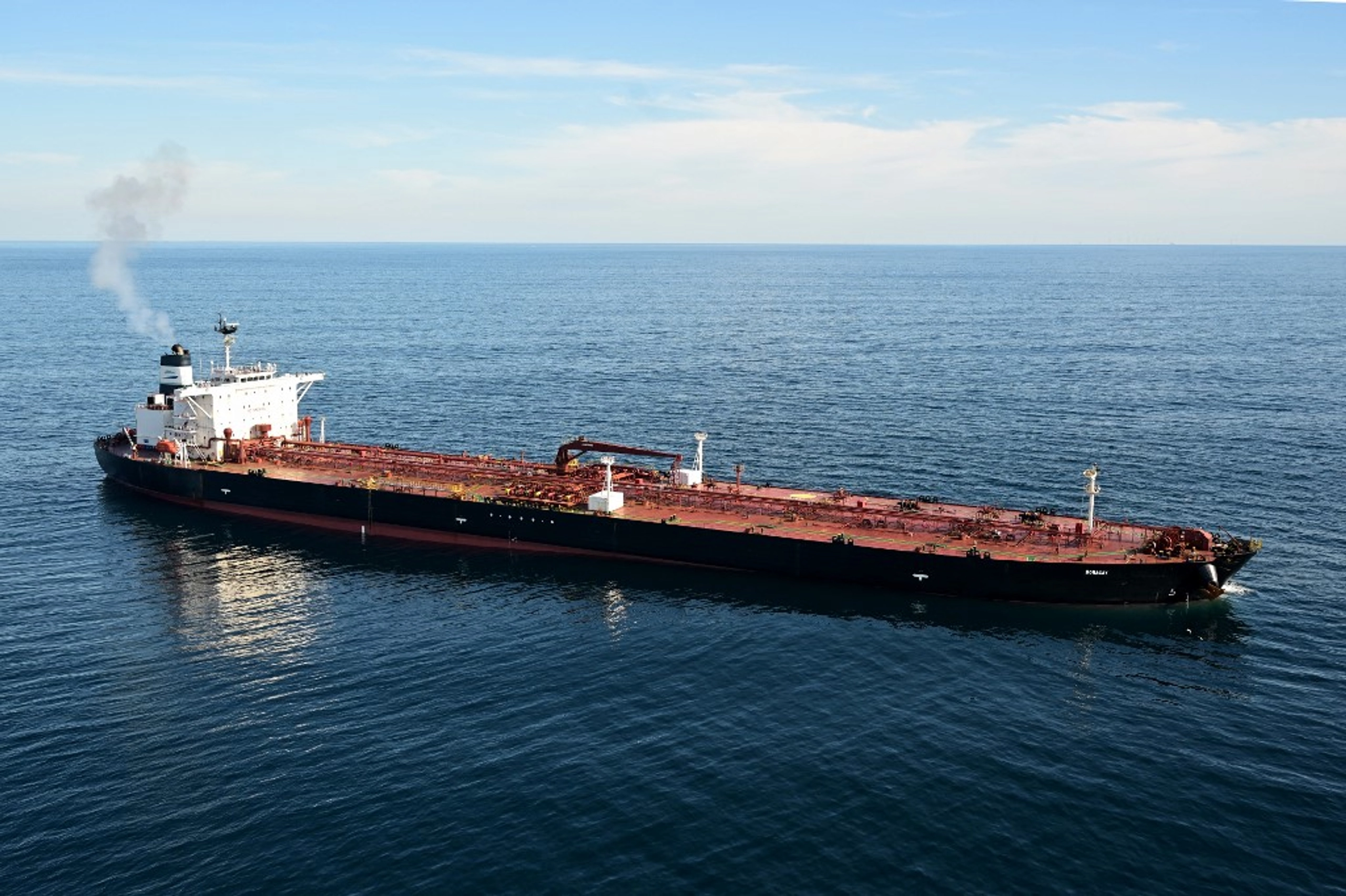
The Russian “shadow fleet” tanker Deliver, which was intercepted by the French military earlier this week, was escorted into the waters near the port of Marseille on Friday, June 26.
According to the Mediterranean Maritime Prefecture, the oil tanker arrived in the Gulf of Fos accompanied by the French Navy. The vessel will be anchored and placed at the disposal of the Marseille prosecutor as part of an ongoing investigation into alleged violations of flag requirements.
JOIN US ON TELEGRAM
Follow our coverage of the war on the @Kyivpost_official.
To ensure the proper conduct of the investigation, authorities have established strict security perimeters around the tanker, including a 500-meter maritime no-sail zone and a 1.5-nautical-mile aerial no-fly zone. The prefecture urged the public to respect these restrictions and avoid interfering with state services.
Compliance will be actively monitored by units of the Maritime Gendarmerie and the French Navy.
Crackdown on sanctions evasion
The arrival of the Deliver in Marseille follows its initial seizure near the coast of Sicily on Tuesday. French President Emmanuel Macron confirmed the operation on Thursday, sharing a video of the interception and stating that the vessel was violating international maritime law.
Macron noted that the French seizure came shortly after a similar operation by the United Kingdom, framing it as a demonstration of Europe’s commitment to enforcing sanctions against Russia.
“We will not allow the shadow fleet to circumvent sanctions and finance Russia’s war effort,” Macron stated on the social media platform X. “Europe will continue all necessary efforts to increase the cost of the war for Russia and help achieve a strong and lasting peace in Ukraine.”
Ukrainian Forces Strike Volgograd Defense Plant and Targets in Occupied Crimea
Russia has increasingly relied on a decentralized network of aging tankers – commonly referred to as the “shadow fleet” – to maintain its oil exports while bypassing Western sanctions imposed following its full-scale invasion of Ukraine.
Broader European action
The seizure of the Deliver aligns with intensifying European efforts to dismantle this logistical network. Earlier this month, lawmakers from France and Germany introduced a joint initiative calling for stricter, coordinated action against the shadow fleet.
The proposal, which is scheduled for consideration by the Franco-German Parliamentary Assembly, urges European governments to increase inspections of suspicious vessels, detain ships found in violation of international regulations, and escalate diplomatic pressure on the countries whose flags these tankers fly.
Proponents of the initiative, which includes backing from Germany’s Christian Democratic Union (CDU/CSU), Social Democratic Party (SPD), and the Green Party, argue that the shadow fleet represents not only a direct challenge to the sanctions regime but also a severe environmental and security risk, as many of the vessels operate with limited transparency and inadequate maintenance.
You can also highlight the text and press Ctrl + Enter

Attack on Moscow Oil Refinery: Putin Under Pressure?