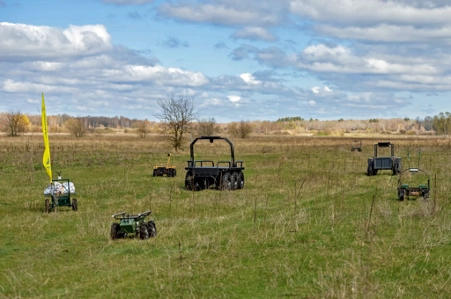
Earlier this week Ukraine carried out the mass testing of unmanned ground vehicles (UGV) under the auspices of its Brave-1 defense technology coordinating agency. The trials involved more than 70 UGV of all shapes and sizes put forward by around 50 domestic manufacturers.
The trials were designed to evaluate the technical reliability and resilience of the vehicles along with an assessment of their suitability for battlefield deployment under extreme simulated combat situations.
JOIN US ON TELEGRAM
Follow our coverage of the war on the @Kyivpost_official.
The testing involved the robot having to navigate a 10-kilometer (6.5-mile) course along unfamiliar routes under extreme conditions which included a variety of electronic warfare (EW) measures employing constantly shifting jamming frequencies.
The examination also assessed the UGVs’ performance against their stated parameters such as payload capacity and the ability to sustain speed and mobility while and to maintain communications over relatively long distances.
The event was organized in cooperation with representatives of Ukraine’s security and defense forces. A spokesperson for the trials said they were not only interested in evaluating the technical performance of each individual system but also to assess how they would fit into existing or help develop future operational concepts and procedures for UGV deployment. This could include for support to reconnaissance, mine clearance, logistics, casualty evacuation and offensive operations.
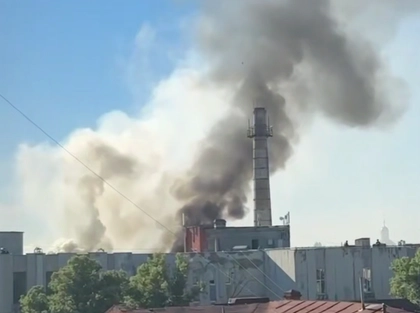
Ukraine Hits Targets 1,300 km Inside Russia, Striking Ufa Oil Refinery and Penza Missile-Linked Plant
A Brave-1 spokesperson said that results overall had exceeded expectations, with the majority of those tested successfully completing the course and performing to the levels their producers claimed.
In its press release, Brave-1 said that several of the UGV undergoing testing are already being fielded by combat formations of Ukraine’s armed forces, including the 3rd, 5th, 59th, 92nd, and the 108th Separate Assault Brigades, National Guard and special operations units from Ukraine’s Security Service (SBU) and Defense Intelligence Agency (HUR), and many others.
Ukraine’s military considers the trial to have been another important milestone in the development and acceleration of the country’s autonomous warfare capabilities in the face of continuing deployment of drones and EW by Russian forces.
It is hoped that these innovative, homegrown ground-based systems will maintain Ukraine’s edge in the ongoing technological battleground. With many of those UGVs fielded providing the necessary enhancement and balance of firepower, mobility, and survivability that will allow Ukraine to prevail.
You can also highlight the text and press Ctrl + Enter

Russia Hit by 660-Drone Overnight Barrage Targeting Moscow, Crimea and Key Military Sites