Ukrainian strike planners on Thursday hit a Russian missile base with long-range drones that destroyed buildings and targeted service personnel for the second day in a row, in retaliation for a bloody Russian Sunday strike that killed dozens of civilians and injured more than a hundred.
The attack targeted the home base of the Russian Army’s 112th Guards Missile Brigade, the unit thought by Ukraine’s military intelligence agency HUR to have fired a pair of surface-to-surface missiles into the center of the northern Ukrainian city of Sumy, in Russia’s deadliest strike against civilians in months.
JOIN US ON TELEGRAM
Follow our coverage of the war on the @Kyivpost_official.
A HUR Tuesday statement said Russian forces fired two Iskander-M ballistic missiles armed with cluster munition warheads, one launched from Russia’s Kursk region and one from its Belgorod region, in the bloody Sumy attack.
A cluster munition-equipped Iskander missile, called a 9M27K, typically is loaded with about a half ton of cylinder-shaped bomblets, each weighing about 2.5 kilograms (5.5 pounds). As designed, to deliver the bomblets where the launcher is aiming, an Iskander flies to a point in the sky between 900-1,400 meters (2,953-4,593 feet) above an intended target, the missile nose cone opens, and when the warhead is 6-10 meters (20-33 feet) over the target, a trigger charge scatters the cluster munitions.
In ideal conditions an area 1.5 square kilometers (.6 square miles) is covered completely with bomblets from a single Iskander missile.
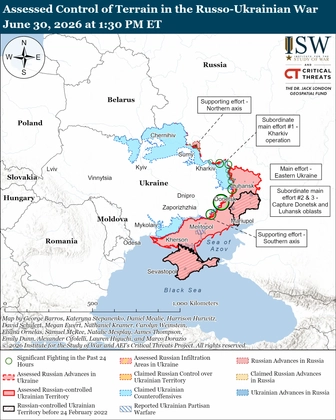
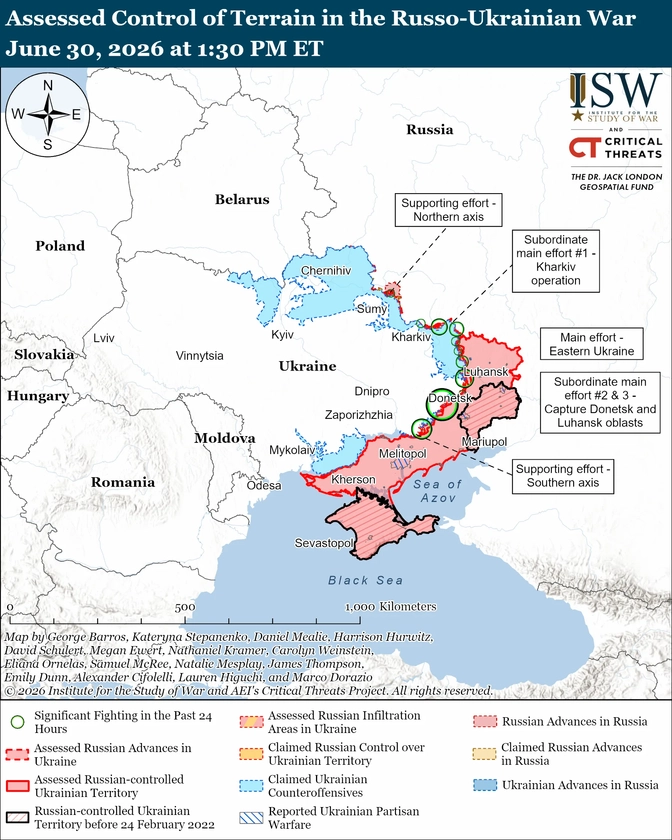
ISW Russian Offensive Campaign Assessment, June 30, 2026
The Sunday, April 13, attack, according to Ukrainian media reports, targeted a Ukrainian army ceremony being held at a government facility in the center of the city.
Hundreds of bomblets saturated everything around the base, including the campus of the Sumy State University and three busy city streets.
Passersby, motorists, families walking on the sidewalks, churchgoers, and passengers of a public transport bus were hit. The final casualty toll was 35 Ukrainians killed, including two children, and 119 injured, including 15 children.
The Ukrainian retaliatory strike came on Wednesday. Since launching a strategic bombardment of targets inside Russia in early 2023, Ukraine’s long-range drone strike planners have mostly attacked large military infrastructure difficult to repair quickly, like fuel bases and ammunition depots.
Smaller, harder-to-hit targets like military barracks or warships have been targeted less often, and when strikes have been launched, usually precision-guided weapons like the made-in-USA ATACMS missile or the French/British SCALP/Storm Shadow cruise missile have been used to carry them out. The Wednesday attack against the 112th Guards Missile Brigade, using drones, was a change in Ukrainian tactics.
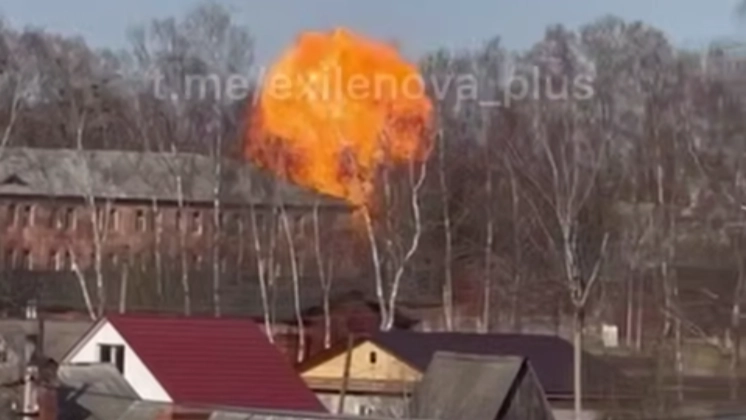
The Ukrainian drones, by reports, were tail-prop robot aircraft the size of a big motorcycle called an An-196 Liutyi. Between six and twelve struck at 3 a.m. in a Tula region village called Shuya. Locals uploaded to social media images of explosions in and around the home base of Russia’s 112th Guards Missile Brigade. The uploaded images violated Russian law about making public sensitive information, but continued throughout the day. The content appeared to confirm seven ground blasts.
At least two of the Ukrainian drones flew almost to Moscow and then turned west to attack from an unexpected direction, Ukrainian military information platforms reported.
A second wave, carried out according to some reports by 2.5-meter-long (8.2-foot-long) tail-prop drones called a Bobr, struck about five hours later, at 8 a.m. local time. However, some video showed Liutyi drones carrying out the second wave strike.
Tula governor Dmitry Milyaev, in an official statement later that day, said all the Ukrainian drones were shot down and there was no damage, telling taxpayers: “The situation is under control.” A subsequent statement from his office admitted glass had been broken in some buildings.
Russian social media images from the scene contradicted Milyaev’s official line, showing storage buildings on fire and with broken walls. One video published by Ukraine’s UNIAN news agency, purportedly recorded as the drones hit 112th Brigade premises, showed soldiers using coarse language and taking cover inside a damaged barracks building.
Ukraine’s Army General Staff (AGS) took responsibility for the attack and confirmed it was a retaliation for the Russian Sumy strike.
“Ukraine’s ‘pleasant’ UAVs are attacking the city of Shuya in Ivanovo Oblast. This is home to the 112th Missile Brigade, which was involved in the attack on Sumy on Palm Sunday. A*sholes, you let at least five (drones) through your defenses,” the official Ukrainian army statement said.
Russian geo-locators at the Astra independent news agency concluded that at least three warehouses containing Iskander parts and warheads had their roofs blown in, and that barracks and training rooms suffered serious damage.
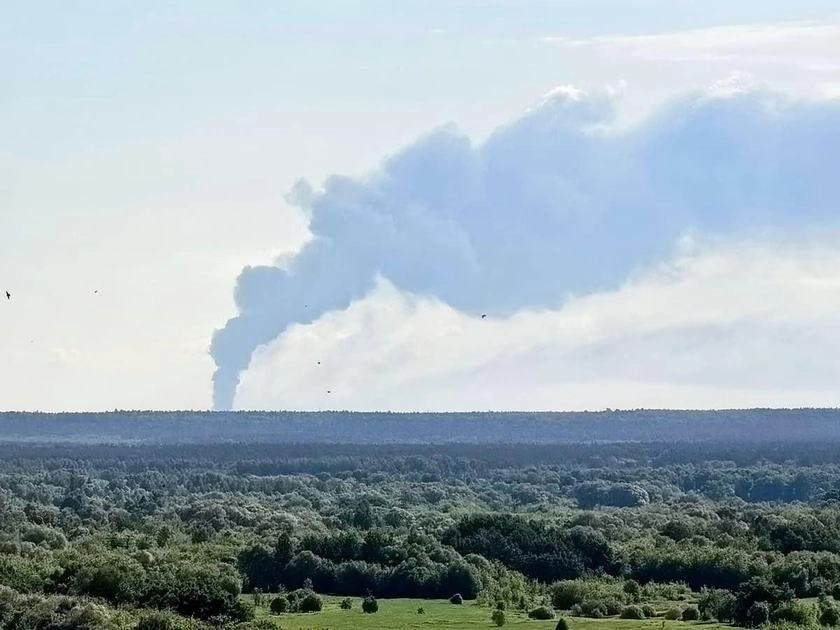
According to Russian social media and images captured by the NASA-run NISI world satellite fire overwatch network, fires burned on base premises throughout the day. The Ukrainian open-source geo-location group KiberBoroshno reported it had confirmed at least three hits and damage to a headquarters building and a training facility.
At about 3 a.m. Thursday, almost exactly 24 hours after the first strike, another wave of Liutyi drones penetrated Russian air defenses and detonated around the barracks and storage buildings of the 112th Guards Rocket Brigade in Shuya.
Social media images recorded propeller engine sounds similar to Ukrainian attack drones, and the characteristic thump of warhead detonations. Blasts and fires were visible in the vicinity of the military base, those reports said.
Russian followed by Ukrainian social media by midday Thursday was filled with images of fires burning inside buildings geolocated to Russia’s 112th Guards Rocket Brigade. Ukraine’s Army General Staff on Thursday said the latest strike had targeted and struck weapons storage depots, barracks and training buildings, modular shelters for equipment and personnel, a base transformer substation, and a base water tower. Video recorded at sunrise showed fires still burning.
Local Russian officials cancelled direct school attendance, ordered classes be held remotely, and reported that all Ukrainian drones had been shot down and nothing in Shuya had taken significant damage.
You can also highlight the text and press Ctrl + Enter

Russia Hit by 660-Drone Overnight Barrage Targeting Moscow, Crimea and Key Military Sites