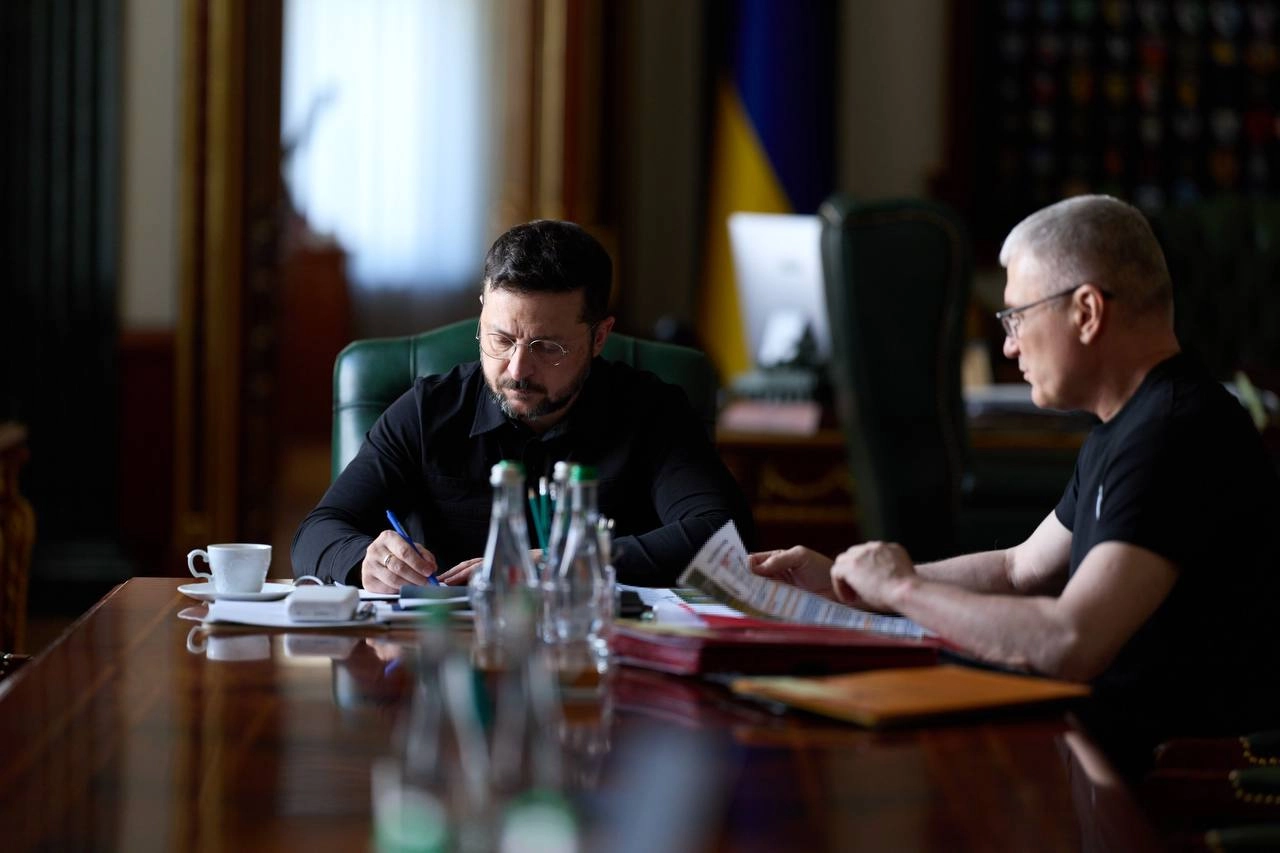
Ukrainian intelligence has reported the destruction of more than 60,000 tons of ammunition at a Baltic Fleet arsenal near St. Petersburg after recent drone raids.
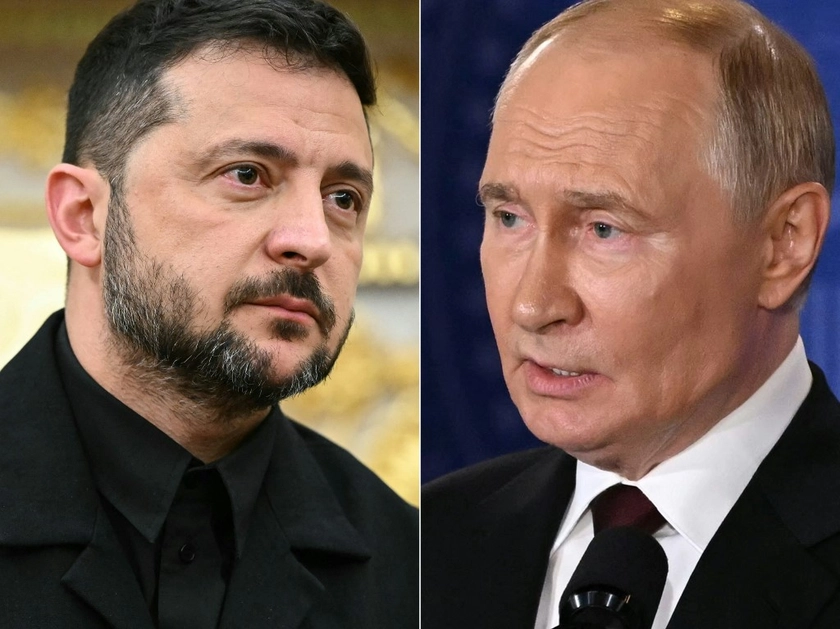
President Volodymyr Zelensky said this in a Telegram statement on Wednesday, citing a report from the head of the Main Intelligence Directorate (HUR), Oleh Ivashchenko.
JOIN US ON TELEGRAM
Follow our coverage of the war on the @Kyivpost_official.
“First of all, we discussed the implementation of the plan of our long-range sanctions against Russia in this war and the steps needed to bring peace closer. In particular, among the recent effective defeats on the territory of the occupier, it is worth noting the elimination of more than 60,000 tons of ammunition at the Baltic Fleet arsenal near St. Petersburg,” Zelensky said.
Ukraine struck St. Petersburg in early June, with the strikes coinciding with the beginning of the St. Petersburg International Economic Forum (SPIEF), Russia’s flagship business event.
Zelensky added that intelligence assessments confirmed Ukraine successfully struck its planned targets at Russian military production sites.
According to Zelensky, Ukrainian forces also struck Russian enterprises producing radio electronics and other critical components for the Russian military.
Notably, Ukraine’s General Staff on Wednesday published a report on the results of a strike on the Dubna Space Communications Center (SCC) in Russia’s Moscow region.
The facility is the largest ground-based satellite communications complex in Russia and is used for military communications, including control of satellite repeaters employed by the Russian defense ministry for communications, reconnaissance, and troop coordination.
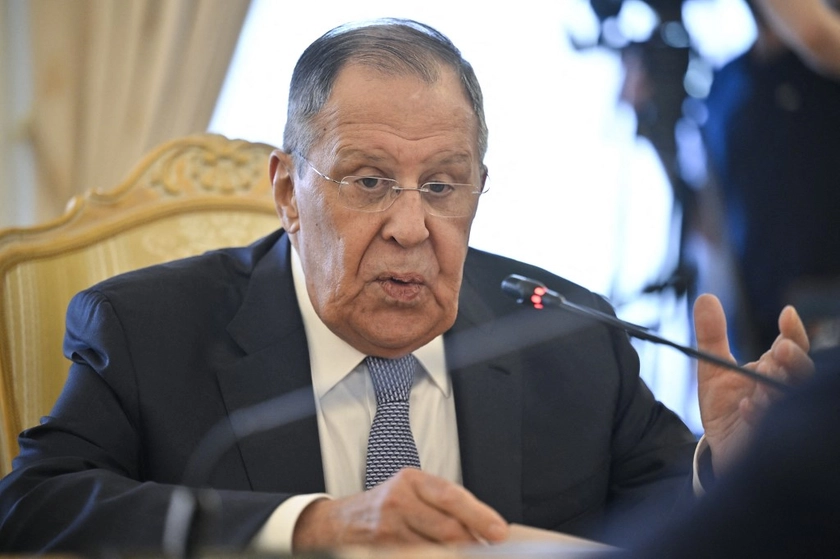
Lavrov Rejects Frontline Freeze as Basis for Ukraine Peace Talks
According to the report, the strike took place early on Monday.
“Additional data analysis confirmed a hit on the hardware and modular complex of the 32-meter MARK-IV antenna, which is used for satellite communications, as well as on the technical building adjacent to the antenna,” the statement reads.
Further damage
Ukraine’s General Staff also confirmed damage to the plant’s main production and administrative (hardware and software) building, including partial destruction of one of its walls.
The building houses central communications hardware, ground control complex equipment, and the central control panel of the satellite network.
Zelensky said intelligence obtained internal Russian documents showing assessments of the impact of Ukraine’s long-range strikes, adding that Russia has begun redeploying air defense systems to protect Moscow and the Kerch Bridge that connects occupied Crimea with mainland Russia.
“In fact, these are the two areas the Russians have been ordered to prioritize defending, even if it means weakening other regions across their own territory and the temporarily occupied areas of Ukraine,” Zelensky said.
He also referred to a separate intelligence report on Russian missile production and strategic aviation, adding that Ukraine is preparing further responses to Russia’s ongoing war.
“It is important that as many Russians as possible understand that the war is being prolonged precisely because of the Russian leadership’s refusal to engage in diplomacy. Ukraine has put forward meaningful diplomatic proposals,” he added.
Energy targets
In early June, Ukrainian forces carried out overnight strikes on several key military and energy-related targets deep inside Russia, including the St. Petersburg oil terminal, facilities at the Kronstadt naval base, and a defense industry enterprise in the Tambov region.
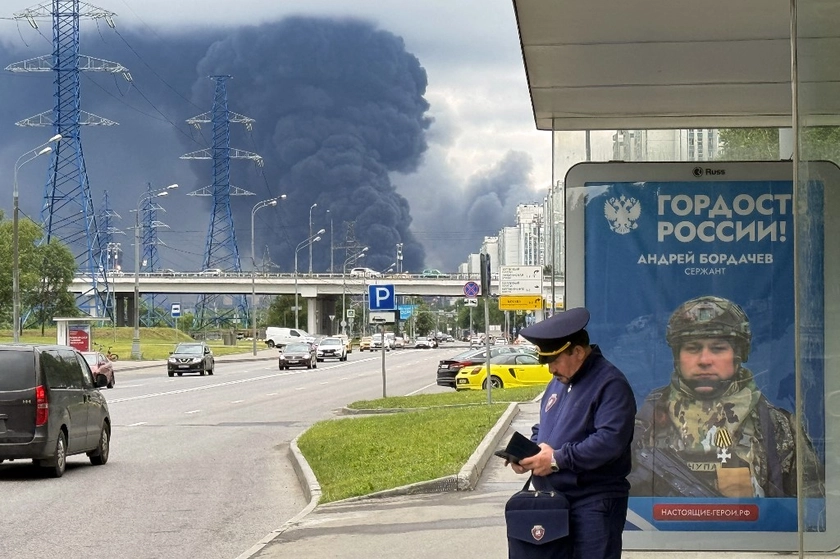
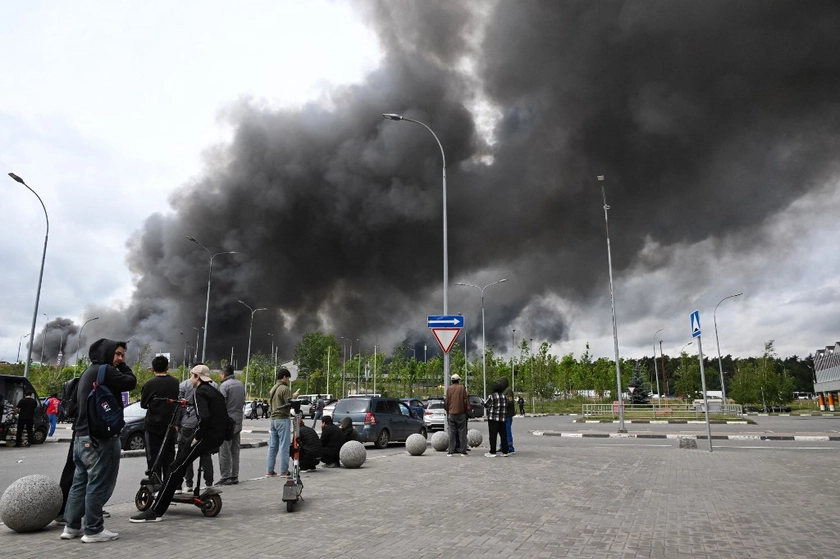
A large fire broke out in St. Petersburg on June 3 after Russian authorities reported a mass overnight drone attack on the Leningrad region.
Russian officials said air defenses intercepted multiple drones, with Governor Alexander Drozdenko claiming initially that three drones were shot down, and later reporting around 30 were involved in the attack.
Despite official claims of interceptions, videos circulating on Russian Telegram channels showed flames and thick smoke rising from the port area of St. Petersburg.
The independent channel Astra, along with other Russian outlets, identified the burning site as JSC Petersburg Oil Terminal, one of the largest oil handling facilities in northwestern Russia.
Authorities also activated the “Kover” security plan at St. Petersburg’s Pulkovo Airport, leading to flight disruptions, delays, and cancellations of more than 10 outbound flights.
In a Telegram statement, Zelensky praised the operation, which he said involved Ukraine’s Security Service (SBU), Unmanned Systems Forces (USF), Special Operations Forces (SSO), State Border Guard Service, and other units.
He also confirmed a strike on the St. Petersburg oil terminal, located around 1,100 kilometers (684 miles) from Ukraine’s border, and said “purely military targets” at the Kronstadt naval base were also hit.
You can also highlight the text and press Ctrl + Enter