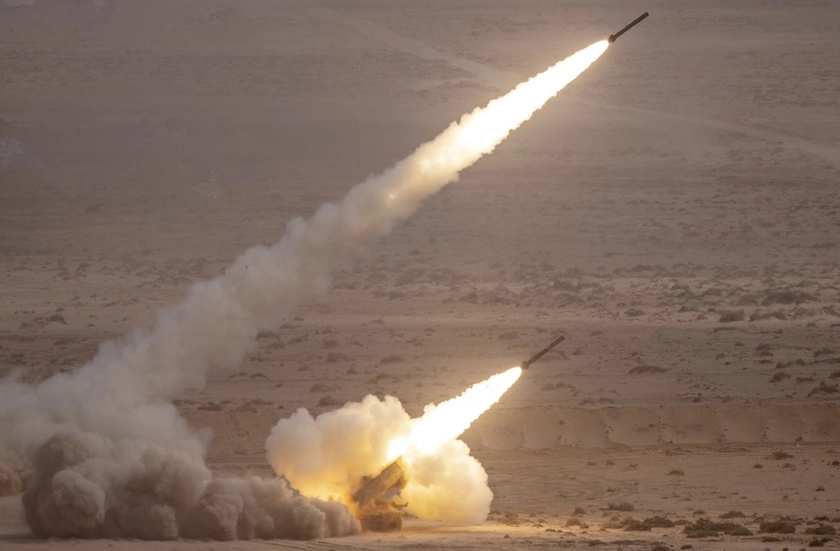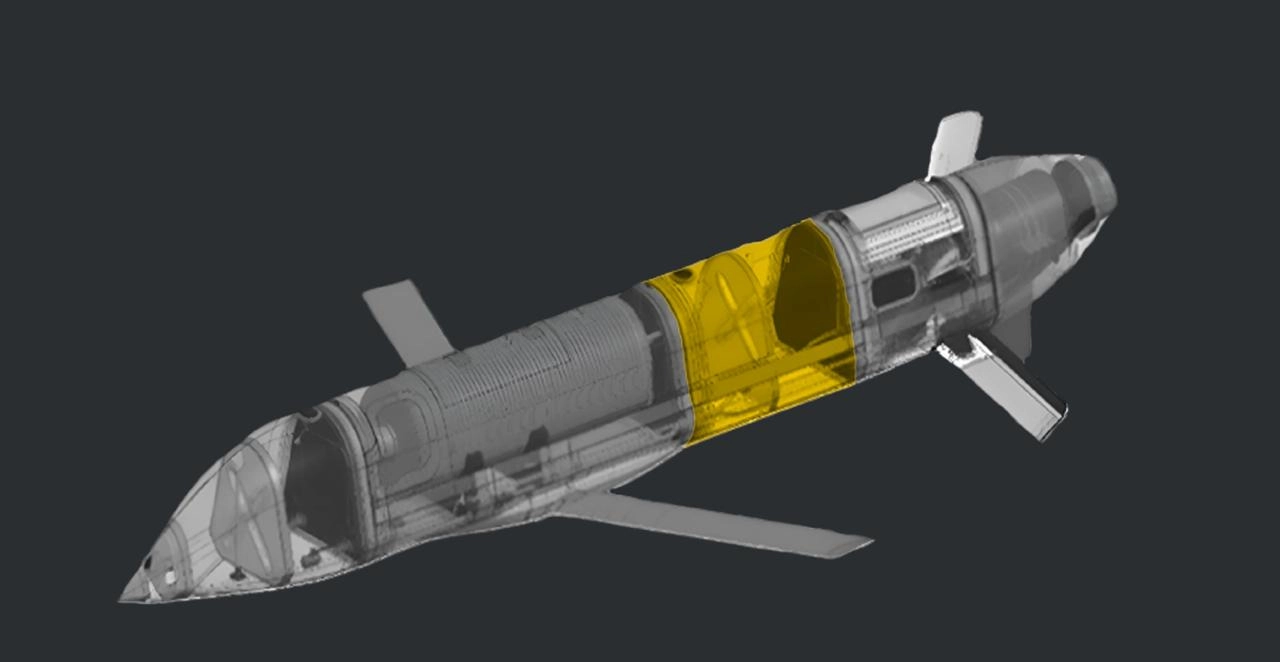
The new Russian S8000 “Banderol” cruise missile contains foreign components, including parts manufactured in China, Japan, and South Korea, as well as nearly two dozen microchips produced by companies from the United States, Switzerland, Japan, China, and South Korea.
According to Ukraine’s Defence Intelligence (HUR), which published the missile’s technical specifications on the War&Sanctions portal in the “Components in Weapons” section, a distinctive feature of the missile is its ability to make tighter turns than standard Russian cruise missiles (such as the Kh-101, 3M-14, 9M727, and Kh-69) while maintaining the typical cruise missile flight path.
JOIN US ON TELEGRAM
Follow our coverage of the war on the @Kyivpost_official.
The “Banderol” is equipped with a warhead weighing up to 150 kg (331 lbs) and can reach targets at a distance of up to 500 km (310 miles), flying at a speed of 500 km/h (310 mph). It uses aviation kerosene (such as Jet-A) as fuel.
The missile was developed by the sanctioned Russian company Kronshtadt, and its primary carrier is the Orion UAV, also produced by Kronshtadt. The missile is also being adapted for deployment from Mi-28N attack helicopters.
Ukrainian intelligence documented the use of foreign-made components in the S8000 missile, including:
- Swiwin SW800Pro jet engine (China) – a aircraft turbojet engine available for purchase online, including on AliExpress, for approximately $16,000;
- RFD900x telemetry module, manufactured in Australia or its Chinese replica;
- Inertial navigation system (INS), likely of Chinese origin;
- Murata battery packs (Japan);
- Dynamixel MX-64AR servos from the South Korean company Robotis;
- CRP-protected Kometa-M8 antenna (Russia, “VNIIR-Progress”) – also used in Geran (Russian Shahed, UMPK, and UMPB drones;
- Approximately 20 varieties of microchips from manufacturers based in the US, China, Switzerland, Japan, and South Korea.
According to HUR, most of the foreign electronic components found in the missile were acquired through the “Chip and Dip” network – one of Russia’s largest electronics distributors.
Despite Public Break With Russia, Springer Continues Publishing Russian Journals
In total, over 20 key components of the S8000 missile have been identified, along with around 30 companies involved in its production or supply chain.
Last month Kyiv Post reported that the HUR has published a detailed breakdown on the War&Sanctions portal of 243 enterprises that are part of three major holdings within Russia’s state-owned corporation, Rostec.
“Rostec enterprises account for more than half of Russia’s total production of weapons and military equipment and play a key role in supplying the aggressor’s [military] in its war against Ukraine,” the HUR statement said.
The Russian state conglomerate unites more than 700 enterprises across the defense, aviation, electronics and engineering sectors. Rostec companies produce more than half of Russia’s weapons and military equipment. It is a critical supplier of the weapons and technology Moscow’s armed forces need to sustain their war efforts.
Earlier Kyiv Post reported that since 2014, over five million documents belonging to Ukraine’s National Archival Fund (NAF) have fallen under Russian control following the occupation of parts of Ukraine, including Crimea, Donetsk, Luhansk, and Kherson regions.
Kherson, a strategic city in southern Ukraine, was occupied by Russian forces in March 2022 during the early stages of the full-scale invasion. It was liberated by Ukrainian troops in November 2022, marking a major turning point in the counteroffensive. After its liberation, investigators confirmed that nearly 360,000 archival items had been looted by occupying forces.
You can also highlight the text and press Ctrl + Enter
Attack on Moscow Oil Refinery: Putin Under Pressure?
Ukrainian Storm Shadow Hit Iskander-Linked Electronics Plant, Say Russian Sources