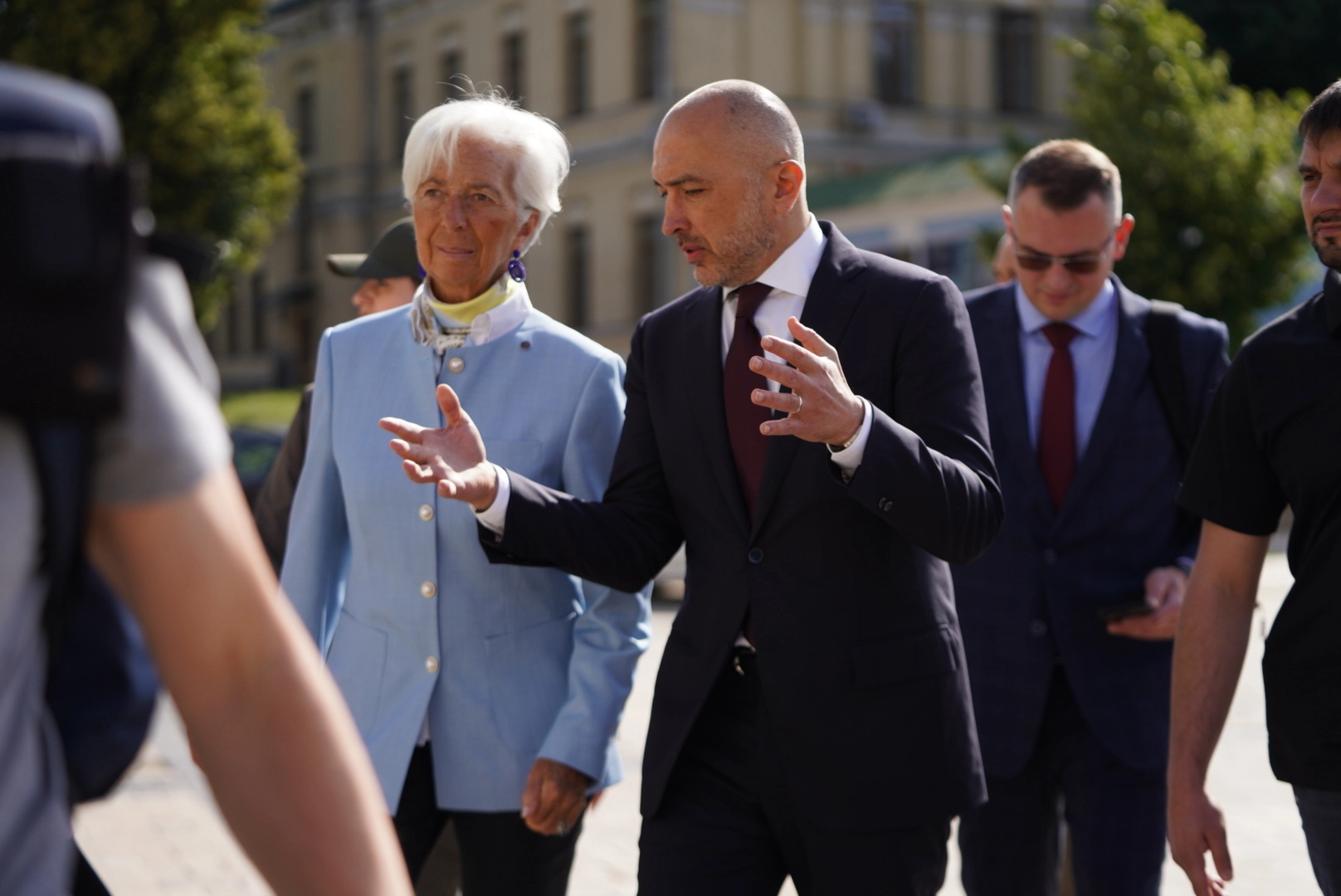
Despite the hardships of war, Ukraine’s integration in the European Union offers a clear path to recovery and lasting prosperity, President of the European Central Bank (ECB) Christine Lagarde said at a conference in Kyiv.
Lagarde gave a speech as the keynote speaker during the ninth Annual Research Conference “Economic and Financial Integration in a Stormy and Fragmenting World” organized by the National Bank of Ukraine and Narodowy Bank Polski in Kyiv.
JOIN US ON TELEGRAM
Follow our coverage of the war on the @Kyivpost_official.
The ECB President arrived in Kyiv, despite a recent devastating Russian attack on Ukraine’s capital. Narodowy Bank Polski representatives joined the conference online.
Ukrainian President Volodymyr Zelensky said Russia had launched 440 drones and 32 missiles in total, targeting cities across the country. Ukrainian officials said Wednesday that at least 28 people were killed and 134 wounded in Kyiv alone. Emergency crews said 23 of the victims were pulled from the rubble of a nine-story apartment building in the city’s Solomyansky district.
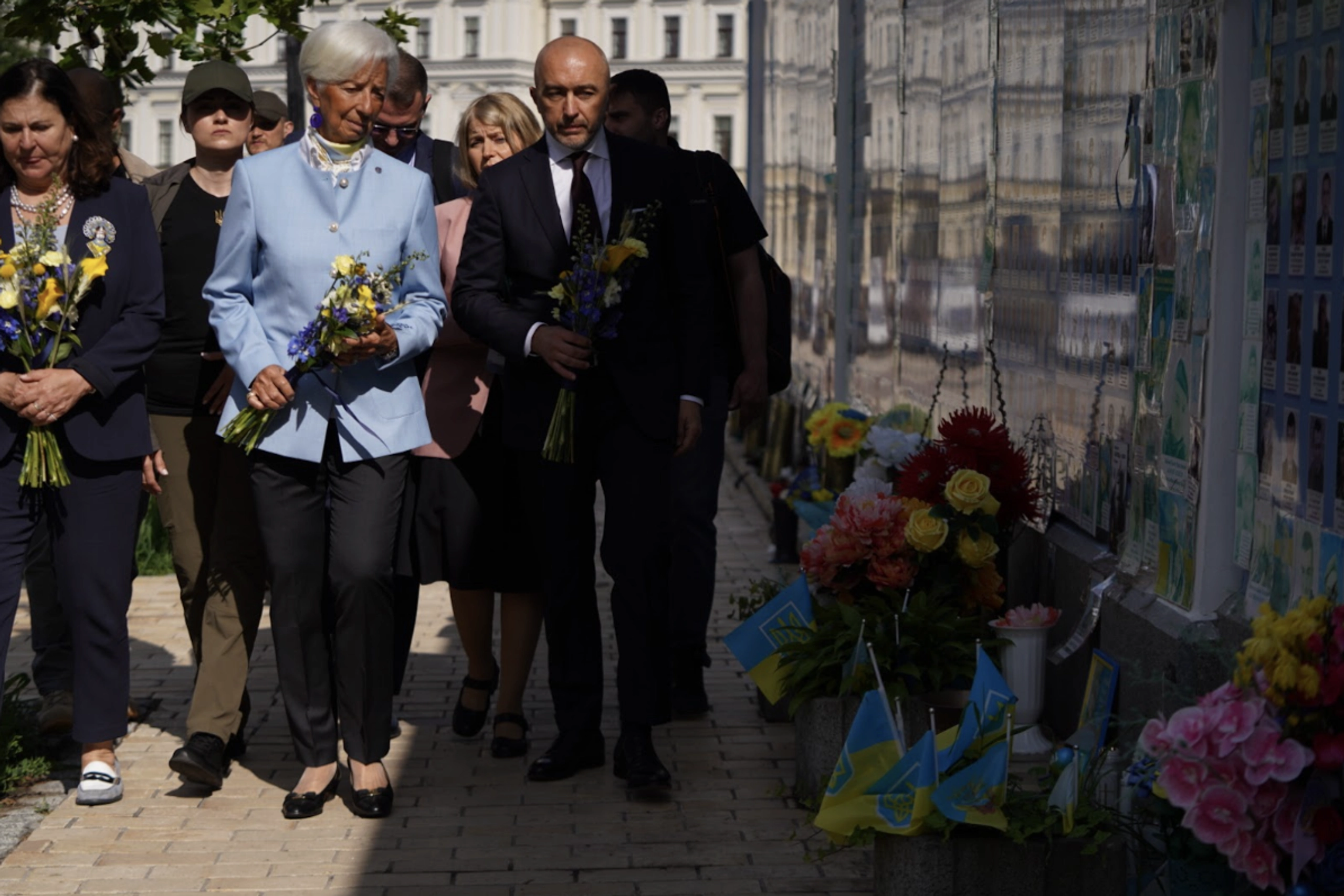
Before conducting a speech at the conference, Lagarde also laid the flowers at the memorial honouring the soldiers who died over the last 10 years of Russia’s war against Ukraine, which started in 2014 with Russia invading Donbas. Ukraine’s central bank governor Andriy Pyshny and EU Delegation to Ukraine ambassador accompanied the ECB President.

You Realize How Valuable Life Is When Death Feels Possible Every Day
“It is an honor to be here in Kyiv – a city that has come to symbolize resilience, dignity and the enduring spirit of freedom. Kyiv stands not only as the heart of Ukraine, but as a beacon of what it means to hold fast to democratic values in the face of immense challenge,” Lagarde said, having laid the flowers at the memorial and returning to the conference.
Closer ties with the European neighborhood can provide a strong foundation for Ukraine to rebuild and emerge stronger, Lagarde said. She still has hope, she says, despite the Trump regime tariffs threatening businesses around the world, while geopolitical tensions rise and global supply chains fragment.
Lagarde stated that both the EU and Ukraine should learn two lessons from forming the Eurozone and European Union.
Deeper integration increases the potential rewards, it also raises the risks if not managed wisely. Sound domestic policy frameworks are essential to maximize growth and safeguard stability, she said.
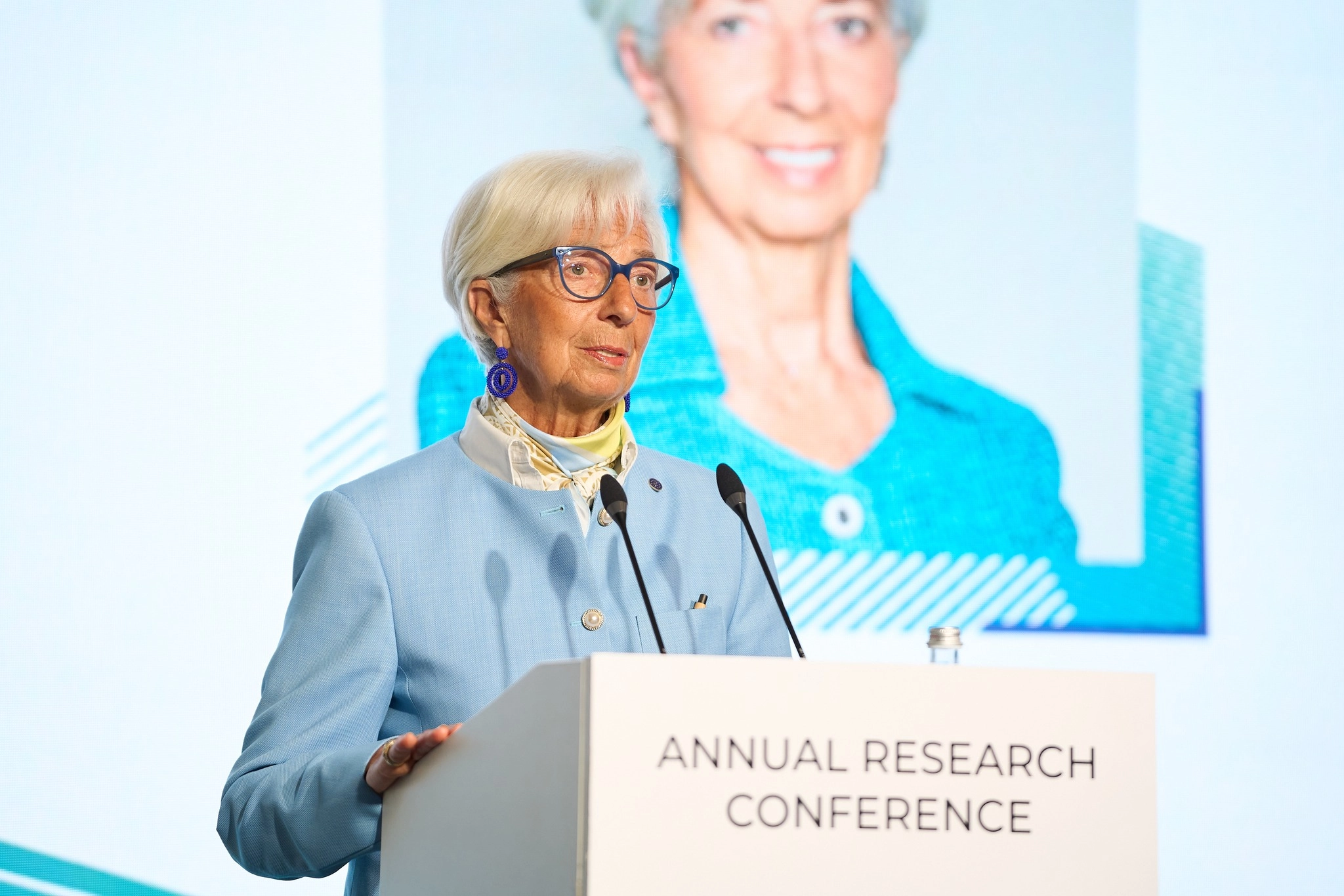
Citizens of European countries became richer after the EU added new member states. Between 2004 and 2019, the EU’s new Member States saw their GDP per capita grow 32% more than comparable non-EU countries.
Second, the benefits of integration are neither automatic nor permanent, Lagarde said. Maintaining them depends on continuous reform – but reforms must also deliver tangible improvements for people’s lives, and do so relatively quickly.
Integration within the EU countries can create risks, Lagarde said. As new capital flows into the country after integration, domestic governments may use them to increase revenues and boost sectors that could precipitate financial crises.
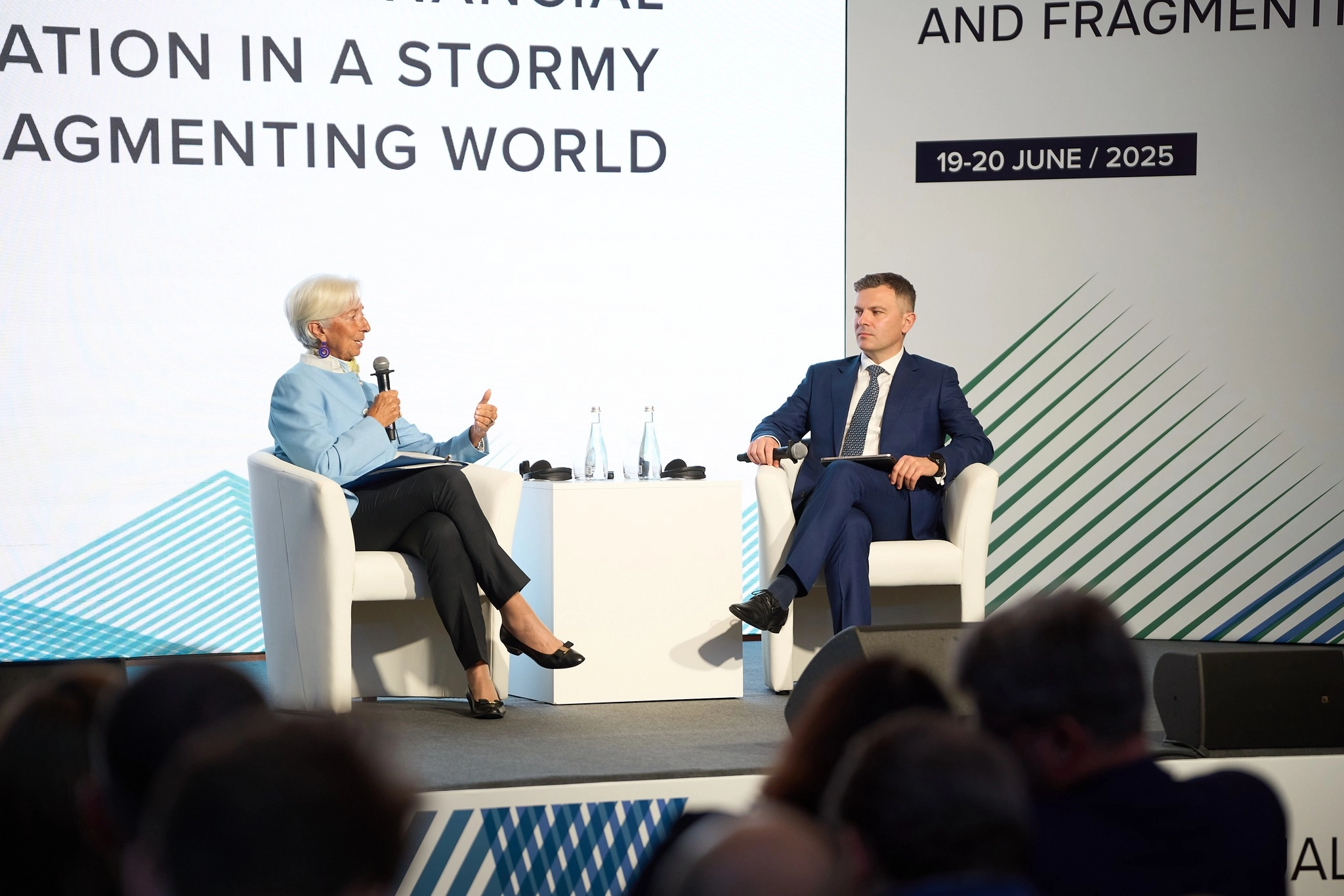
To avoid a financial crisis, such countries should channel foreign investment into strong industrial strategies, a skilled workforce and integration into global supply chains, according to her.
Also, instead of increased spending, it is better to keep strict requirements on capital, create buffers and keep the whole financial system stable instead of ignoring the risks.
“This insight is especially relevant for Ukraine today as it charts its path towards recovery... But without the right safeguards, that capital risks being misallocated – undermining long-term productivity instead of strengthening it,” Lagarde said in Kyiv.
You can also highlight the text and press Ctrl + Enter