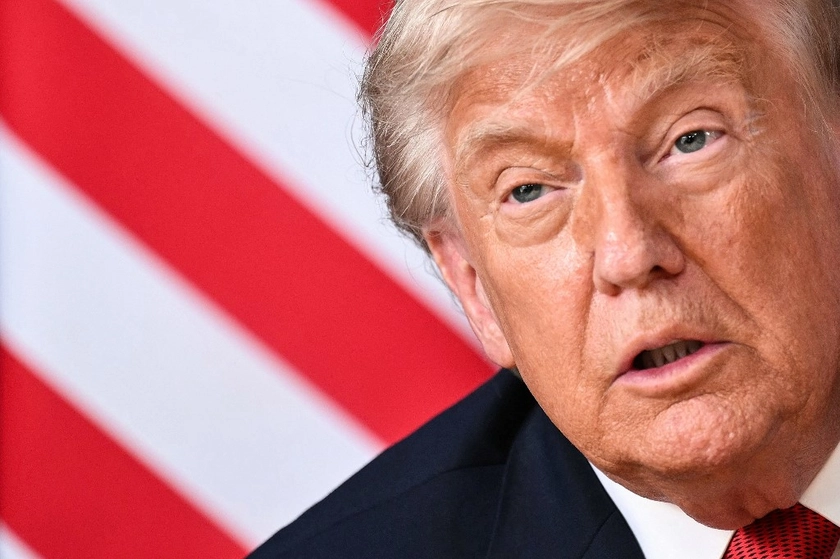
WASHINGTON DC – US President Donald Trump said Thursday he would decide on whether his country should get involved in Israel’s conflict with Iran “within the next two weeks.”
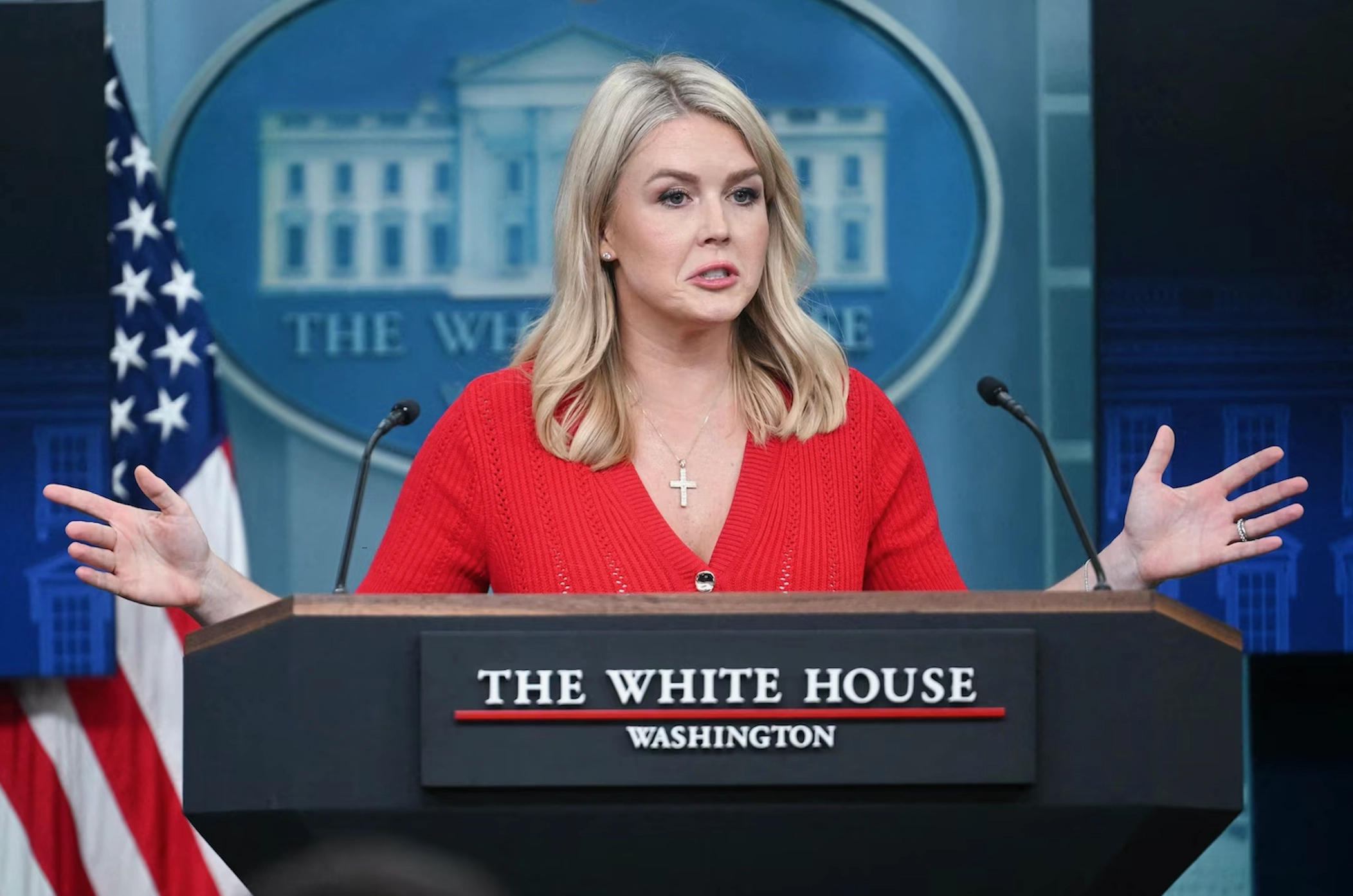
White House Press Secretary Karoline Leavitt read a message from Trump at a daily briefing, citing “a lot of speculations” about whether the US would be “directly involved.”
JOIN US ON TELEGRAM
Follow our coverage of the war on the @Kyivpost_official.
“Based on the fact that there’s a substantial chance of negotiations that may or may not take place with Iran in the near future, I will make my decision whether or not to go within the next two weeks,” Trump noted in the statement.
Leavitt would not offer further details of what had led the US President to believe that negotiations with Iran were possible.
However, she did hint that “correspondence has continued” between the White House and Tehran when asked about reports that Trump’s special envoy Steve Witkoff had been in touch with Iran’s foreign minister. In the meantime, the press secretary said she was “not tracking” if Witkoff would go to Geneva for the next talks with Iran.
Trump himself said on Wednesday that Iran had reached out asking to send officials to the White House to negotiate a deal on its nuclear program - something that Tehran officials later denied they would do.
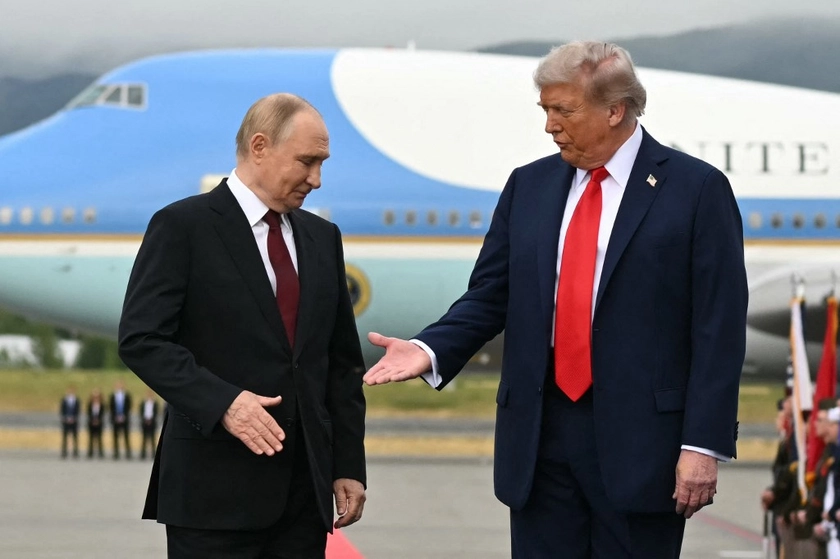
Trump has repeatedly fallen back on a two-week timeline to decide on policy decisions, including lately when he said multiple times he would know in “roughly two weeks” whether Russian dictator Vladimir Putin was interested in negotiating an end to the war in Ukraine.
US Reports Continued Shipping in Strait of Hormuz Despite Iranian Closure Claims
Asked two months ago if he could trust Putin, Trump replied, “I’ll let you know in about two weeks.”
When reporters on Thursday pressed Leavitt about the reliability of Trump’s timelines, given previous delays on other global matters such as Ukraine, the press secretary replied by suggesting that the conflicts were different and couldn’t be compared.
She then said that Trump’s tendency to push his self-assigned deadlines comes from his desire to broker peace.
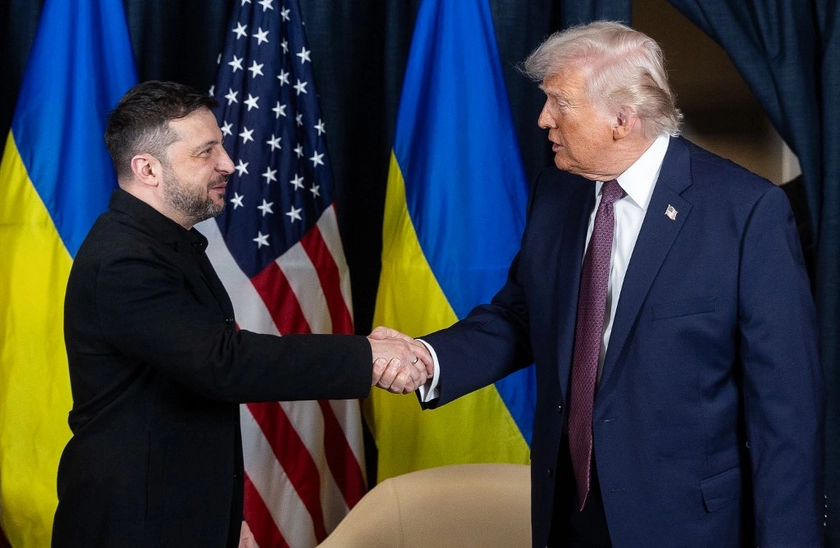
“The last time the president said ‘two weeks’, you saw [Russia and Ukraine] have direct negotiations for the first time in years,” Leavitt said. “The president is always interested in a diplomatic solution to the problems and the global conflicts in this world,” she added.
“He is a peacemaker-in-chief; he is the peace-through-strength president. If there is a chance for diplomacy, the president will grab it,” the press secretary said.
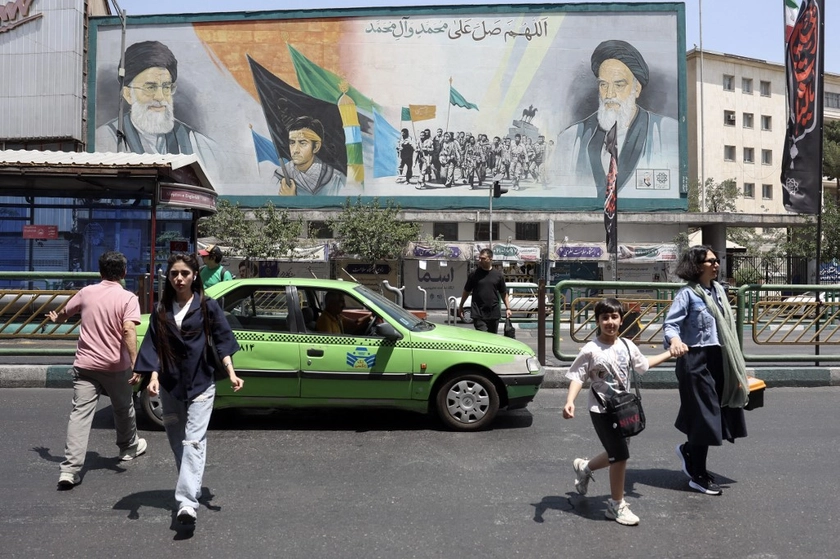
Trump’s Iran deadline also comes as his political supporters are split over whether the US should join Israel’s assault on Iran by bombing nuclear facilities buried deep underground.
The only way to destroy Iran’s primary, once-top-secret, deep underground uranium enrichment laboratory, the Fordow Fuel Enrichment Plant, using air power would be to send several US B-2 stealth bombers, each employing one 30,000 lbs (13,600 kg) GBU-57 massive ordnance penetrator (MOP) bunker-buster weapon, according to the Center for Strategic and International Studies (CSIS). An attack that could only be executed by the US Air Force.
On Thursday, Trump held his third Situation Room meeting in four days. Earlier, he said, “I may do it, I may not do it” when asked if he would take military action against Iran.
For Iran watchers in Washington, such as Jason Brodsky, policy director at United Against Nuclear Iran, a nonprofit that focuses on countering threats posed by the Islamic regime, Trump might be deliberately using suspense and strategic ambiguity in his decision-making process regarding a military strike on Iran, possibly to encourage negotiations.
Speaking to Kyiv Post, Brodsky said Trump’s approach to the Iran conflict, suggesting that the White House might be hoping for a coercive diplomatic outcome after a military strike, which would be unprecedented for the Islamic Republic.
“I think that the President is still holding out for the very slight possibility that the Iranians will agree to his terms as a part of a coercive diplomatic play after they’ve been directly hit militarily in an unprecedented way,” Brodsky said.
“I think that the scenes that we’re seeing in Tehran, it’s historic. This is nothing that the Islamic Republic has ever faced before,” he said.
The analyst also implied that Trump might be using misdirection to confuse Iran, steering the conversation to throw them off.
“There also might be some misdirection at play. You know, with the president, sometimes he’ll want to try to steer the conversation in a certain direction, to throw off the Iranians,” he concluded.
You can also highlight the text and press Ctrl + Enter