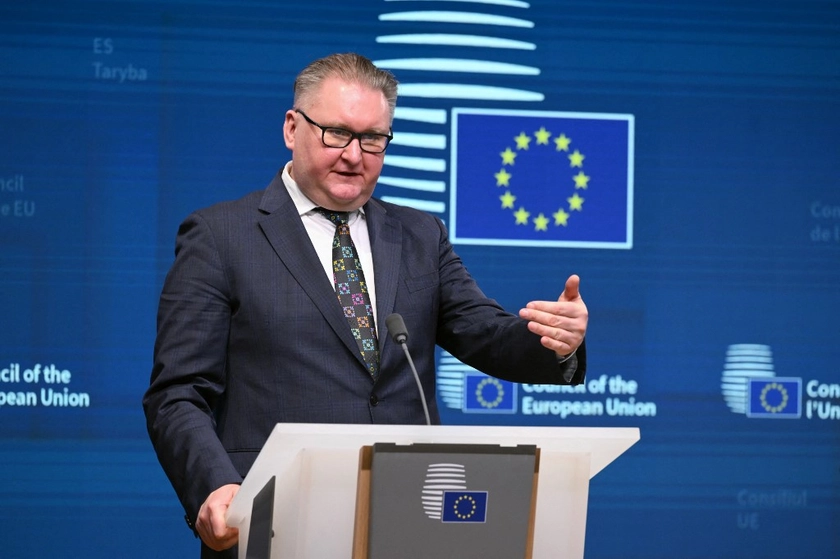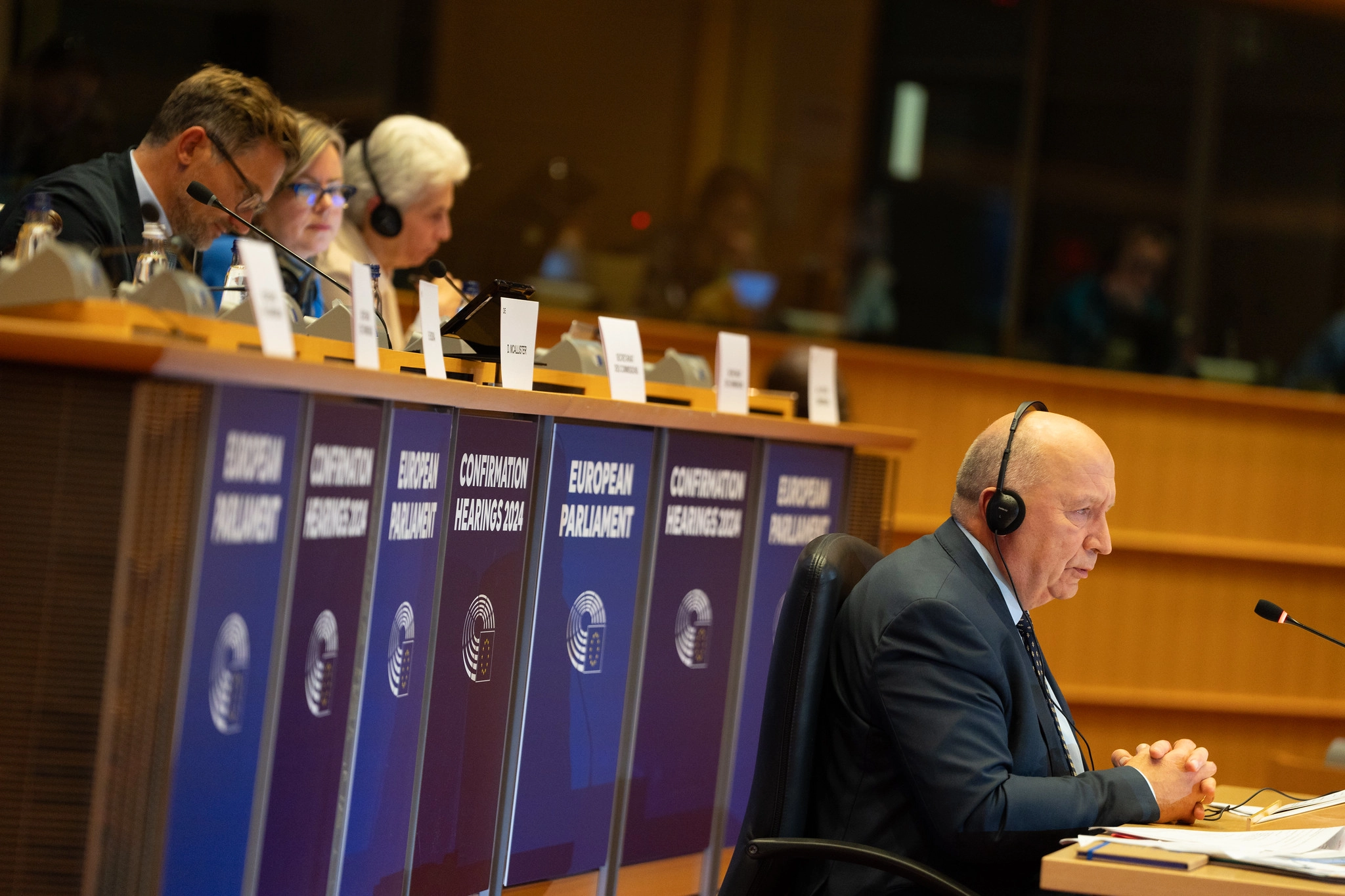
WASHINGTON DC – European Commissioner for Defense and Space Andrius Kubilius arrived in the US capital over the weekend for a visit that will last through July 22, aiming to address potential military shortfalls in Europe as the White House shifts its strategic focus to the Indo-Pacific region.
The landmark visit, his first trip to Washington as the EU’s top defense official, comes as the Trump administration is expected to announce a possible reduction in its military presence in Europe later this summer.
JOIN US ON TELEGRAM
Follow our coverage of the war on the @Kyivpost_official.
European security remains heavily reliant on the US, a reliance increasingly strained by Russia’s ongoing war in Ukraine.
Before heading to DC, Kubilius spent last week attending the Aspen Security Forum and visiting the US Space Force Space Operations Command in Colorado Springs.
As the architect of the EU’s initiatives to bolster its defense industrial base and capabilities through the “Re-Arm Europe Plan/Readiness 2030” plan, Kubilius is advocating for a more self-reliant European security framework.
His portfolio also includes strengthening military mobility, countering cyber and hybrid attacks, and overseeing Europe’s expansive space programs.
In Washington, Kubilius is scheduled to meet with representatives from the defense industry. He will deliver the keynote address at the second annual EU Defense Night on Monday, hosted by the EU Delegation in the US.
EU Investigates von der Leyen Over Zelensky Chat
The event will convene officials, industry executives, and policy analysts, with a “Spotlight on Ukraine” featuring specialists such as Rimantas Žylius of Palantir, Dr. Jennifer McArdle of Helsing, Inc., Hannah Thoburn of Anduril Industries, and Kateryna Mykhalko of Tech Force in UA.
Speaking at the Aspen Security Forum late last week, Kubilius underscored the Russian war against Ukraine as a “very clear message” that the threat from aggressive Russia extends beyond neighboring countries to all of Europe.
He cited intelligence reports indicating Russia’s preparations to “test Article 5” within three to five years, noting that Russia’s current ammunition production in three months matches NATO’s annual output.
Kubilius highlighted Europe’s growing understanding that it must assume greater responsibility for its security as the US increasingly focuses on potential threats from China in the Indo-Pacific.
While acknowledging ongoing tariff disputes with the US, he stressed the importance of political trust and credibility among allies. He also confirmed that while President Trump has urged the purchase of US-made Patriot missile systems, which he said are “very much needed” by Ukrainians, due to escalating Russian attacks, other NATO nations are also fostering Europe’s defense industry through EU-level programs.
The EU bloc’s defense chief announced a significant increase in European defense spending levels, projecting up to €130 billion collectively for the 2028-2035 budgetary period. But, national spending will constitute the majority of European defense outlays.
Kubilius suggested that Trump’s recent decision to supply Ukraine with more defensive weapons indicates a realization that direct diplomacy with Russian dictator Vladimir Putin yields no results.
“The only way to bring peace into Ukraine is to implement this formula: Peace through strength,” Kubilius asserted, calling for increased support for Ukraine.
He stated that current military aid, at approximately 0.1% of combined European and American GDP, leaves ample room for further contributions. He reiterated the European consensus that Putin has no genuine interest in peace, and that supporting Ukraine is crucial to avoid a detrimental outcome for the West.
Both Russian and Ukrainian militaries are “battle-tested” forces with advanced drone warfare capabilities, he said. He advocates the rapid integration of Ukrainian military forces and its industry into European networks.
Kubilius concluded by outlining a projection with a five-fold increase in the EU’s defense and space budget, rising from €26 billion ($30.2 billion) to approximately €131 billion ($152 billion) for the 2028-2034 period.
This investment goal is to develop new systems for intelligence data and strengthen European space initiatives, such as Galileo and Copernicus.
You can also highlight the text and press Ctrl + Enter

Ukrainian Storm Shadow Hit Iskander-Linked Electronics Plant, Say Russian Sources