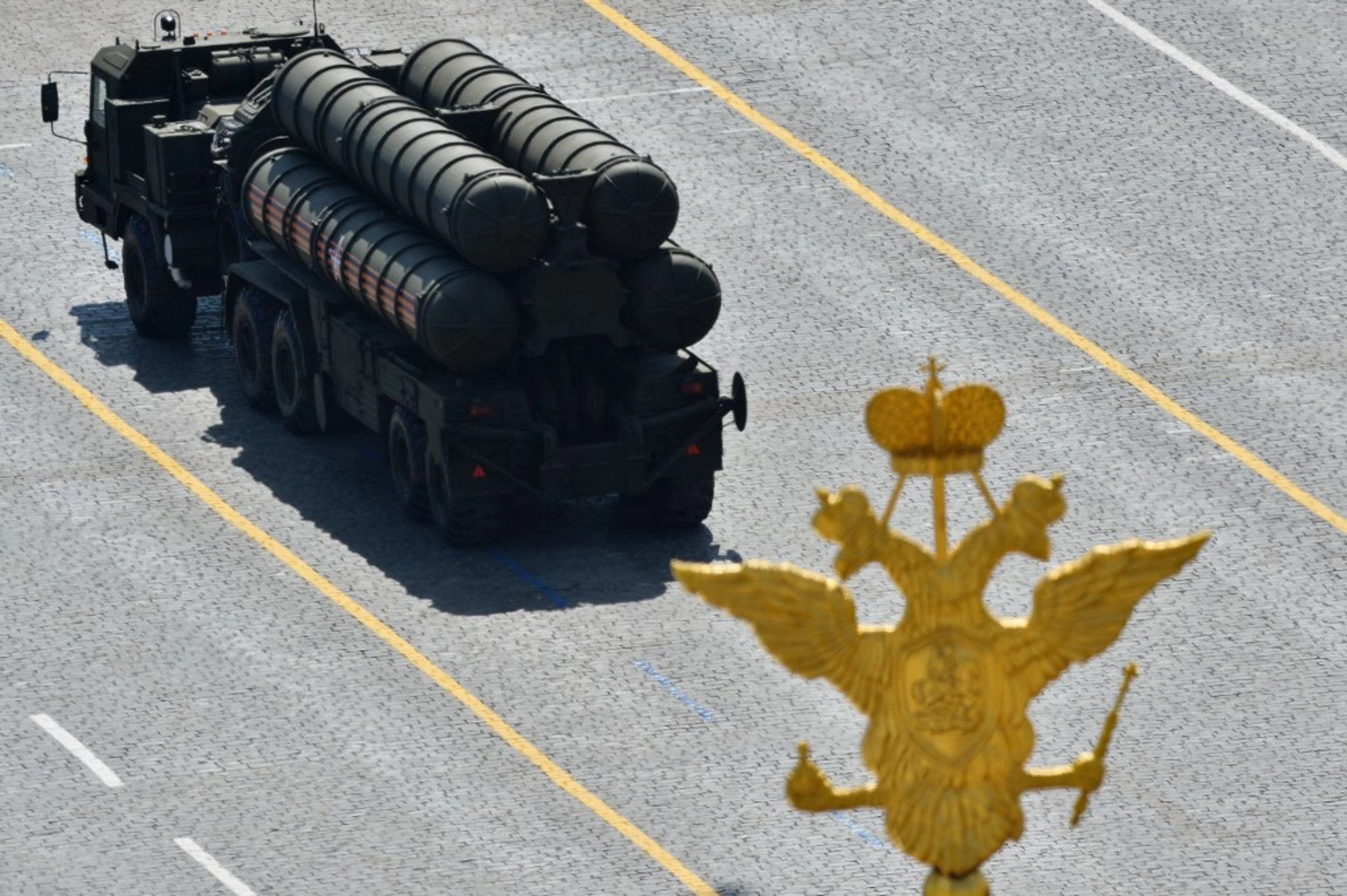
Near Isfahan, a key city about 440 kilometers (273 miles) south of Tehran, Iran reportedly conducted its first live test of the Russian-made S-400 Triumf air defense system on Saturday, July 26, marking a major step in its military capabilities.
The S-400 is one of the world’s most advanced long-range surface-to-air missile systems. It can detect and destroy enemy aircraft and missiles from hundreds of kilometers away. This test is seen as a clear warning to Israel and the United States that Iran will defend its airspace.
JOIN US ON TELEGRAM
Follow our coverage of the war on the @Kyivpost_official.
According to Army Recognition, the test involved a full S-400 battery. This included the 91N6E “Big Bird” acquisition radar, the 92N6E “Grave Stone” engagement radar, command and control units, and multiple 5P85TE2 missile launchers.
Observers had noticed increased radar activity and transporter movements in the area in recent weeks, suggesting the test was part of a larger military exercise.
Iran’s government has not officially confirmed the test, but regional defense experts say this marks the first time the system has been activated in the field inside Iran.
Reports of Iran’s acquisition of the S-400 system first appeared in August 2024 when a Russian Il-76 military transport plane was spotted in Tehran, believed to be delivering key system components.
While the Islamic Revolutionary Guard Corps previously downplayed the need for the S-400, trusting locally made systems like the Bavar-373 and Khordad 15, the recent test indicates Iran is now deploying the Russian system operationally.
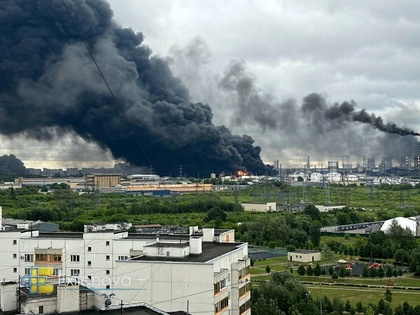
Moscow’s Biggest Oil Refinery Near Kremlin Hit Again as Drone Raid Sparks Fires Across Russian Capital
The S-400, developed by Russia’s Almaz-Antey, is among the world’s most advanced long-range surface-to-air missile systems available for export. It can target aircraft, cruise missiles, drones, and ballistic missiles at ranges up to 400 kilometers (249 miles) and altitudes up to 30 kilometers (19 miles).
Equipped with advanced phased array radars, the S-400 can track up to 80 targets simultaneously and engage up to 36 at once, using missile variants like the 48N6E3 and 40N6.
Iran-Russia Growing Military Ties
The military collaboration between Russia and Iran during the war in Ukraine has significantly deepened, with Iran supplying Russia with a substantial quantity of weapons, drones, and munitions that have altered the conflict’s dynamics.
Since mid-2022, Iran has provided Russia with thousands of drones, notably the Shahed series, which Russia has used extensively in Ukraine.
These drones, including the Shahed-136 and Shahed-131 models, have been deployed as loitering munitions targeting Ukrainian military and critical infrastructure, compensating for Russia’s dwindling stock of cruise missiles reliant on imported components.
In addition to drones, Iran has escalated its support by supplying ballistic missiles to Russia. Reports confirm deliveries of short-range ballistic missile systems such as the Fath-360 and Fateh-110, marking a serious upgrade in the lethality of Iranian assistance.
US military officials have testified that Iran donated over 400 short-range ballistic missiles to Russia, and intelligence sources indicate that Russian personnel have trained in Iran to operate these missile systems.
This arms transfer is part of a broader strategic defense cooperation pact signed by the two countries, which includes joint military exercises, co-production of military equipment, and increased intelligence sharing.
Russian forces have also begun domestic production of Iranian-designed drones, such as the Shahed-type, at facilities like the Alabuga Special Economic Zone, reflecting a high level of technological and operational integration between the two militaries.
You can also highlight the text and press Ctrl + Enter

Iran Reveals Details of Upcoming Peace Deal with US
Iran Rejects Trump’s Sunday Peace Treaty Timeline