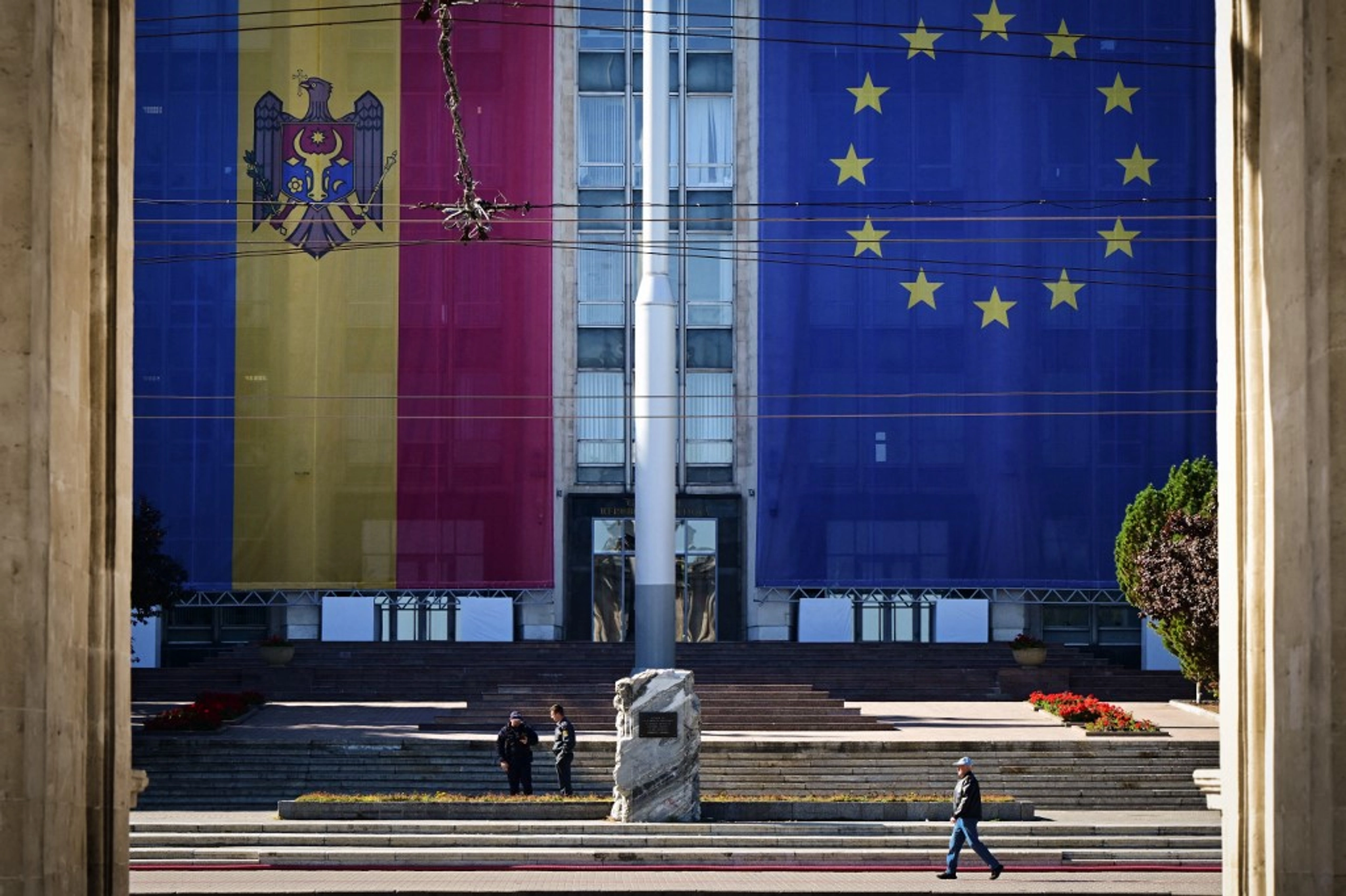
“We, in the villages, are left with our mud and our struggles,” said 75-year-old Margareta Pasla from northern Moldova. She gets by on a pension of €130 a month, just enough to cover heating and electricity if she still takes odd jobs in neighboring villages.
Her phrase quoted in Radio Free Europe has become a shorthand for how life feels for many across Moldova on the eve of the vote: tired, precarious and stripped of illusions that politics will make much difference.
JOIN US ON TELEGRAM
Follow our coverage of the war on the @Kyivpost_official.
Official data shows that in 2024 a third of Moldovans lived below the poverty line, up from a quarter before Russia’s full-scale invasion of Ukraine. Inflation surged above 30% at its peak, and although it has eased, wages and pensions never caught up.
A phrase often heard across the country is that Moldovans are “tired of being tired.”
In a country held together by low-paid teachers, overstretched doctors, subsistence farmers, and the money wired home from abroad, geopolitics, though important, often feels abstract.
For all the talk abroad about Russian hybrid attacks and EU accession, Sunday’s vote in one of Europe’s poorest countries is more about whether people can heat their homes, sell their crops and keep their families afloat.
Work, wages and services
Moldova is the poorest country in Europe next to Ukraine, and that shapes everything else. After the shocks of the pandemic and the war next door, the economy has barely moved. GDP collapsed by almost 6% in 2022, recovered only 0.7% in 2023, and last year grew by just 0.1%, basically stagnating.
Serbian President Aleksandar Vucic Announces Imminent Resignation and Early Elections
Exports have been falling for two years in a row, while household consumption is squeezed by years of high prices. Inflation peaked at 35% in late 2022, the highest in Europe, before easing to about 7% by mid-2025. Real wages have not caught up.
The average monthly salary today is about 12,200 lei, roughly €600 before tax. But that figure hides the reality. In Chișinău’s IT sector, you can make more, yet in small towns and villages, where most Moldovans live, wages can be half that. One in five households admit their earnings do not even cover basics.
Teachers average less than €500 a month, while a junior doctor in a provincial hospital starts on about €250. For educated professionals, the decision to emigrate is often made long before they graduate.
Pensions tell the same story. The minimum pension now stands at around 3,300 lei, about €165. The pro-EU PAS government boasts that pensions have risen faster than inflation since 2021, but most of the hikes were financed by one-off grants and loans.
The diaspora nation
Moldova is a country of 2.4 million, with a further million of its citizens now living abroad. Economists calculate that remittances still account for around 15% of GDP, a huge share by European standards, and in the 2000s the figure was double that.
Money wired home pays for food, medicine, school fees, and keeps villages alive. Without it, many households would collapse.
Some Moldovans joke that the diaspora is the country’s largest political party. It has more members than any bloc in parliament and shows up in force on election day. In 2021, queues stretched for hours outside polling stations in Berlin, Paris, and Milan, with expatriates overwhelmingly backing pro-European candidates.
In the 2024 presidential election, an unprecedented 327,000 citizens voted from abroad, and 82% of them backed Maia Sandu’s re-election.
Inside Moldova she actually lost, with her Russia-leaning opponent taking 51%. But once the ballots from Berlin, Milan, Paris, and beyond were counted, Sandu finished on 55.4% overall. The diaspora decided the presidency.
But the political power of the diaspora comes with a hollowing effect at home. Villages are stripped of their working-age population, leaving grandparents to raise children. Local schools and clinics lose both staff and students.
Identity and language
Language in Moldova is both simple and complicated. The constitution recognises Romanian as the official language, but many still call it Moldovan. Linguistically they are the same, yet the label carries political weight.
To say you speak Romanian often signals that you see Moldova’s future tied to Europe and to cultural kinship with Romania. To say you speak Moldovan can suggest a more separate identity, one that parties with closer ties to Moscow have long cultivated.
The country’s patchwork makes identity politics unavoidable. Gagauzia, a Turkic-speaking, Orthodox Christian minority, an autonomous region in the south, is Russian-leaning and votes overwhelmingly for pro-Kremlin blocs.
Give us this day our daily bread
Religion adds another fault line. Two rival Orthodox churches compete for followers: the Moldovan Orthodox Church under the Moscow Patriarchate, and the Bessarabian Orthodox Church aligned with Bucharest, which takes its name from Bessarabia, the historical region between the Prut and Dniester rivers that now forms most of modern Moldova.
A sermon can matter as much as a campaign ad, because the churches are not just religious authorities but also political actors shaping views on family, tradition, and Europe.
This is why identity matters so much in elections. About 90% of Moldovans identify as Orthodox, and polls show the Church is the most trusted institution in the country, with nearly 60%, far higher than parliament or the presidency.
Actual attendance is moderate, mostly at Easter, Christmas, or family events, but the influence is cultural and moral rather than weekly ritual.
Priests in villages remain respected authorities. Older Moldovans in particular still fill the churches, and nearly 70% of those over 60 say they trust the clergy.
The Moscow-aligned Moldovan Orthodox Church has echoed Kremlin narratives about defending Christian identity against a secular Europe. The Romanian-aligned Bessarabian Church frames European integration not as something new, but as a restoration of Moldova’s pre-Soviet identity, a return to the cultural and political space it once shared with Romania and Europe.
Tradition and culture
Politics and identity can divide Moldovans, but tradition still binds them together. Shared rituals, foods, and festivals cut across party lines and regional loyalties.
The country has the world’s highest vineyard area per capita, and wine is not just an export but a proud marker of national and regional identity. Village wine festivals are the highlight of the year and politicians never miss the chance to be photographed among the vines.
Cuisine follows the same pattern of rootedness. The staple is mamaliga, a cornmeal dish served with cheese, sour cream, or stewed meat, and it sits alongside fruit and pickled vegetables.
Folklore fills the calendar. Each March people exchange tiny red-and-white braided charms known as Mărțișor, pinned to lapels as tokens of renewal. Rural festivals keep alive songs and dances that date back generations, and they carry political messages too. They affirm that Moldova is not just a space between Russia and Romania but a culture in its own right.
Exhaustion and apathy
If there is one phrase that sums up the national mood, it is the complaint that people are “tired of being tired.” After years of crisis – the pandemic, energy shocks, runaway inflation, the war next door – Moldovans no longer expect politics to change their lives.
Polls show that 45% of voters say they do not trust any politician, and that number has been climbing steadily.
This fatigue shows up in the way people answer survey questions. Since 2020, large majorities have said the country is on the “wrong track.” One 2025 barometer put the number of people who believe the country was on the wrong track at 67%.
It also shows up at the ballot box. Turnout has been slipping for years. The 2021 parliamentary election brought just over 52% participation, helped by a strong diaspora vote. By the 2023 local elections, turnout dropped below 40% in many areas.
The young…
Nowhere is Moldova’s split clearer than between young and old. The country’s youth have grown up with European wages just across the border and with social media that connects them to Berlin or Milan as much as it does to Chișinău.
Many of them are already abroad, working in cafés, hospitals, or construction sites, and they send home not just money but different expectations about how politics should work.
In surveys, young Moldovans lean heavily toward Europe, seeing integration as a chance for stability and opportunity. Yet at home, many in this age group do not show up at the polls. Turnout among 18–29 year-olds often hovers around 30%.
…and the old
Older Moldovans live in a different information world. In villages, Russian television still dominates, shaping attitudes toward Moscow, the war in Ukraine, and the West. Sunday sermons in Orthodox churches reinforce traditional values, warning against what priests describe as the dangers of European liberalism.
Polling consistently shows the over-60s skewing pro-Russian, often preferring leaders who promise cheaper gas and the familiar language of stability. Crucially, more than 60% of people over fifty typically vote, making their preferences decisive in election after election.
For many older, pro-Russian voters, the West is not just distant but dangerous, seen as a threat to Moldovan identity through talk of LGBT rights, gender politics, and a liberalism they believe would erode tradition.
Election as reckoning
Moldovans go to the polls this Sunday in what President Maia Sandu has called “the most consequential election” in the country’s history. The phrase has become a cliché in European politics, but here it rings true.
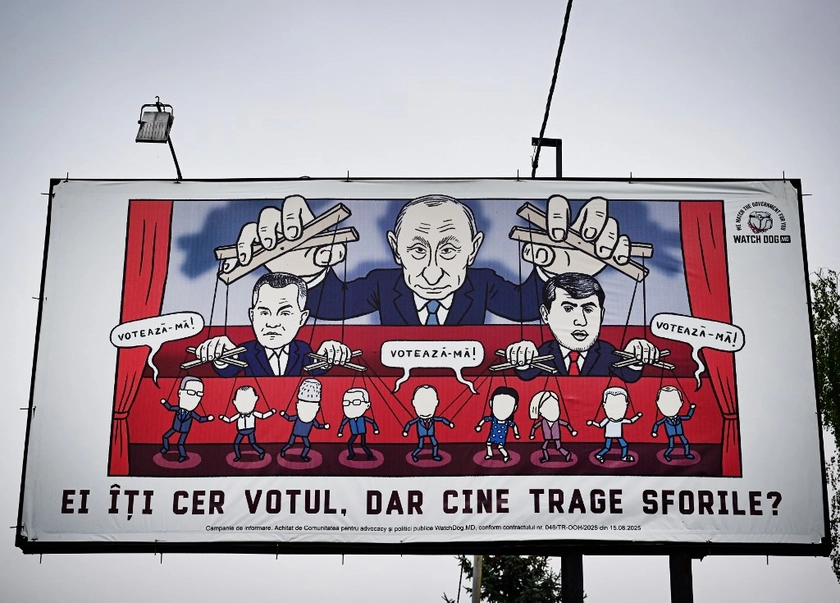
The campaign has been bitter. Igor Dodon, the former president and leader of the pro-Russian Socialists, brands Sandu’s ruling PAS party a “criminal regime,” accusing it of selling out the country to Brussels. PAS counters with promises of EU funding, infrastructure, and stability.
Polls show the contest is close, with undecided and diaspora voters large enough to swing the result.
Suspended between hope and fatigue, between diaspora optimism and village despair, this election for many like Margareta Pasla in Cuselauca, a village in northeastern Moldova is a test of whether Moldova can begin to escape the mud and struggles of daily survival, or whether it remains stuck in the familiar pattern of low wages, emigration, and political disappointment.
You can also highlight the text and press Ctrl + Enter

Russia Hit by 660-Drone Overnight Barrage Targeting Moscow, Crimea and Key Military Sites