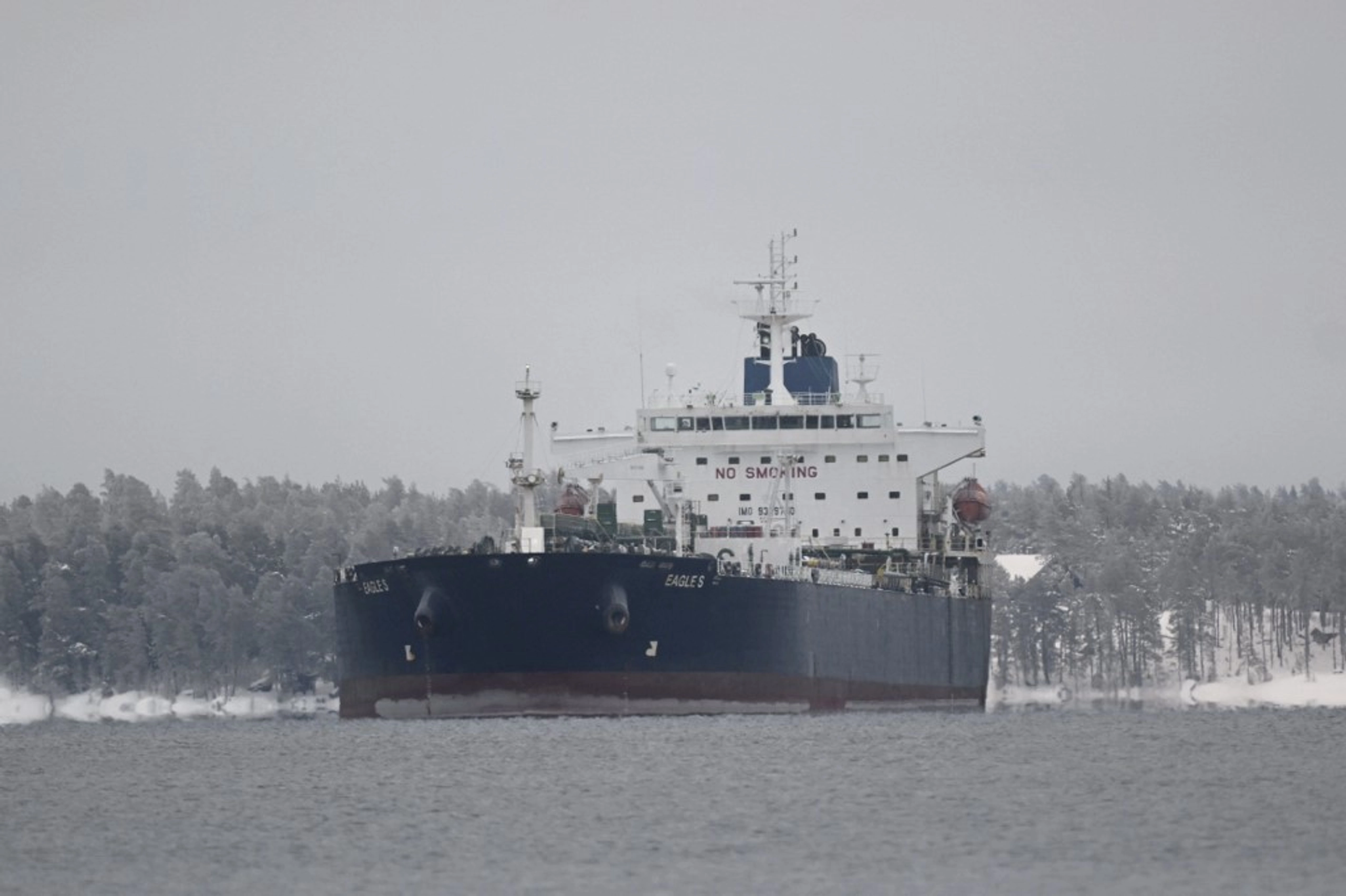
A Finnish court has ruled a lack of jurisdiction over the prosecution of Eagle S, the oil tanker accused of cutting undersea cables linking Estonia and Finland in the Baltic Sea in late 2024.
As such, the charges brought against the sailors were not considered, and the authorities are ordered to pay the €195,000 ($228,876) legal fees for the accused sailors.
JOIN US ON TELEGRAM
Follow our coverage of the war on the @Kyivpost_official.
According to Finnish outlet Yle, the Helsinki District Court ruled that despite the investigations being held in Finnish territorial waters, the alleged crime took place in Finland’s exclusive economic zone, which raised the issue of jurisdiction surrounding maritime activities.
Yle noted that the legal team representing the Eagle-S crews made similar arguments.
It is also irrelevant whether the ship was forced into Finnish waters – as the defendants claimed – or entered it voluntarily, the court said.
Prior to the decision, prosecutors sought a minimum prison sentence of 2.5 years for Eagle S captain Davit Vadatchkor and crew members Robert Egizaryan and Santosh Kumar Chaurasia for their “aggravated vandalism and aggravated interference with telecommunications” when they damaged the cable by dragging the vessel’s anchor across the sea floor.
The investigation suggests that the anchor fell due to poor maintenance of the vessel, with prosecutors arguing that the crew and captain should be held responsible for their negligence. However, the case does not mention Moscow, despite initial suspicions that it was an act of Russian sabotage.

Russians’ Gloom Over Economy and Living Standards Reaches 20-year High
The Eagle S incident
On Dec. 25, 2024, the oil tanker Eagle S, after departing from a Russian port, reportedly dragged its anchor across the seabed in the Gulf of Finland, cutting several undersea cables – including the Estlink-2 power cable between Finland and Estonia and multiple telecommunications cables.
Finnish authorities seized the vessel three days later and barred it from sailing, citing shortcomings in the vessel’s safety management system.
Authorities later found trails extending tens of kilometers on the seabed along the ship’s route, suggesting the vessel was hauling an anchor along the seabed. In January, Finnish authorities detained two Georgian nationals – including the captain – on board the ship.
The incident has led to condemnation from Europe, with some accusing Moscow of deliberate sabotage, which has ultimately prompted European nations to step up maritime patrols and impose sanctions on Russia’s shadow fleet of vessels.
You can also highlight the text and press Ctrl + Enter

Russia Hit by 660-Drone Overnight Barrage Targeting Moscow, Crimea and Key Military Sites