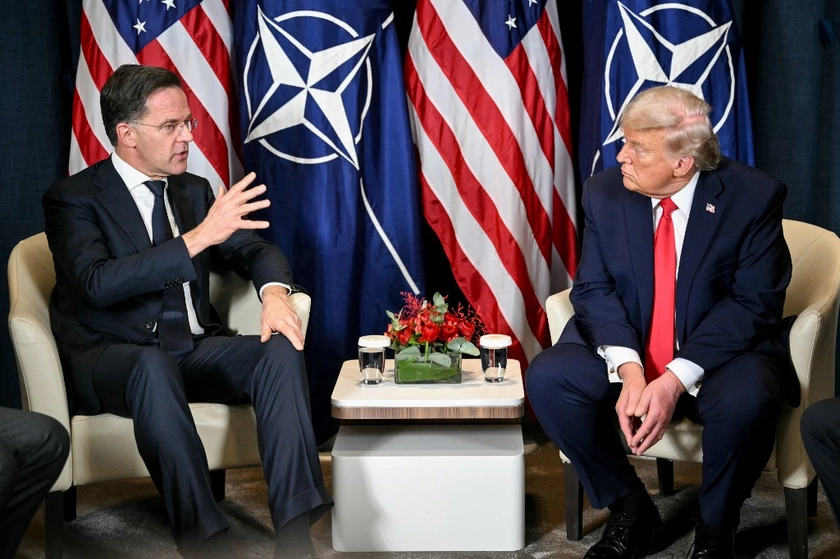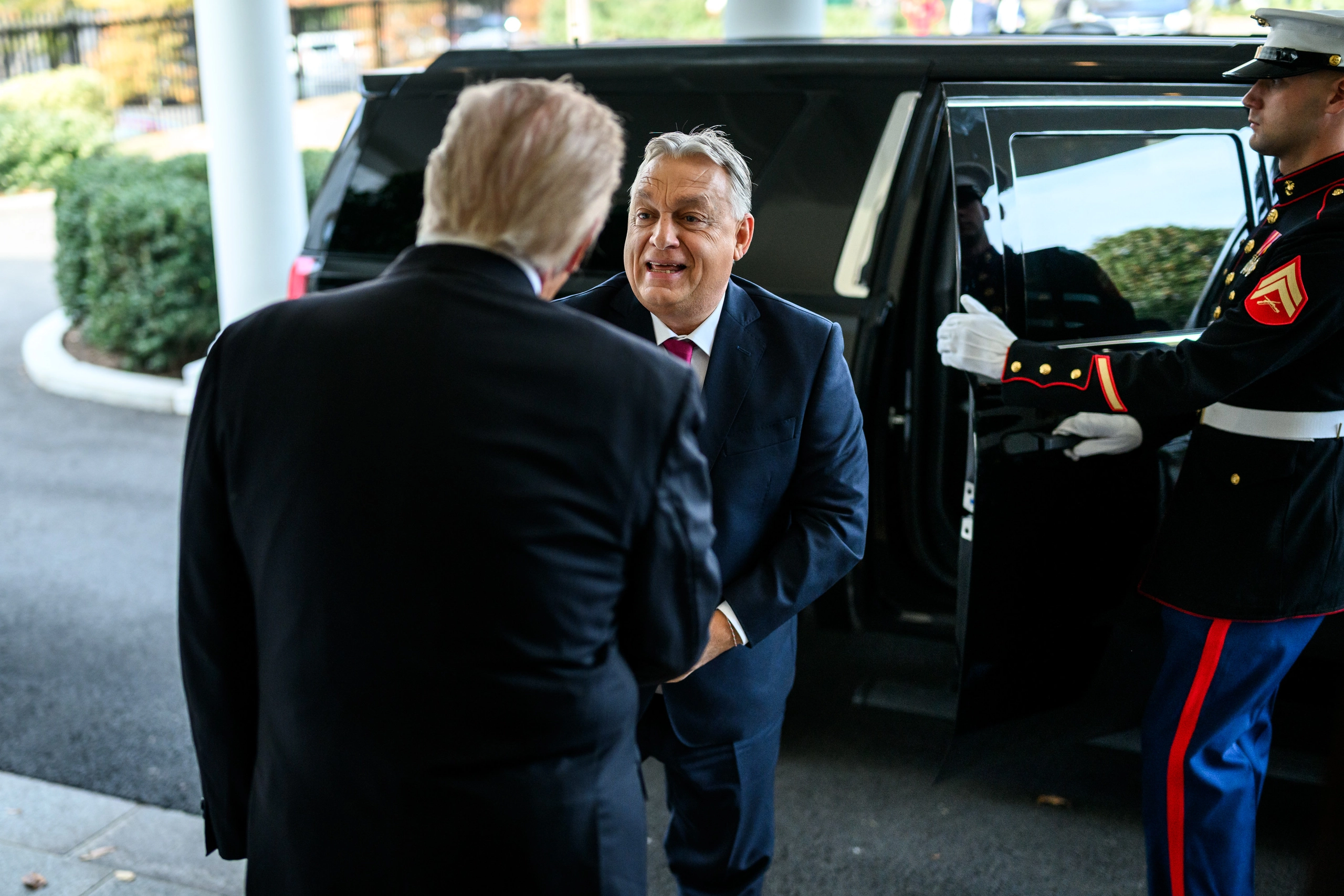
WASHINGTON, DC – Hungarian Prime Minister Viktor Orbán declared Friday night that his country had secured a sweeping exemption from US sanctions targeting Russian energy – a crucial political breakthrough delivered directly from the White House after a private meeting with US President Donald Trump.
The exemption, confirmed by a senior US official to Kyiv Post on Friday night on condition of anonymity, will last for one year. This marks a stark demonstration of the enduring personal and ideological alliance between the two nationalist leaders – and a major blow to the US administration’s stated goal of crippling Russian revenue streams funding the war in Ukraine.
JOIN US ON TELEGRAM
Follow our coverage of the war on the @Kyivpost_official.
Orbán, who has long been Russian President Vladimir Putin’s most reliable advocate within the European Union, beamed as he addressed Hungarian media after meeting with Trump.
His landlocked nation relies heavily on Russian oil – a “physical reality,” as he put it – that served as the centerpiece of his appeal to his longtime ally in Washington.
“We asked the [US] president to lift the sanctions,” Orbán said, asserting that Hungary is “in a significantly different situation than other European countries.”
He triumphantly announced that Hungary had “received full exemption from sanctions” for Russian oil and gas delivered via the critical Druzhba and TurkStream pipelines.
Zelensky Says US Signals Support on Missile Licenses, Warns Belarus Over Border Equipment
Orbán later sealed the moment with a boastful tweet: “Decision reached: President Trump has guaranteed full sanction exemptions for the TurkStream and Friendship pipelines, allowing Hungary to continue providing families with the lowest energy prices in Europe. Thank you, Mr. President!”
Art of the deal – and art of the loophole
The carve-out comes just weeks after the Trump administration levied new sanctions against major Russian energy firms, complicating Hungary’s supply lines and forcing Orbán’s hand.
For the Hungarian leader, facing an upcoming domestic election, the exemption is a much-needed economic and political lifeline.
For President Trump, who earlier in the day acknowledged the geographical realities of Hungary’s reliance on Russia, the decision underscores a willingness to prioritize political and personal alliances over a cohesive sanctions strategy.
“It’s very difficult for him to get the oil and gas from other areas,” Trump told reporters, echoing Orbán’s argument. “It’s a big country, but they don’t have the ports. And so they have a difficult problem,” he added.
But the optics of granting a special dispensation to a NATO member that continues to funnel billions into the Kremlin’s coffers proved too much for Washington’s defense hawks to stomach.
Key Democrat fires back
The reaction from Capitol Hill was swift and pointed. Sen. Jeanne Shaheen (D-NH), ranking member of the Senate Foreign Relations Committee, wasted no time issuing a scathing statement.
“President Trump is right to say that Europe needs to reduce its reliance on Russian energy exports that fuel Putin’s war machine,” Shaheen began, before pivoting to a direct challenge to the president.
“I urge President Trump not to give Prime Minister Orbán a pass as Hungary actually increases its dependence on Russian energy and has provided nearly seven billion dollars to the Kremlin’s coffers since the beginning of this war,” she declared.
Shaheen’s condemnation was bolstered by a recent bipartisan push – a resolution she and Sen. Thom Tillis (R-NC) led earlier this week, co-sponsored by six Republicans – explicitly urging Hungary to end its dependence on Russian energy.
“If we want to get Putin to the negotiating table, we need to put pressure on his key sources of revenue,” Shaheen argued, pushing Trump to hold allies to the same standard applied to Russian energy firms.
The broader blow to Ukraine policy
Beyond the financial implications for Russia, the White House meeting represented a lost opportunity for Western solidarity, according to analysts.
Mercedes Sapuppo, a fellow with the Atlantic Council’s Eurasia Center, told Kyiv Post the interaction only served to bolster Orbán’s controversial positions on the war.
“Today’s presser offered no serious movement on Ukraine and gave Prime Minister Orbán an opportunity to legitimize his position that Ukraine cannot win this war and that Ukraine should make a compromise with Russia,” Sapuppo noted, adding that any such compromise would be “nowhere near free and fair.”
Sapuppo continued, saying that while President Trump “did hold firm in perceiving President Putin as the holdout in seeking peace,” he ultimately “fell short of taking the opportunity to push Hungary to back off from blocking stronger European actions against Russia.”
“This missed opportunity will likely see Hungary continue its friendly positioning vis-à-vis Russia,” she concluded.
Beyond sanctions: “Golden age” of cooperation
Despite the political controversy surrounding the Russian oil exemption, the State Department issued a fact sheet celebrating a robust and deepening bilateral relationship, hailing a “New US-Hungary Energy Partnership.”
The partnership, the fact sheet said, is “built on mutual respect for sovereign decision-making” and featured several new agreements aimed at showcasing Hungary’s gradual shift toward Western energy sources – even as it keeps Russian supplies flowing.
Hungary unveiled a $114 million deal with US-based Westinghouse Electric Company to supply nuclear fuel for the country’s Paks I nuclear power plant.
The facility, which had long depended on Russian fuel, is expected to begin receiving American shipments next year – a move the administration framed as a sign of diversification rather than rupture with Moscow.
In addition, Washington and Budapest signed a Memorandum of Understanding on civil nuclear cooperation, committing to expand collaboration on next-generation energy technologies.
Hungarian officials signaled plans to invest as much as $20 billion in small modular reactor (SMR) construction, an emerging nuclear technology that US companies have been eager to export across Central Europe.
The two sides also announced a major step into the liquefied natural gas market. Hungary agreed to purchase approximately $600 million worth of US LNG, with the first deliveries expected within the next year. American officials described the deal as a tangible sign of “energy diversification,” even as Hungary’s pipelines from Russia remain wide open.
The meeting also touched on broader security and economic ties, including the full restoration of Hungary’s participation in the Visa Waiver Program, an intent to purchase $700 million worth of US defense articles, and the signing of the Artemis Accords for civil and commercial space cooperation.
The message from the White House is clear: under Trump, the US-Hungary alliance is entering what Orbán himself has called a “golden age,” marked by a pragmatic, transactional approach that separates geopolitical pressure on Russia from the energy needs of a key ideological ally.
The one-year exemption, however, ensures that for now, the flow of discounted Russian oil and gas will continue to fund the Kremlin’s operations – a stark contradiction in the West’s united front against Putin’s aggression.
You can also highlight the text and press Ctrl + Enter

Moscow Refinery, Krasnodar Oil Depot Burning in Massive Ukrainian Drone Raid