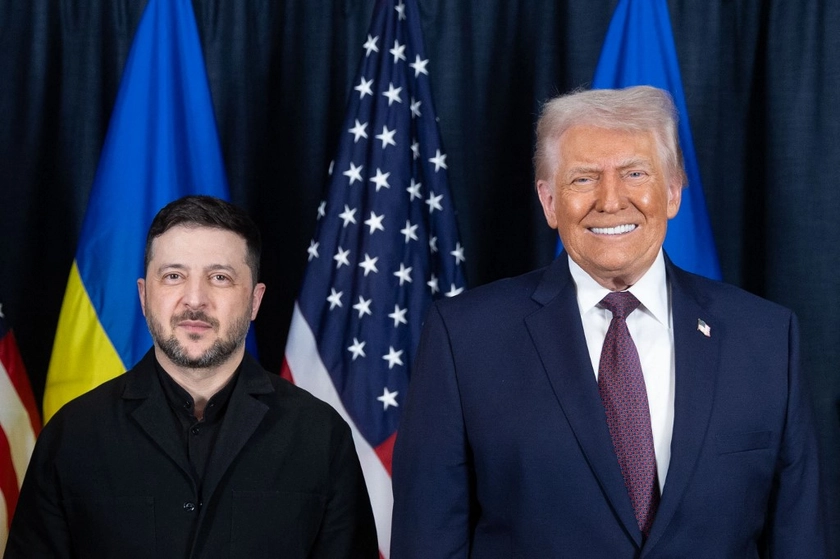
Kyiv Post’s Washington correspondent has set the alarm bell ringing by reporting that the Trump administration is pushing to strip language from a UN resolution that affirms Ukraine’s territorial integrity and condemns Russia’s occupation of Crimea and other regions.
Let’s recall that in February 2025, the US joined Russia, Belarus, and North Korea in opposing a UN resolution rebuking Moscow for starting the war in Ukraine. America’s closest allies – from the United Kingdom to Germany, from Japan to Australia – voted overwhelmingly in favor.
JOIN US ON TELEGRAM
Follow our coverage of the war on the @Kyivpost_official.
The US stood with the Kremlin.
This wasn’t an isolated incident. Donald Trump has systematically dismantled the Western response to Russian aggression. He’s pressured Volodymyr Zelensky to accept a peace plan that hands Russia control of roughly 20 percent of Ukrainian territory – Crimea, large chunks of the Donbas, all of it. The plan freezes the conflict where it stands now and might also entail lifting every US sanction on Russia and slamming the door on NATO membership for Ukraine.
European officials from the UK, Lithuania, and Germany have publicly torn into the approach. One senior diplomat put it bluntly: it “gives Putin everything he wants.”
Call it what it is: America abandoning the rules-based international order it spent eight decades building, defending, and profiting from.
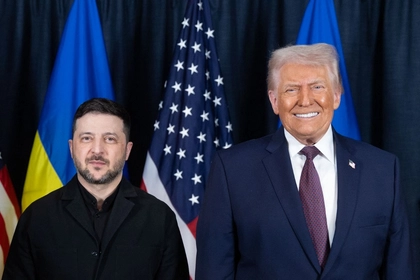
Trump to Join Zelensky for G7 Working Session on Ukraine Peace Conditions
The crisis we face
That system now faces its gravest crisis since its inception. The threat doesn’t come from America’s adversaries. It comes from those who currently lead it.
When Russia invaded Ukraine in February 2022, Vladimir Putin explicitly rejected the post-Cold War European security architecture, denied Ukraine’s right to exist as a sovereign nation, and tried to redraw international borders through military force. The international response was textbook: economic sanctions isolated Russia, military aid flowed to Ukraine, diplomatic efforts rallied dozens of nations to Ukraine’s defense.
A world governed by force? That favors those willing to use it without restraint. As the rules-based order weakens, autocracy advances.
Trump’s actions threaten to unravel all of this. By forcing Ukraine to cede territory for peace, he’s telling every authoritarian leader that if you can seize territory and hold it long enough, if you can make the war painful enough for Western democracies, eventually they’ll tire and force your victim to accept your conquest. Conquest, if you can pull it off and wait it out, will be recognized and rewarded.
Why the system matters
The rules-based international order has prevented great power war for nearly 80 years. Unprecedented in human history. For centuries, great power wars erupted regularly, culminating in two world wars that killed over 100 million people. The international order built after 1945 ended this pattern through rules, institutions, and alliances that made aggression costly and cooperation beneficial.
This system is also fundamentally a democratic project, not just a strategic arrangement. Instead of arbitrary power, we get agreed rules. International institutions create accountability. Consensus-building replaces diktat. These democratic principles, scaled up to international relations.
Autocracies understand this perfectly, which is why Putin, Xi, and other authoritarians work relentlessly to undermine international institutions and norms. A world governed by rules constrains their power.
A world governed by force? That favors those willing to use it without restraint. As the rules-based order weakens, autocracy advances.
Ukraine crystallizes this reality. Here’s a democracy fighting for its right to exist, to choose its own alliances, to determine its own future. Russia’s invasion isn’t just territorial aggression – it’s an assault on the principle that nations have the right to self-determination. Incidentally, that was a principle promoted as far back as 1918 by a previous US president, Woodrow Wilson, in his famous “Fourteen Points” as the basis for peace negotiations at the end of World War I.
When Trump proposes forcing Ukraine to surrender territory and sovereignty, he’s not just abandoning an ally. He’s abandoning the democratic principle that peoples, not autocrats, decide their own fate. The choice is stark: defend the rules-based order and democratic self-determination together or watch both crumble.
The dangerous logic of appeasement
Some will argue that defending Ukraine risks escalation with Russia. Nuclear war, even. This argument sounds prudent. It’s actually far more dangerous.
It assumes that appeasing aggression reduces risk. History teaches the opposite. Putin didn’t stop after Georgia in 2008. He didn’t stop after Crimea in 2014. He won’t stop if he’s allowed to keep his gains in Ukraine. He’ll be emboldened. Other authoritarian leaders will learn that nuclear threats can paralyze Western democracies into accepting conquest.
Others will argue that the US can no longer afford to be the world’s policeman. False choice. The cost of supporting Ukraine is a tiny fraction of the American defense budget, and most of that money gets spent in the US. The cost of allowing the rules-based order to collapse? Far higher. A more dangerous world, requiring higher defense spending and ultimately a greater risk of being drawn into direct conflicts.
Europe must stand firm
America’s European partners cannot remain silent while the US abandons the principles that have secured European peace for 80 years. European leaders must speak out forcefully and publicly against any peace plan that rewards aggression and violates international law.
This isn’t about being anti-American. It’s about defending the rules-based order and the democratic values it represents. If Putin succeeds in Ukraine, his next targets would likely be NATO members. The Baltic states, Poland, and other Eastern European nations understand this viscerally. They know that appeasing Putin in Ukraine makes them more vulnerable, not less.
The democratic world cannot simply watch America dismantle the system and hope for the best.
European voices can influence American public opinion. There needs to be a unified position of all democratic countries, articulated clearly and repeatedly, and followed up by concrete actions. The democratic world cannot simply watch America dismantle the system and hope for the best.
What hangs in the balance
If Trump succeeds in forcing Ukraine to accept territorial losses, the consequences will cascade. China will move more aggressively in the Indo-Pacific, confident that American security guarantees are worthless. North Korea will be emboldened in its threats against South Korea and Japan. Iran will pursue regional hegemony with renewed vigor. Authoritarian powers everywhere will understand that the window for territorial expansion has opened.
American allies will draw their own conclusions. If the US won’t defend Ukraine’s territorial integrity, why would it defend the Baltic states, Poland, Taiwan, or South Korea? Some will seek to develop their own nuclear weapons. Others will accommodate rising authoritarian powers, concluding that American protection cannot be relied upon.
Trump’s position on Ukraine represents a choice: does America defend this system, or let it die? Does this country stand by the principle that borders cannot be changed by force, or accept that conquest will be rewarded?
Most dangerously, the world will return to an era of great power competition unconstrained by rules or institutions. Regional conflicts will proliferate. Arms races will accelerate. The risk of miscalculation and escalation will increase dramatically. And eventually, inevitably, the great powers will clash directly. The consequences could dwarf even the world wars of the last century.
Trump’s position on Ukraine represents a choice: does America defend this system, or let it die? Does this country stand by the principle that borders cannot be changed by force, or accept that conquest will be rewarded?
Does it abandon principle for expedience, sacrifice long-term security for short-term relief, and signal to the world that America is no longer willing to defend the international order it created?
There’s still time to choose differently. Ukraine’s territorial integrity can still be defended. The rules-based international order can still be upheld. But the window is closing. America built this system. America led it. America benefited from it. Now America must defend it.
Also, remember a previous lesson from history. That having inspired the creation of a rules-based international order at the end of World War I, America’s withdrawal in 1920 from involvement in European affairs and refusal to join the newly created precursor to the UN – the League of Nations – undermined that pioneering effort to defend democracy and security.
The views expressed in this opinion article are the author’s and not necessarily those of Kyiv Post.
You can also highlight the text and press Ctrl + Enter