The International Monetary Fund (IMF) and the Ukrainian authorities have reached a staff-level agreement on a new 48-month Extended Fund Facility (EFF) worth about $8.2 billion. The long-awaited step is announced as Kyiv negotiates fresh macro-financial support for the next two years while Russia’s full-scale war continues with no sign of ending.
The staff-level agreement will go to the IMF Executive Board for approval “upon completion of the prior actions and subject to adequate financing assurances from donors”, the IMF official statement wrote, not leaving the details of which prior action it will be.
JOIN US ON TELEGRAM
Follow our coverage of the war on the @Kyivpost_official.
The Fund wrote that Ukraine faces a total financing gap of around $136.5 billion for 2026–29 in the baseline scenario – including a residual gap of about $63 billion in 2026–27 after counting existing commitments.
This is close to the $65 billion residual financing gap for 2026-2029 that Kyiv Post reported in September.
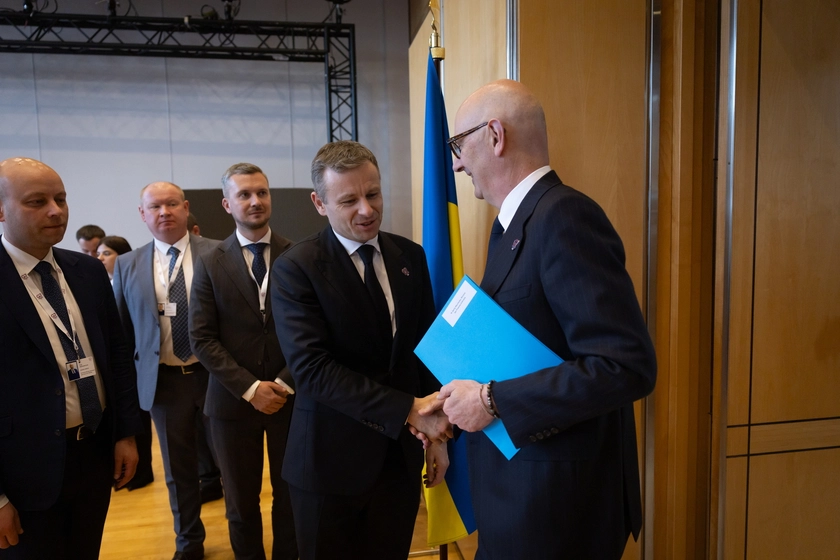
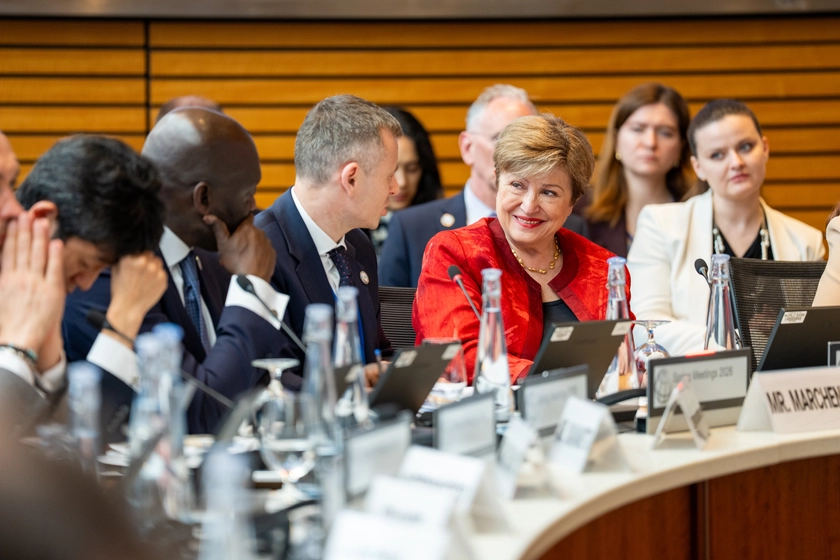
An IMF team led by Gavin Gray held policy discussions in Kyiv from Nov. 17–21 at the authorities’ request for a new program. The mission met with Prime Minister Yuliya Svyrydenko, Finance Minister Serhiy Marchenko, National Bank of Ukraine Governor Andriy Pyshny, other government ministers, public officials, and civil society.
“Russia’s war continues to take a heavy toll on Ukraine’s people and its economy. The authorities nevertheless remain steadfast in their resolve to maintain macroeconomic stability, and to restore debt sustainability and external viability,” the IMF press release said. “They are also committed to addressing informality, tackling corruption, and improving governance including in the state-owned enterprise sector.”
IMF Staff Greenlights $690 Million for Ukraine Despite Missed VAT Benchmark
“After eight successful reviews under Ukraine’s most recent IMF program, the authorities firmly believe that a new Extended Fund Facility (EFF) will provide a strong anchor for their medium-term plans and support their efforts to mobilize much needed external support. They are committed to advancing their reform agenda, despite the challenges of the war,” IMF Mission Chief Gavin Grey said, according to the press release.
“Risks to the outlook remain exceptionally high,” the statement said, citing the uncertainty of the war’s duration and the level of international donor support. The IMF said prompt donor action is “indispensable” to help Ukraine manage large fiscal and external needs and avoid liquidity strains.
Budget priorities: Tax, customs, debt and revenue mobilization
The Fund stressed that enacting a 2026 budget consistent with program parameters is “imperative.” The IMF wrote that Ukrainian authorities are committed to domestic revenue mobilization measures, debt management and tackling “economic informality.”
The task list for these objectives includes:
- implementing their debt restructuring strategy to restore debt sustainability
- accelerating efforts to prevent tax evasion and avoidance
- taxing income earned through digital platforms
- closing customs loopholes for consumer good imports
- removing exemptions for VAT registration
- increasing competition in public procurement
- addressing loopholes in the current labor code.
NBU to use exchange rate as shock absorber while keeping inflation in check although Bloomberg previously wrote about IMF pressures on Ukraine’s central bank, the National Bank of Ukraine (NBU), to devalue the Hryvnia, the IMF rhetoric on the NBU’s policy remained almost alike to the previous framework of the 8th memorandum of the previous EFF program.
The NBU reaffirmed its commitment to:
- lowering inflation toward the five percent target over its three-year horizon
- allowing “greater exchange rate flexibility”
- increasing the exchange rate’s role as a shock absorber
- in turn, helping to preserve adequate central bank FX reserves.
Anti-corruption and governance reforms again central to IMF program
What’s also new is the list of additional anti-corruption frameworks.
The IMF underlined the need to “resolutely” tackle corruption, sustain independent anti-corruption institutions and continue reforms to the state tax and customs services, including appointing a new customs head and upgrading IT systems.
Kyiv Post previously reported the IMF’s positive nod that Ukraine has already implemented 40 percent of its long-term customs reform plan to make the customs more effective. Additional priorities include strengthening financial planning, reporting and auditing of state-owned enterprises and improving nomination procedures for state-owned banks.
The agreement arrives at a moment when Ukraine needs new commitments for 2026–27, with existing programs – including the current EFF, the EU’s Ukraine Facility and the Extraordinary Revenue Acceleration loan – set to expire by 2026–27.
You can also highlight the text and press Ctrl + Enter