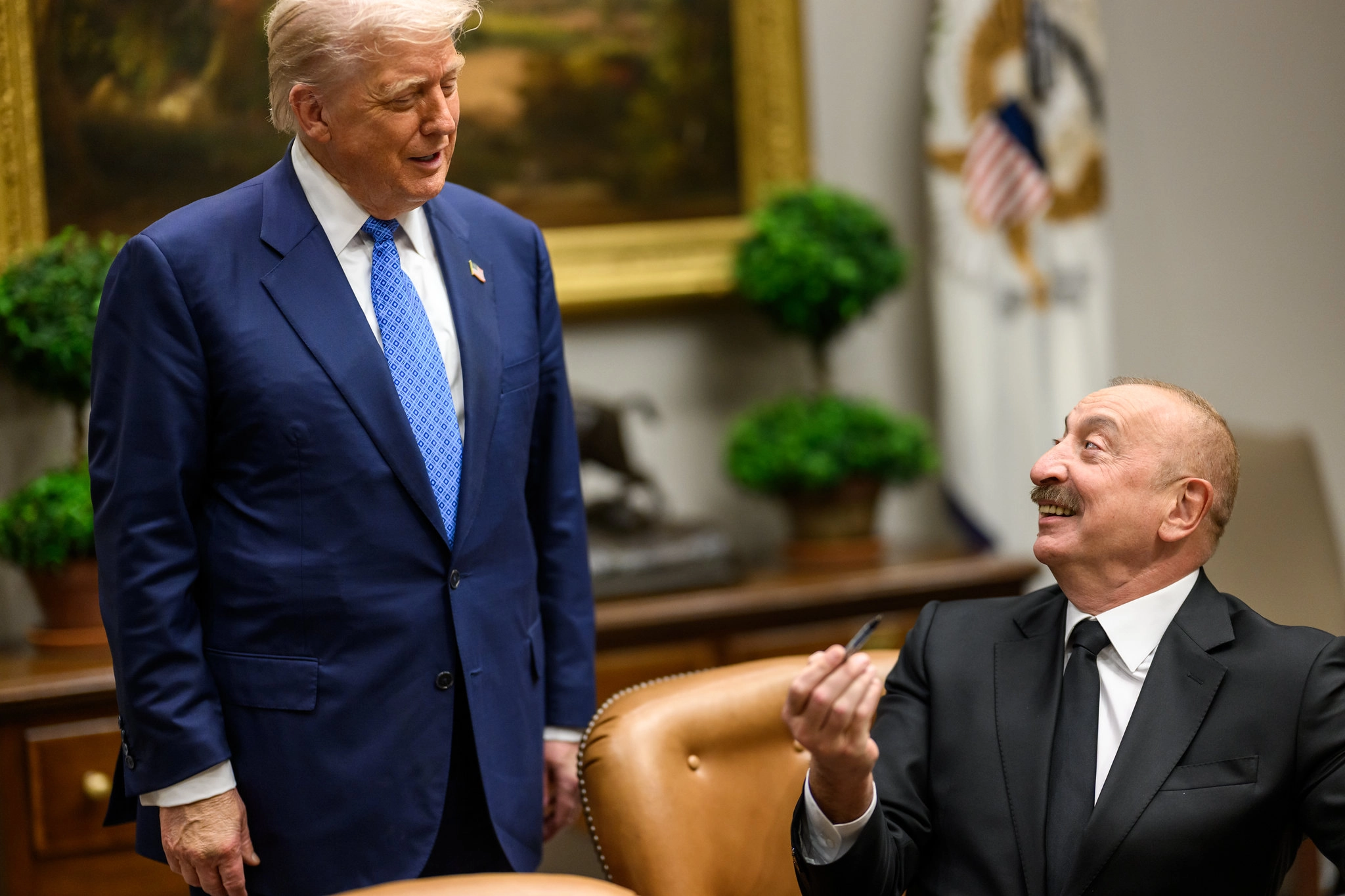
WASHINGTON, DC – Azerbaijani President Ilham Aliyev, freshly emboldened by his high-profile White House visit in August, has wasted little time flexing his muscles back home – escalating a sweeping crackdown on political opponents as Washington looks the other way.
His newest target is Ali Karimli, the longtime leader of the Popular Front Party of Azerbaijan (PFPA) and one of Aliyev’s most persistent critics.
JOIN US ON TELEGRAM
Follow our coverage of the war on the @Kyivpost_official.
Karimli was detained last week after a raid on his home and charged with attempting a “violent seizure of power,” allegations opposition figures call both fantastical and depressingly familiar.
The arrest is part of a broader surge of detentions, forced disappearances, and travel bans on PFPA officials and allied opposition groups.
Authorities in Baku insist the arrests are tied to an investigation involving Aliyev’s latest bogeyman – former presidential administration chief Ramiz Mehdiyev. Critics say the linkage is pure political theater, meant to provide a thin legal veneer for a purge aimed at eliminating the last vestiges of organized opposition.
“Ali Karimli’s detention is the latest outrage in the ongoing consolidation of authoritarian practices in Azerbaijan,” Amnesty International said in a statement.
“Snatching him from his home, holding him incommunicado, and pressing dubious charges sends a chilling warning,” added Denis Krivosheev, the organization’s deputy regional director.
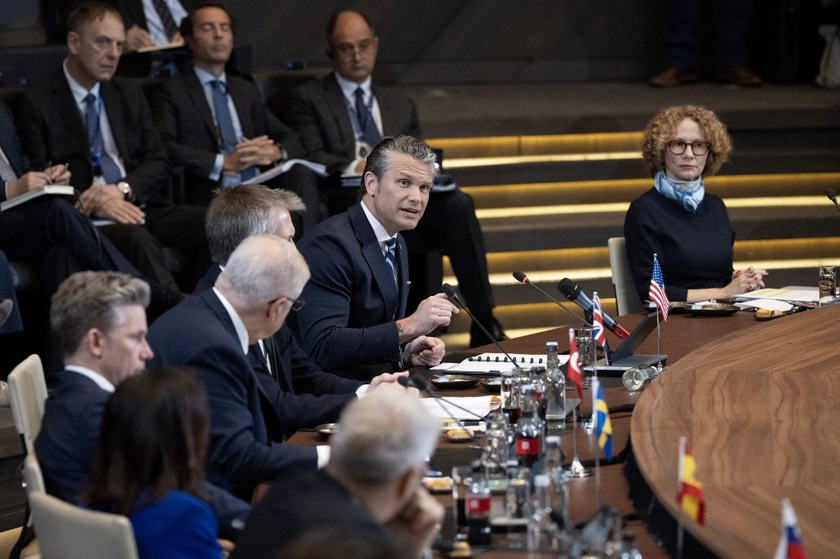
Hegseth Tells NATO US Will Review Force Presence in Europe
Deafening silence from Foggy Bottom
Despite the spike in repression just months after Aliyev’s lavish White House welcome, the administration that embraced him has remained conspicuously quiet.
The State Department hasn’t said a word. Multiple inquiries from human rights groups and media outlets – including Kyiv Post – have gone unanswered.
For Washington veterans, the silence is strategic – and dangerous.
“The timing reflects Aliyev’s sense that the world is distracted and Washington will not push back,” said former US Ambassador to Azerbaijan Richard Kauzlarich.
“It would be appropriate for the State Department or Embassy to issue a statement regretting the detention of Ali and the continued targeting of journalists and political opponents,” he told Kyiv Post.
That silence is shaping perceptions in Baku – and on Capitol Hill.
A senior Democratic congressional aide, speaking exclusively to Kyiv Post early this week, said the administration is “sleepwalking into complicity.”
“We’re watching an ally carry out a full-blown political purge,” the aide said, adding, “And the State Department’s response so far is… nothing. That vacuum is being read in Baku as a license to escalate.”
A Republican aide focused on human rights issues was even more blunt: “Aliyev thinks Washington needs him more than he needs Washington. Knowing that, the administration’s inaction is incredibly troubling.”
Congress prepared to act
With the White House hesitating, lawmakers are stepping in. Rep. Chris Smith (R-NJ), the co-chair of the Tom Lantos Human Rights Commission, recently announced his intention to introduce the “Azerbaijan Democracy Act of 2025,” sweeping sanctions legislation targeting Baku’s top brass.
The bill would impose visa bans and freeze US-based assets belonging to senior Azerbaijani officials implicated in corruption or political repression.
The draft legislation – seen by Kyiv Post – initially names 35 individuals across Aliyev’s security, judicial, and political apparatus.
“It’s the sense of Congress,” one section reads, “that the President [of the United States] should block all property and interests in property” of officials who personally benefit from actions designed to “undermine democratic institutions” in Azerbaijan.
A congressional aide familiar with the bill’s drafting told Kyiv Post concerns about Aliyev’s latest moves “shifted the calculus.”
“Aliyev is reading Washington’s silence as a green light. The Congress is saying: no more blank checks,” the aide emphasized.
Post-Karabakh purge
Analysts say Aliyev’s crackdown isn’t simply opportunistic – it’s structural. With Trump focused on cementing peace between Azerbaijan and Armenia, Aliyev faces no serious external pressure. That leaves the opposition.
Jamil Hasanli, chair of the National Council of Democratic Forces, believes the timing is directly tied to Aliyev’s ostentatious reception at the White House this summer.
“He has wanted to arrest Ali Karimli for 10 years,” Hasanli told Kyiv Post. “Joking in the White House gave him this courage.”
Hasanli warned that Aliyev is now determined to reshape Azerbaijan’s political system in the “post-Karabakh era,” while Western governments are consumed with Ukraine, the Middle East, and other crises.
“As long as the world is preoccupied, Aliyev wants to crush the PFPA and the National Council,” he said.
‘Stability’ at what cost?
Human rights groups caution that Western hunger for regional stability – and Caspian energy – risks becoming a blank check for repression.
“Authorities must release Ali Karimli unless they can demonstrate real evidence,” Amnesty’s Krivosheev noted. “So far, they’ve shown only their determination to take politically motivated arrests even further.”
Inside Washington, frustration is mounting that Aliyev is exploiting US silence.
One Senate aide put it bluntly: “We cannot outsource stability to authoritarians and then act shocked when they behave like authoritarians.”
With lawmakers poised to act and allies on edge, the White House risks watching its leverage in Baku slip away.
The real question: will it finally break its silence, or leave Aliyev free to write the next, even darker chapter?
You can also highlight the text and press Ctrl + Enter
Putin’s Worst Nightmare