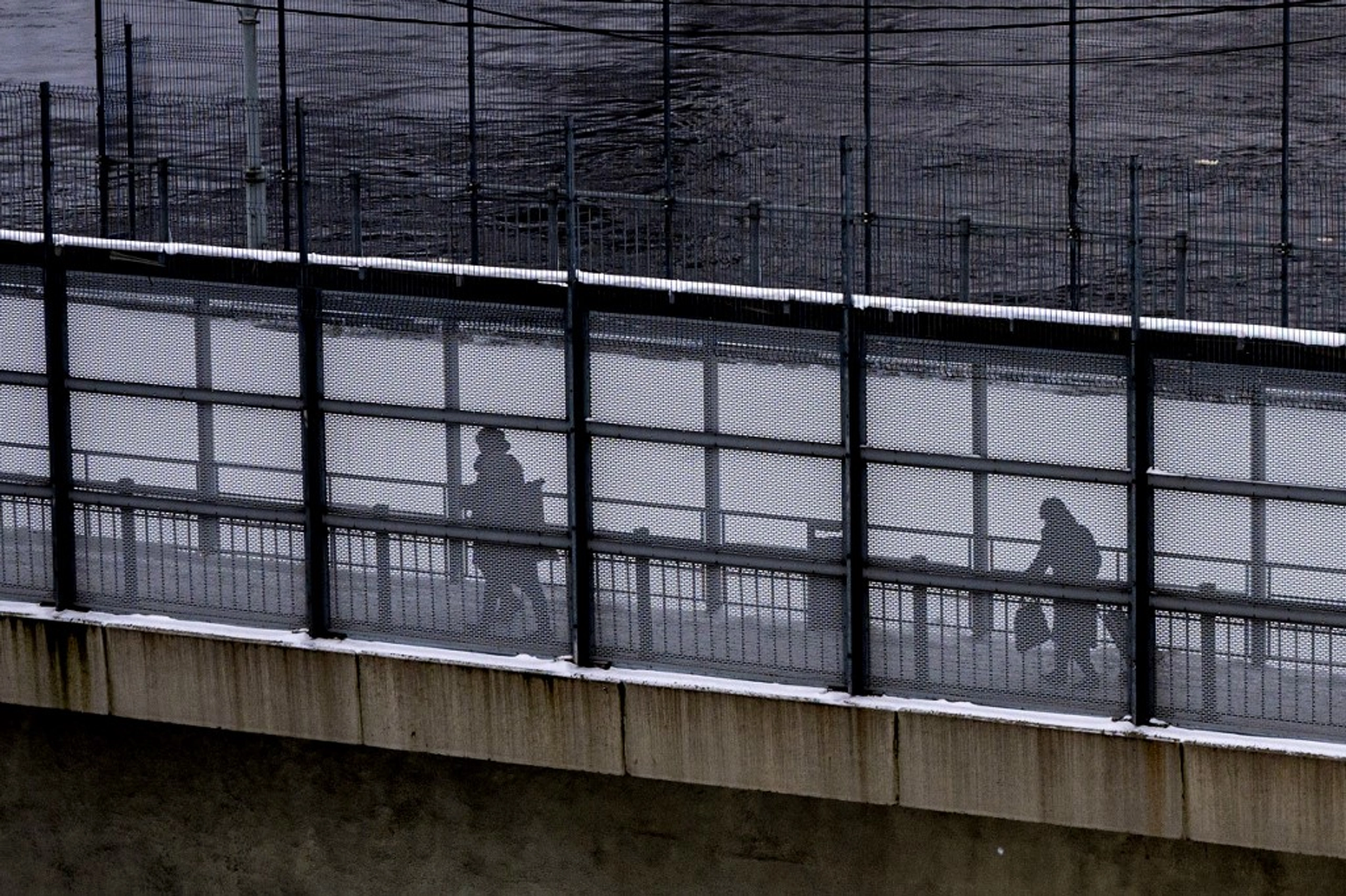
Three Russian border guards briefly entered Estonian territory on Wednesday, Dec. 17, and remained there for about 20 minutes, according to Estonia’s border protection agency.
The agency said Estonian and Russian officials are set to meet on Thursday to discuss the incident, adding that Estonia will summon Russia’s top diplomatic envoy in Tallinn.
JOIN US ON TELEGRAM
Follow our coverage of the war on the @Kyivpost_official.
According to Bloomberg, Estonian Interior Minister Igor Taro said it was too early to determine whether the crossing was accidental or a deliberate provocation. The incident was captured on video, and border patrols in the area have since been reinforced.
The incursion occurred along a narrow strip of land near the Narva River, where Estonian territory extends to the eastern bank. Estonia and Russia have long failed to ratify a formal border treaty, despite years of negotiations.
Last year, Russian border guards also removed navigational buoys on the Narva River, challenging the de facto border line.
The latest episode follows a series of border incidents between Estonia and Russia.
In September, Estonia called emergency NATO consultations and raised the issue at the UN Security Council after Russian aircraft violated its airspace.
In October, Tallinn closed a road long used as a shortcut through Russian territory after reports of Russian soldiers intimidating local residents.
In late November, Estonia’s Foreign Minister Margus Tsahkna warned US officials that Russia could rebuild its military strength and return to NATO’s eastern borders within two to three years, urging Washington to prepare for a growing threat despite Moscow’s heavy losses in Ukraine.
Zelensky Confirms Deep Strikes on Russian ‘Temp’ Fuel Reserve and ‘Azot’ Chemical Plant
Speaking in Washington to the bipartisan Helsinki Commission and the Atlantic Council, Tsahkna said Russian forces are undergoing a “massive reform” and will return to the Baltic region with “even more troops and military equipment than they had before the full-scale invasion.”
He challenged claims that Russia’s military has been exhausted by the war in Ukraine.
Tsahkna cited intelligence indicating a growing concentration of Russian forces along the Baltic and Finnish borders.
He also pointed to what he described as Russia’s escalating “shadow war” against the West, including electronic warfare, sabotage operations in Estonia, the escorting of sanctions-busting “shadow fleet” oil tankers in the Baltic Sea, and the use of irregular migration to pressure border states.
Addressing security incidents, Tsahkna referenced what he called an unprecedented incursion by three Russian MiG-31 fighter jets into NATO airspace, saying Moscow’s actions have forced a tougher deterrence posture.
“If there is a real threat, we will shoot them down,” he said.
Tsahkna said Estonia will raise defense spending to 5.4% of GDP next year, well above NATO’s 2% target, and continues to provide military aid to Ukraine worth at least 0.25% of GDP.
“A stronger Europe is a stronger NATO, a stronger America,” he said.
You can also highlight the text and press Ctrl + Enter

Putin’s Worst Nightmare