Russia has confirmed that it struck Ukraine with an Oreshnik missile overnight, with the Russian Ministry of Defense describing the attack as retaliation for what it called a “terrorist attack” on the residence of Russian President Vladimir Putin.
In a statement published on Telegram, the ministry said the strike was carried out in response to an alleged attack on the presidential residence in Russia’s Novgorod Oblast on Dec. 29, 2025.
JOIN US ON TELEGRAM
Follow our coverage of the war on the @Kyivpost_official.
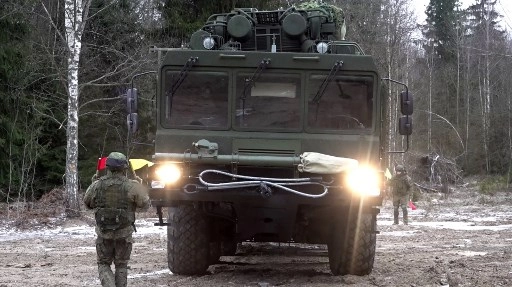
“Today, in response to the Kyiv regime’s terrorist attack on the residence of the President of the Russian Federation in the Novgorod region, the Russian Armed Forces launched a massive strike using long-range, land- and sea-based precision-guided weapons, including the Oreshnik medium-range ground-mobile missile system,” the statement said.
Russia also confirmed the use of strike unmanned aerial vehicles (UAVs) during the attack.
“The objectives of the strike were achieved,” the ministry claimed. “The production facilities for unmanned aerial vehicles used in the terrorist attack, as well as energy infrastructure supporting Ukraine’s military-industrial complex, were hit.”
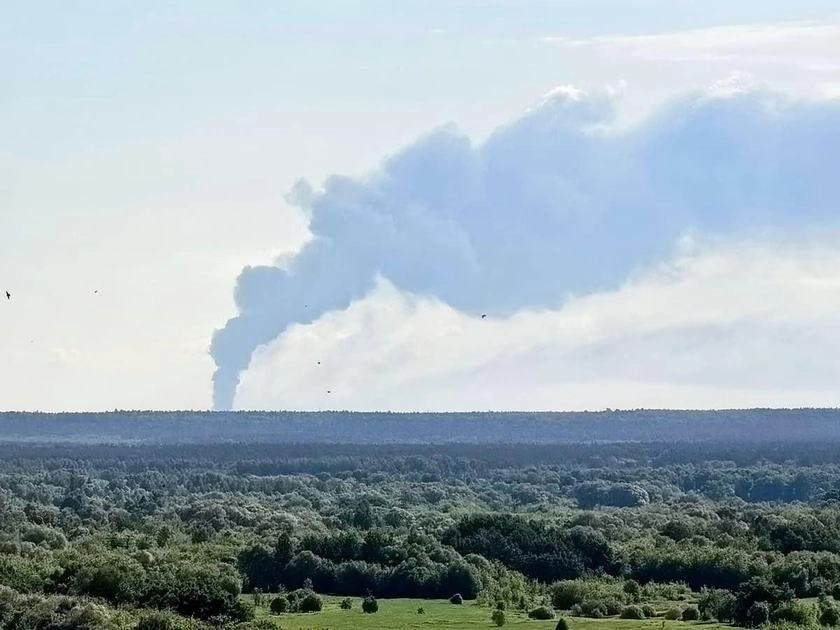
A series of loud explosions was heard overnight in Lviv. Social media users reported a possible strike by an Oreshnik missile, though Ukrainian authorities have not officially confirmed the type of weapon used.
Kasparov: Ukrainian Flag in Sevastopol Is the Shock Russia Needs to Accept Empire Is Dead
Lviv Mayor Andriy Sadovy later confirmed the explosions, followed by Maksym Kozytsky, head of the Lviv Regional Military Administration (OVA).
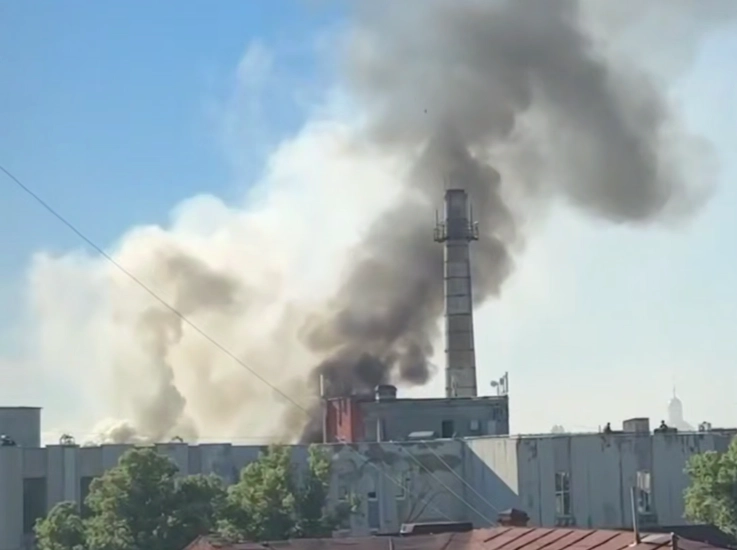
According to preliminary information, a critical infrastructure facility in the Lviv region was hit. Emergency and utility services are working at the site. No residential buildings or civilian facilities were damaged in the attack.
A video shared on social media claimed to show the attack in the Lviv region, though the Kyiv Post was unable to independently verify its time or location.
Ukraine’s Air Force said that at around 11:30 p.m. on Jan. 8, a nationwide missile alert was declared due to the threat of ballistic missiles launched from Kapustin Yar, where RS-26 Rubezh missile systems are based.
These systems are designed to deliver nuclear strikes at distances of up to 6,000 kilometers (3,728 miles).
Western analysts believe Oreshnik is a modified version of the Soviet-era RS-26 Rubezh medium-range ballistic missile, with a range of more than 4,000 kilometers (2,500 miles) and the ability to carry multiple nuclear-capable or conventional hypersonic re-entry vehicles.
Sadovy stressed that it remains unclear whether the attack involved an Oreshnik missile.
“Whether it was Oreshnik is currently unknown. The military will provide information. There was a hit on a critical infrastructure facility. All relevant services are working on site, and the fire is being extinguished,” he wrote.
At 7:51 a.m., Sadovy provided an update on Telegram, saying that in the village of Rudno, part of the Lviv community, the automatic gas safety system had been triggered as a result of the missile strike.
“For security reasons, gas supply has been temporarily suspended for 376 subscribers on several streets,” he said.
Sadovy clarified that this was not a network accident, explaining that the system was activated by a shock wave. Specialists are currently inspecting the equipment, after which gas supply will be restored.
Kozytsky reported that radiation levels at the impact site were within normal limits and that no harmful substances were detected in the air.
Ukraine’s Air Command “West” said the missile followed a ballistic trajectory at a speed of about 13,000 kilometers per hour (8,078 mph), but noted that the missile type has not yet been determined.
The command added that the exact type of ballistic missile used in the attack will be identified after all debris and components are examined.
The monitoring channel Nikolaevsky Vanek, which is linked to a senior Ukrainian official, wrote in its overnight report:
“They’re saying that the Oreshnik was launched without a warhead, just like the previous one in Dnipro. Whether this is true will become clear in a few hours. Guys, even without a warhead, this thing can still cause serious trouble.”
According to the report, there is currently no information about casualties or fatalities, and most likely there will be none.
“But keep in mind that we don’t have protection against this thing; the US does. And they need it even more this year and next – no sarcasm or irony here,” the author added.
In its latest Telegram update, Ukraine’s Air Force reported that one medium-range ballistic missile was launched from the Kapustin Yar test site.
President Volodymyr Zelensky confirmed in his address that Russia used one Oreshnik medium-range ballistic missile to attack Ukraine overnight.
Ukrainian military communications and electronic warfare specialist Serhii Beskrestnov, known by the call sign “Flash,” also commented on the launch on Telegram.
“The Oreshnik strike on Lviv was not intended to cause a global impact. I believe it was a message to Europe about the capabilities and determination of the Russian Federation. That is why Ukraine’s western city was chosen for the strike,” Beskrestnov wrote.
He dismissed claims circulating on Russian Telegram channels that the missile penetrated tens of meters into the ground, calling them false.
“To understand the energy of the striking elements, here’s one example: it pierced two concrete floor slabs and burned an entire collection of Lenin’s works stored in the basement archives. I’m not joking,” he added.
Meanwhile, Serhiy Nahornyak, a lawmaker from the Servant of the People faction, said that gas infrastructure in the Lviv region was not targeted in the attack.
According to Nahornyak, gas facilities in the region were neither struck nor critically damaged. He stressed that the Russian missile hit a different facility and was not aimed at gas storage sites or the gas transportation system.
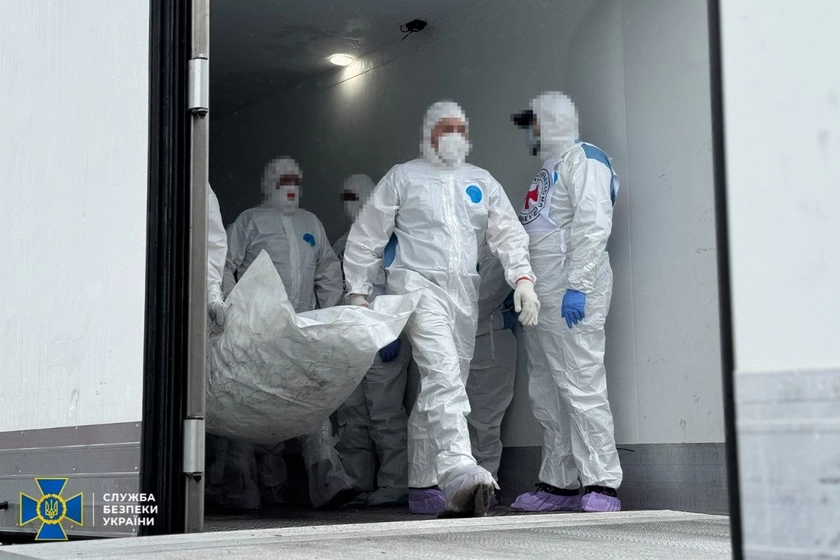
Moreover, the Security Service of Ukraine (SBU) published images of wreckage believed to be from the Oreshnik missile used in Russia’s attack on the Lviv region.
According to the SBU, investigators have located fragments of a Russian ballistic missile. Preliminary assessments indicate that the recovered components belong to the Oreshnik missile system.
Among the parts identified so far are:
- the stabilization and guidance unit, effectively the missile’s control system;
- components of the engine assembly;
- fragments of the orientation mechanism;
- nozzles from the deployment platform, among other elements.
“The recovered wreckage has been classified as physical evidence and is being prepared for transfer for in-depth examination,” the SBU said.
Investigators have classified the use of this weapon against Ukraine’s civilian infrastructure as a war crime committed by the Russian Federation. A pre-trial investigation has been opened under Article 438 of the Criminal Code of Ukraine (war crimes).
The SBU added that by striking civilian targets near the European Union border, Russia sought to disrupt the region’s life-support infrastructure amid a sharp deterioration in weather conditions.
This marks the second reported use of the Oreshnik missile by Russia against Ukraine. The first occurred in November 2024, when the city of Dnipro was struck.
A Kyiv Post fact check published on Dec. 30 found little evidence to support Russian claims that Ukraine attempted to assassinate Putin by launching drone swarms at his personal residence near Valdai in Novgorod Oblast.
Ukrainian officials, including President Volodymyr Zelensky, dismissed the allegations as false and accused the Kremlin of fabricating the incident to justify withdrawing from ongoing peace talks.
Kyiv Post researchers found extensive evidence of Ukrainian drone strikes elsewhere in Russia and Russian-occupied territory that night, but no credible proof that Putin’s residence was targeted.
When asked for evidence, Kremlin spokesman Dmitry Peskov said none was needed, calling skepticism “insane,” while refusing to say whether Putin was at the residence. Foreign Ministry spokeswoman Maria Zakharova insisted the attack occurred and threatened retaliation.
However, major Novgorod regional news outlets, emergency Telegram channels, air defense trackers, and independent Russian media such as Astra and Sota reported no drone activity or air defense engagements in the region at the time.
Ukrainian air monitoring networks also tracked drones in other parts of Russia but recorded none heading toward Novgorod, casting further doubt on Moscow’s claims.
This ongoing news story will be updated as more information becomes available.
You can also highlight the text and press Ctrl + Enter

Russia Hit by 660-Drone Overnight Barrage Targeting Moscow, Crimea and Key Military Sites