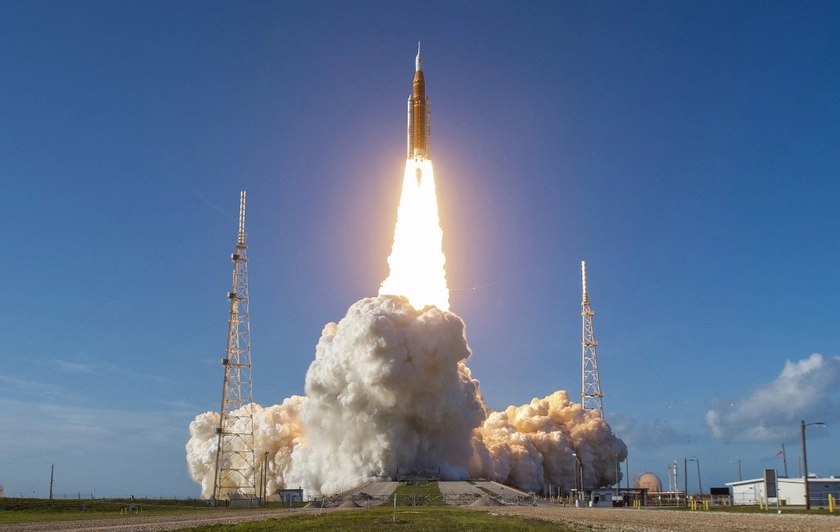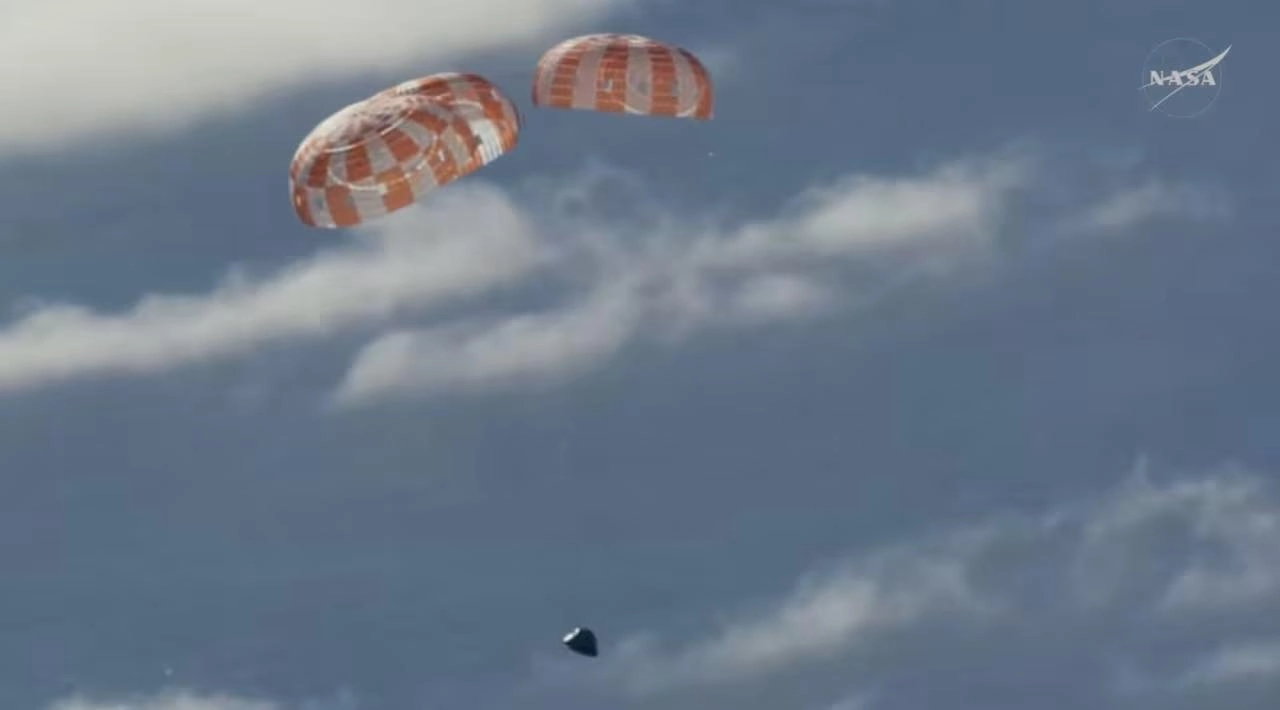
The Orion spacecraft carrying the crew of the Artemis II mission successfully splashed down in the Pacific Ocean on Saturday, April 11, after a 10-day journey around the moon, CNN reported.
The splashdown marks a major milestone for NASA, as it was the first crewed flight to the vicinity of the moon since the conclusion of the Apollo program in 1972. The mission commander, Reid Wiseman, confirmed the crew was in good condition shortly after hitting the water.
JOIN US ON TELEGRAM
Follow our coverage of the war on the @Kyivpost_official.
“What a journey. We are stable. Four green crewmembers,” Wiseman reported, signaling that all four astronauts – including Victor Glover, Christina Koch, and the Canadian Space Agency’s Jeremy Hansen – felt well after their high-stakes voyage.
The recovery process, coordinated by NASA Landing and Recovery Director Liliana Villarreal, involves extracting the astronauts from the capsule onto an inflatable raft known as the “front porch.” From there, they are airlifted by helicopter to the medical bay of the USS John P. Murtha. NASA flight director Jeff Radigan noted that the extraction typically takes between 30 to 45 minutes under calm sea conditions.
Welcome home Reid, Victor, Christina, and Jeremy! 🫶
— NASA (@NASA) April 11, 2026
The Artemis II astronauts have splashed down at 8:07pm ET (0007 UTC April 11), bringing their historic 10-day mission around the Moon to an end. pic.twitter.com/1yjAgHEOYl
The Artemis II mission saw the crew travel approximately 252,000 miles (406,000 km) from Earth, the farthest distance humans have ever ventured into space. While the astronauts did not land on the lunar surface, the mission served as a critical dress rehearsal for Artemis IV, currently targeted for 2028, which aims to land humans on the moon’s South Pole.
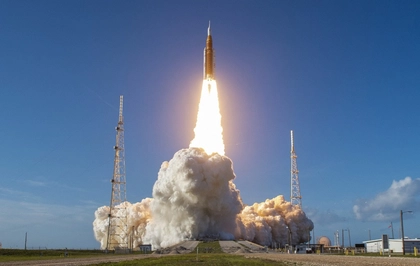
Four Astronauts Head to Moon on World’s First Crewed Lunar Mission in Over 50 years
The successful return provides much-needed validation for NASA’s Space Launch System (SLS) and the Orion capsule, especially following a 20% reduction in the agency’s workforce under recent federal downsizing. US President Donald Trump, who previously lauded the mission as a symbol of American daring, had blessed the “four unbelievable astronauts” during a national address earlier this month.
As NASA looks toward establishing a long-term lunar presence, the success of Artemis II keeps the United State on track in its competitive space race with China, which plans its own crewed lunar mission by 2030.
You can also highlight the text and press Ctrl + Enter

Russia Hit by 660-Drone Overnight Barrage Targeting Moscow, Crimea and Key Military Sites