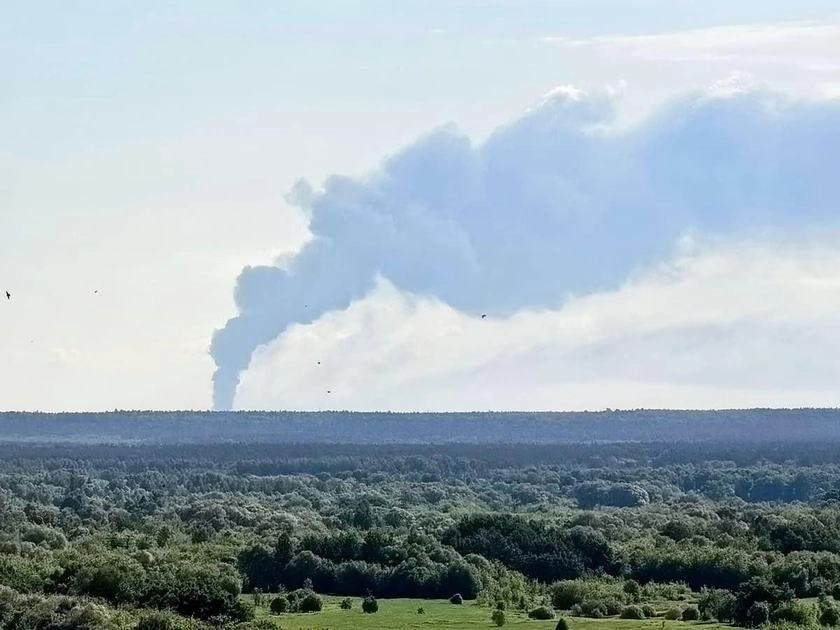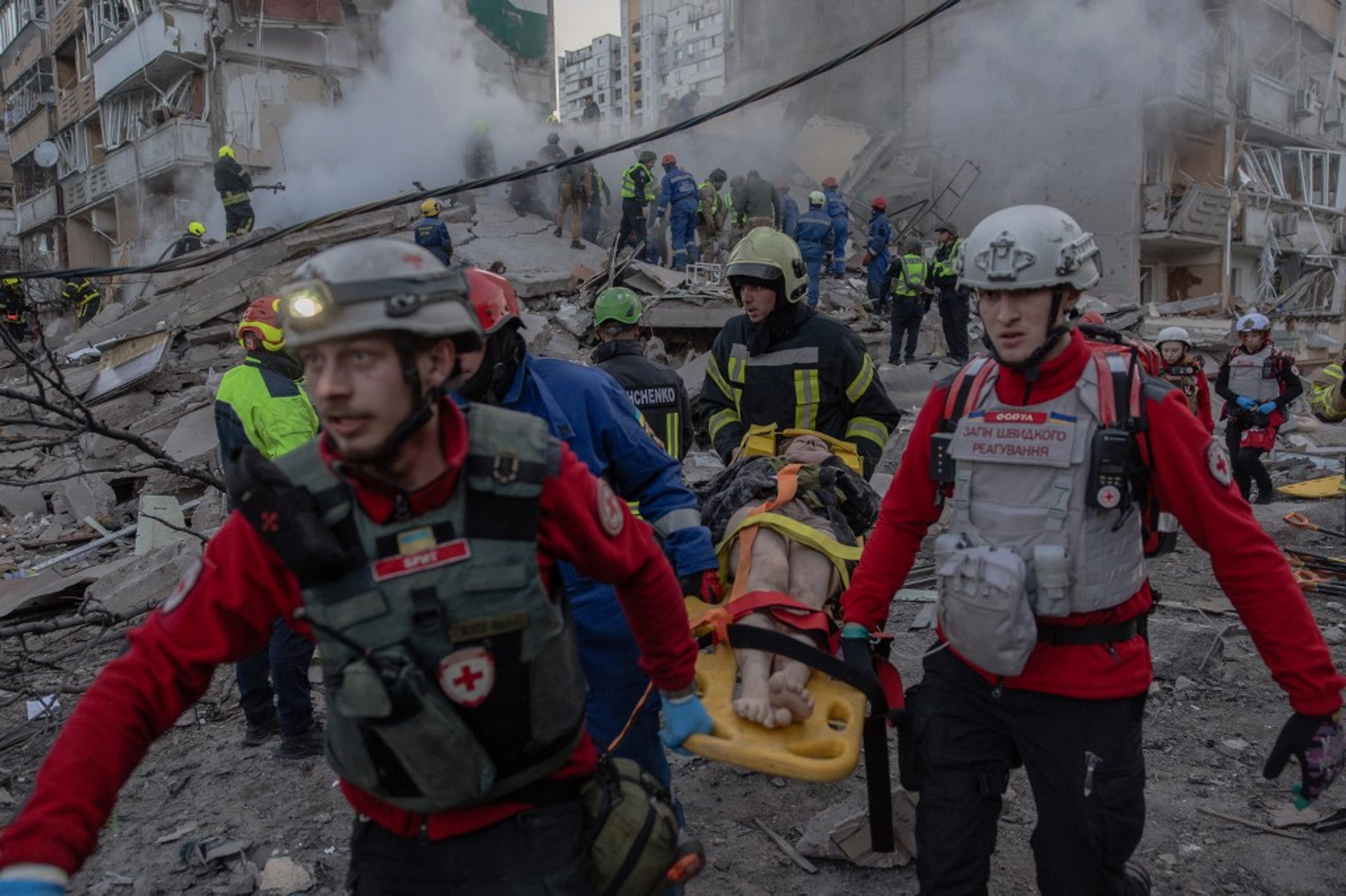
In the past three weeks, as spring turned to summer in the Northern Hemisphere, Russia has unleashed some of the most savage aerial barrages of its war in Ukraine.
In mid-May, a staggering 1,500 drones and dozens of missiles rained down, killing at least 27 civilians, mostly in Kyiv. Ten days later, this was followed by another onslaught of some 600 drones and missiles targeting residential districts and cultural sites.
JOIN US ON TELEGRAM
Follow our coverage of the war on the @Kyivpost_official.
Then, in early June, Moscow fired 656 drones and 73 missiles at Kyiv, Dnipro, Kharkiv, Poltava, and Zaporizhzhia, slaughtering at least 18 more civilians, including children, and wounding over 100 as apartment blocks crumbled and families huddled in makeshift shelters.
These are not precision strikes on military targets. They are deliberate terror campaigns against civilians.
Why this escalation now? Because Russia is militarily and economically attrited, bleeding out on the battlefield and in the ledger books, and it has resorted to the oldest tactic of failing empires: mass punishment of the innocent.
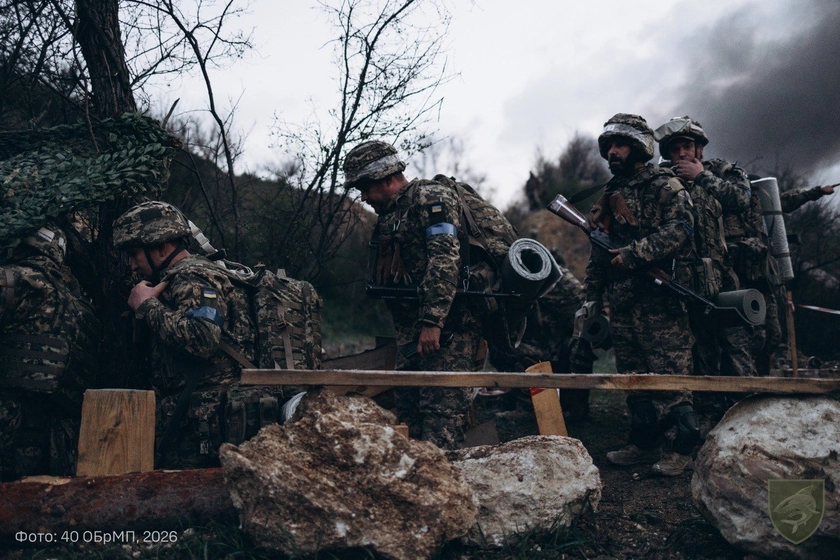
Russia’s ground forces are a shadow of their former self. After years of catastrophic losses, Russian casualties are the highest sustained by any major power in any conflict since WWII. As of late May, independent Western and open-source researchers assessed the figure at over 1.3 million Russian soldiers killed, wounded or missing in action.
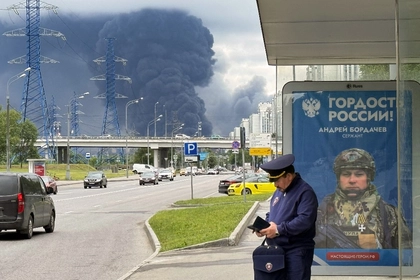
Ukrainian Missile Campaign Now Reaches Across Half of Russia
Targeting Ukrainian cities – power grids, apartment buildings, schools and hospitals – is an admission of strategic failure.
Elite units have been shredded, and equipment losses, depleted by sanctions, long-range drone strikes, and battlefield attrition, have made it impossible to replace at scale, slowing Russian advances to a bloody crawl.
Ukrainian forces, despite their own strains, continue to inflict disproportionate damage. Moscow’s “meat grinding assaults,” as they are often described, yield inches of territory at obscene human cost.
With conventional combat power degraded, Russia cannot deliver a decisive victory. So, they turn to the sky, where their remaining advantage in sheer volume of drones and missiles offers a cheaper way to project strength – by targeting inner city residences.
Economically, the picture is equally grim. Western sanctions have hollowed out key sectors. Russia’s war economy is overheating, reliant on shadow fleets, North Korean shells, and Iranian drones. Inflation bites, reserves dwindle, and long-term industrial capacity erodes under the weight of military spending that masks economic disaster for Russia.
Russian President Vladimir Putin knows a prolonged conventional war risks economic collapse and domestic unrest. Targeting Ukrainian cities – power grids, apartment buildings, schools and hospitals – is an admission of strategic failure.
Unable to conquer Ukraine’s defenders, he seeks to break its people. This is not strength; this is the desperate calculus of a regime that has lost the ability to win on the battlefield.
The human cost exposes barbarity.
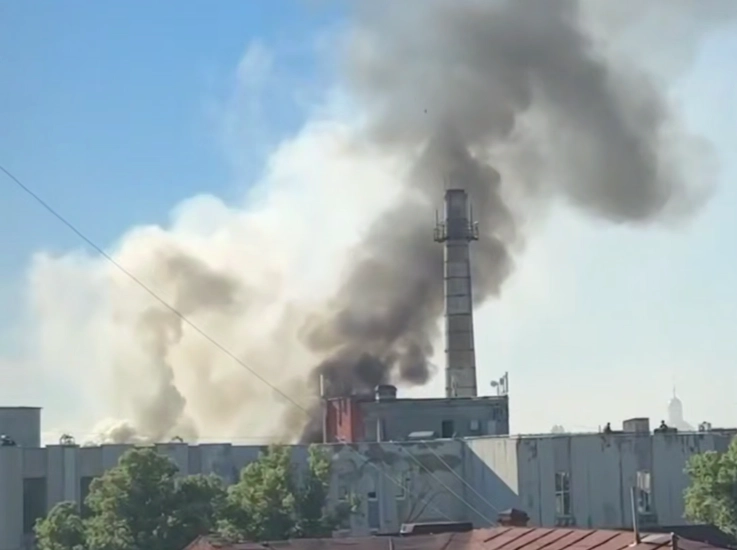
Kyiv, once a vibrant international city, now bears fresh scars from collapsed homes and grieving families. Children die in Dnipro and Kharkiv. Fires rage through civilian infrastructure in Odessa while Russian propagandists celebrate retaliation.
These strikes follow a now familiar pattern: Mix cheap drones with ballistic missiles designed to overwhelm air defenses, then let direct hits and debris do the rest.
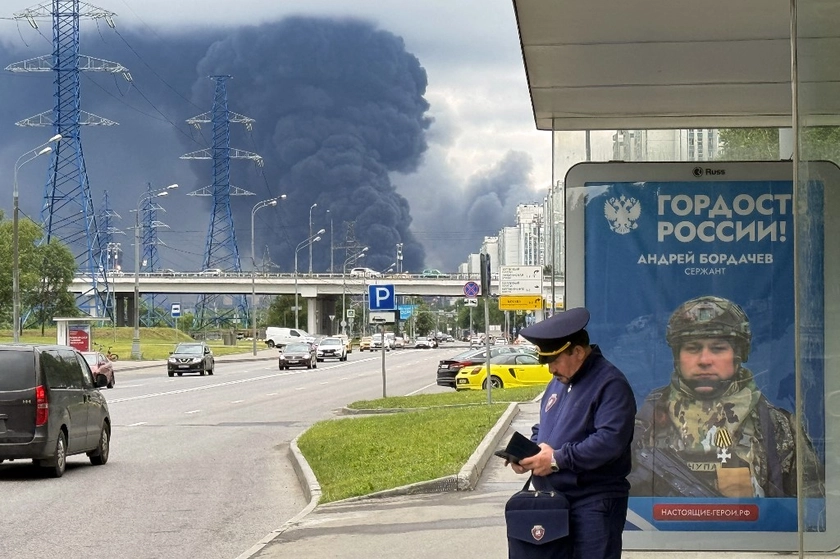
Russia frames it as a response to Ukrainian actions, but the timing and targets reveal the truth: Systematic pressure on civilians to force concessions at the negotiating table that Moscow cannot win on the battlefield.
This is textbook war crime logic. The Geneva Conventions exist precisely to prevent victors-by-default from using terror when their armies fail.
Russia’s campaign has failed abysmally in Ukraine with Vladimir Putin failing in his three key strategic aims: He has been trying to take Kyiv in three days for more than four years; NATO is not weakened, it is markedly stronger having added Sweden and Finland to its membership; and the EU is certainly not divided, it is more aligned now than ever, granting Ukraine candidate status, imposing broad sanctions, and approving a €90 billion ($104 billion) loan package in April.
Hesitation only invites more slaughter.
Moreover, Russia has faced an unexpectedly resilient Ukraine, with a now augmented weapons manufacturing capability that intercepts most of the aerial barrages. The partial successes only underscore Russia’s degraded state, relying on quantity in the face of increasingly degraded quality.
The West must recognize this moment for what it is: an opportunity born of Russian weakness. Every civilian death in Kyiv, Kharkiv, Dnipro and Odesa is a plea for sustained support.
An increased air defense capability, longer-range strike munitions, and greater economic pressure can accelerate the attrition that is already hollowing out Putin’s war machine. Hesitation only invites more slaughter. Ukraine is not just defending its cities; it is holding the line for the principle that aggression and terror must fail.
Putin’s Russia is not 10 feet tall. It is a crippled bully swinging wildly at women and children because it cannot beat the men at the front. Repeated attacks on Ukrainian cities prove it.
History will record this not as a Russian resurgence, but as the death spiral of a failing dictatorship – purchasing temporary headlines with innocent blood while its foundations crumble.
The free world must ensure the price of that blood is the end of Putin’s ambitions, not their fulfillment.
The views expressed in this opinion article are the author’s and not necessarily those of Kyiv Post.
You can also highlight the text and press Ctrl + Enter

Russia Hit by 660-Drone Overnight Barrage Targeting Moscow, Crimea and Key Military Sites