Russia has expanded the deployment of heavy anti-aircraft weaponry within its capital’s civilian core.
On June 5, Russian defense forces utilized a heavy transport helicopter to mount a next-generation surface-to-air missile platform directly onto a high-rise residential complex in a central Moscow neighborhood, Agentstvo News reported.
JOIN US ON TELEGRAM
Follow our coverage of the war on the @Kyivpost_official.
Rooftop installation in Sokolniki
The military hardware was airlifted and secured onto the roof of the “House in Sokolniki” (Dom v Sokolnikakh), a prominent business-class residential high-rise located just minutes from the Sokolniki metro station. The exact location and mounting process were confirmed via geographic and video analysis.
Open-source intelligence (OSINT) analyst Kirill Mikhailov and reports from the Militarnyi portal noted that the weapon system appears to be the specialized Pantsir-SMD-E variant. This next-generation modification differs substantially from the standard Pantsir-S1 systems previously deployed throughout Russia.
To optimize the platform for anti-drone operations, the SMD-E variant completely removes the standard 30-mm dual automatic cannons.
Instead, it relies on a re-engineered, expanded missile payload featuring two distinct interceptor types: standard 95Ya6 Missiles, capable of engaging larger aerial targets at a maximum operational range of up to 20 kilometers, and miniature TKB-1055 Interceptors, small-caliber, specialized short-range missiles engineered specifically to track and neutralize small loitering munitions at distances of up to 7 kilometers.

Ukraine Says Strikes on Russia’s Shadow Fleet Are Legal
The system’s built-in urban tracking radar maintains a scanning radius capable of detecting incoming low-altitude targets up to 24 kilometers away.
Skyscraper militarization and international law
The Sokolniki operation marks the fifth known instance of a permanent Pantsir air defense deployment atop a civilian skyscraper inside Moscow’s localized inner defense ring. It arrives just days after Russian defense planners used a massive Mi-26T heavy transport helicopter in late May to bolt an identical Pantsir-SMD-E module onto the roof of the 42-story Nordstar Tower business center, a corporate facility closely tied to the state-controlled energy giant Rosneft.
Prior to these next-generation additions, older Pantsir-S1 variants were bolted onto the roofs of the Russian Ministry of Defense headquarters, a commercial office block southeast of the Kremlin, and the Main Directorate of the Ministry of Internal Affairs (MVD).
Under global rules of engagement and international humanitarian law, placing operational air defense assets on top of standard office buildings and multi-family residential complexes effectively transforms those civilian structures into legitimate, high-priority military objectives.
Furthermore, operating short-range missile systems within a densely populated metropolitan area presents an immediate, severe physical threat to the local populace. The Pantsir’s urban engagements carry a high risk of extensive collateral damage.
During active interceptions, unguided spent booster stages from fired missiles separate and plummet directly back to earth. Additionally, low target-tracking accuracy amid heavy urban radar clutter often results in falling drone wreckage, shattered shrapnel fields, and unexploded components raining down onto neighborhood streets, municipal schools, and residential courtyards located immediately adjacent to the targeted towers.
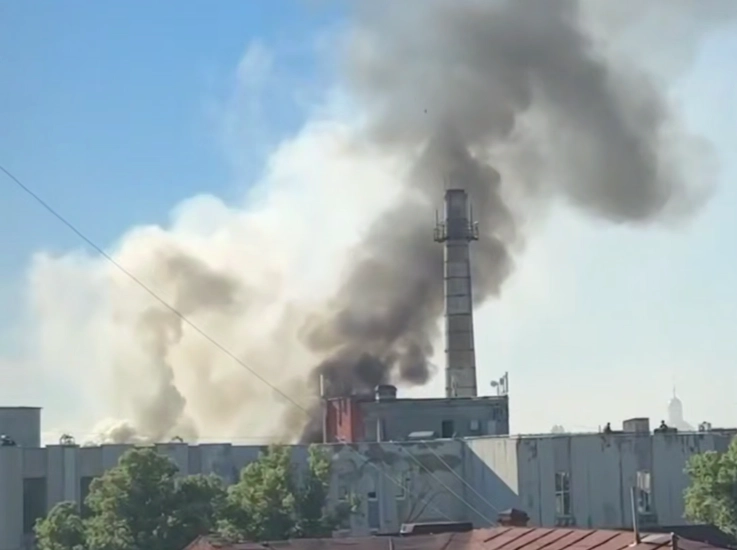
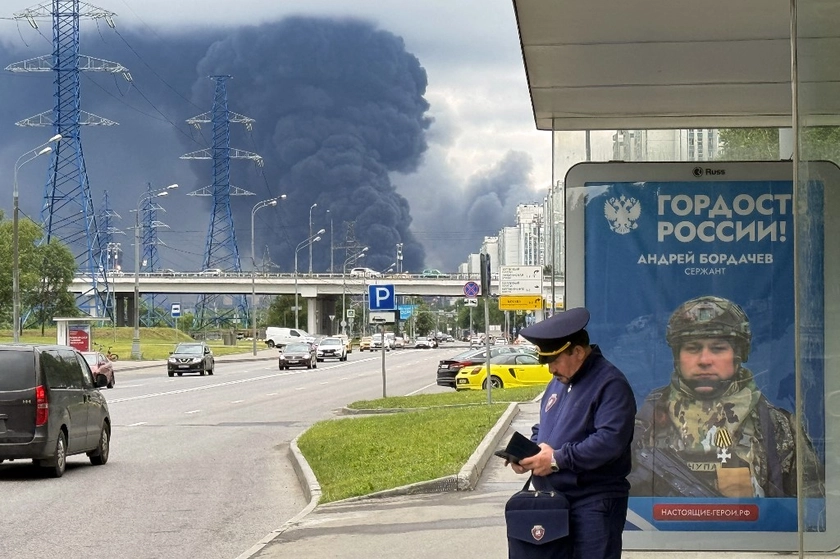
The hasty expansion of Moscow’s multi-layered defensive umbrella follows high-visibility front-line breakthroughs achieved by Ukraine’s long-range drone forces. These include a May 17 strike that compromised an oil refinery in the Moscow region and a May 4 strike that directly impacted a prominent residential tower in western Moscow just days before Russia’s signature May 9 military parades.
You can also highlight the text and press Ctrl + Enter

Russia Hit by 660-Drone Overnight Barrage Targeting Moscow, Crimea and Key Military Sites