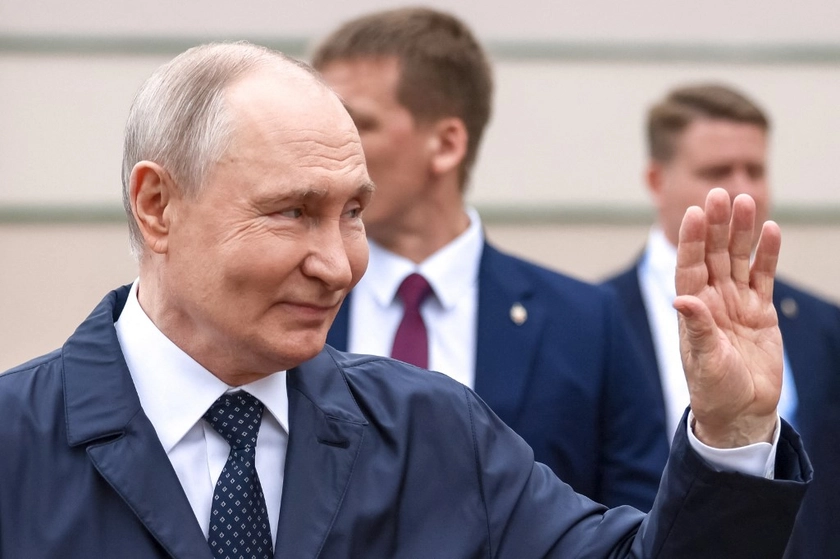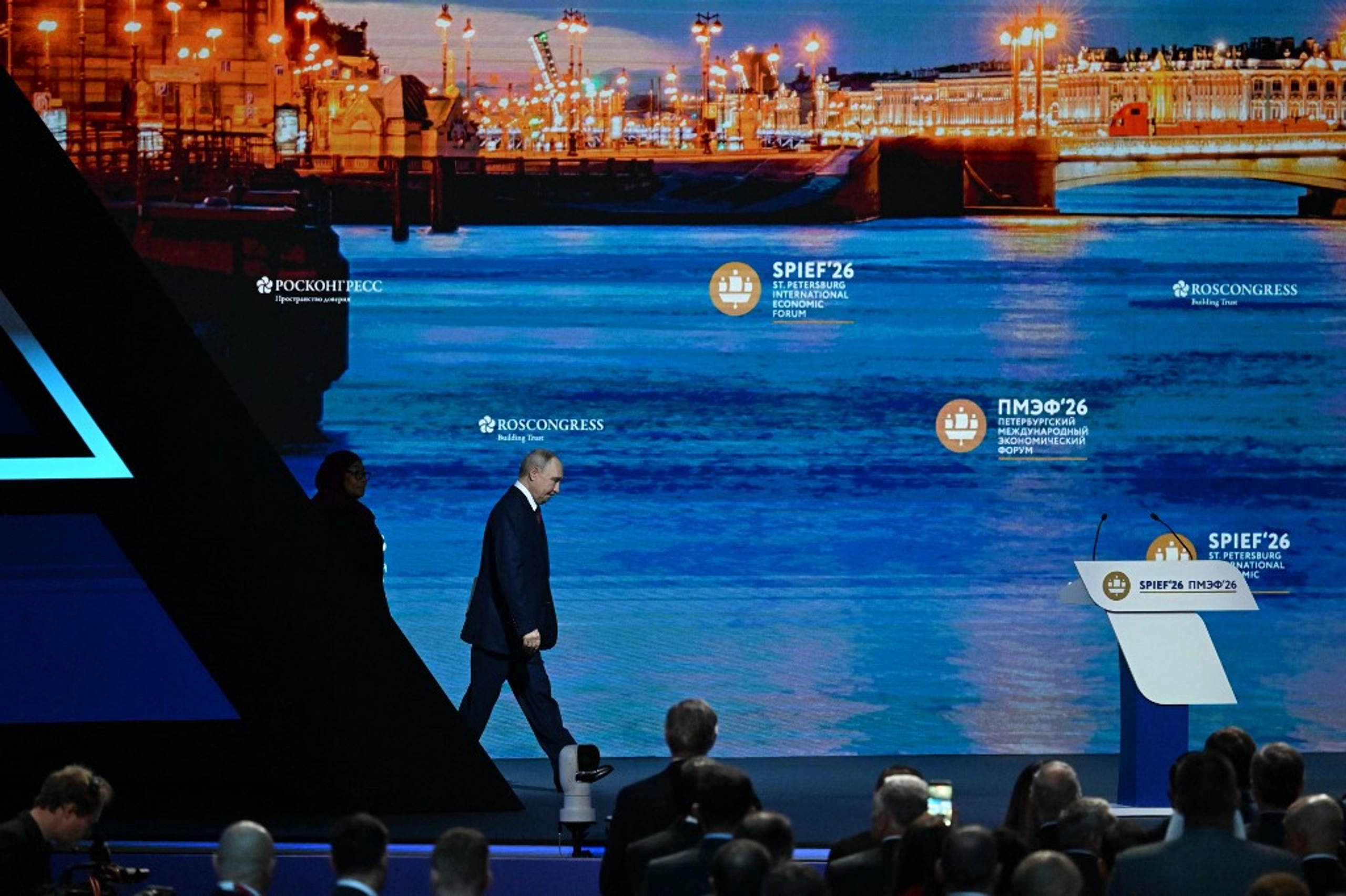
The Kremlin restricted parts of a special surveillance system protecting Russian President Vladimir Putin and his closest aides amid fears that adversaries could use advanced AI-enabled tools to track and target officials.
The Financial Times (FT), citing two people familiar with the matter, said the measures were prompted by concerns that intelligence techniques similar to those used against Iranian officials could be replicated in Russia, potentially enabling foreign services to pinpoint the movements and meetings of senior leadership.
JOIN US ON TELEGRAM
Follow our coverage of the war on the @Kyivpost_official.
The important new development, according to the article, is the ability to collect information on the complex behavior of individuals or groups of people through the ability to parse huge amounts of data, including public and private CCTV (closed-circuit television) video.
Cameras temporarily shut down and hardened
According to the report, the system – separate from Moscow’s wider network of nearly 300,000 city surveillance cameras – was temporarily shut down and later reactivated only after engineers worked to isolate it from the internet and close potential vulnerabilities.
“The Russians already had major concerns about Putin’s personal safety, especially the risk from Ukraine’s intelligence services, who have penetrated traffic cameras in Russia,” the FT article reads.
Ukrainian intelligence services are also believed to have used mobile phone location data to help target senior Russian military officials in Moscow.
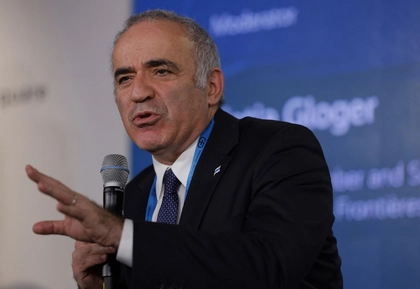
Kasparov: Ukrainian Flag in Sevastopol Is the Shock Russia Needs to Accept Empire Is Dead
Notably, an independent Ukrainian hacker told the FT that surveillance cameras in Moscow, including those near the Kremlin, “are still working and regularly hacked,” though he declined to say whether Ukraine can analyze the footage at scale.
The report also notes that the US and the UK, which have access to similar technologies, have previously provided Ukraine with precise targeting intelligence, including high-resolution imagery from surveillance drones.
Lessons from Iran and Israel intelligence operation
The tightening of security followed reports that Israeli intelligence had used vast amounts of footage from Iran’s traffic cameras to identify the timing and location of a high-level meeting involving Iran’s supreme leader, Ayatollah Ali Khamenei.
Several senior Iranian officials were killed in an attack on the meeting, which marked the opening phase of a joint US-Israel military campaign against Iran.
Israel’s intelligence services have reportedly used advanced artificial intelligence tools to analyze vast volumes of surveillance footage, mapping Tehran’s geography, identifying behavioral patterns of senior officials’ security detail, and isolating targets across millions of hours of video from thousands of cameras, according to the FT report.
They combined this material with other intelligence sources, including human intelligence.
Internal Russian warnings
The incident reportedly triggered concern in Moscow that similar methods – combining surveillance footage with artificial intelligence analysis – could expose vulnerabilities in Russia’s own security infrastructure.
FSB chief Alexander Bortnikov recently warned regional security officials that modern surveillance systems could be exploited by adversaries.
“The recent elimination of senior Iranian officials by the US-Israel alliance is a clear warning sign... The victims’ locations were identified, in part, through software ‘backdoors’ in Tehran’s video surveillance systems.”
However, according to a Moscow Times report, Russia is also expanding its use of AI for surveillance. Rostec head Sergei Chemezov told Putin a month ago that almost all Russian regions have already tested artificial intelligence-based video analytics systems.
He said the systems, developed by NtechLab – a subsidiary of the state corporation – help law enforcement “identify criminals or missing persons in a fairly short time.”
Separately, NtechLab CEO Sergey Suchkov previously said that about half of facial recognition systems are now integrated with city surveillance cameras to monitor public spaces. He added that the technology is also used in schools and universities, including for controlling access to educational facilities.
How AI advances expand large-scale video analysis capabilities
Experts cited in the report said AI-driven visual analysis tools have become significantly more powerful since 2023, with a further leap in capability about a year ago.
The systems are described as far more advanced than traditional machine-learning tools used for facial recognition, object detection, or vehicle tracking.
Unlike earlier software limited to predefined search parameters, the new generation of tools allows natural-language queries across video data
“That lets intelligence officers hunt through massive streams of videos using simple search terms, such as two men handing a bag to each other; a person who has changed their appearance, or has changed clothes multiple times in a day; or a vehicle that has recently been painted over, or has driven past the same spot several times in a short period,” the report said.
Analysts quoted by the FT said these systems effectively turn large-scale CCTV infrastructure into searchable intelligence databases, exposing behavioral patterns and operational movements at scale.
The technology also enables long-term profiling, allowing agencies to reconstruct movements and interactions over months by combining CCTV data with other sources such as social media, intercepted communications, and sensor inputs.
A senior industry figure cited in the report said this marked the first time humans could “communicate in language with computers about what they see,” enabling precise retrieval of moments buried in vast video archives.
The FT notes that such developments have alarmed intelligence agencies globally, prompting efforts to secure or replace vulnerable surveillance systems. Some countries have already moved to restrict foreign-made cameras, while others are reassessing exposure risks.
The report adds that both China and other states are rapidly developing similar AI-enabled surveillance capabilities, raising concerns that such systems could equally be exploited by adversaries if accessed.
You can also highlight the text and press Ctrl + Enter