Ukraine is intensifying pressure on Russia’s key logistics routes to occupied Crimea and southern Ukraine, with repeated strikes on bridges, roads, and supply corridors that analysts say are increasingly constraining Moscow’s military mobility.
According to a Guardian report on Thursday, Russian forces refer to the R-280 highway as the “Novorossiya” route – a critical supply line running from Russia’s Rostov-on-Don through occupied Mariupol and Melitopol toward Crimea via the Sea of Azov coast.
JOIN US ON TELEGRAM
Follow our coverage of the war on the @Kyivpost_official.
Ukrainian troops, however, have dubbed it the “highway of death,” citing frequent drone attacks targeting Russian convoys along the route.
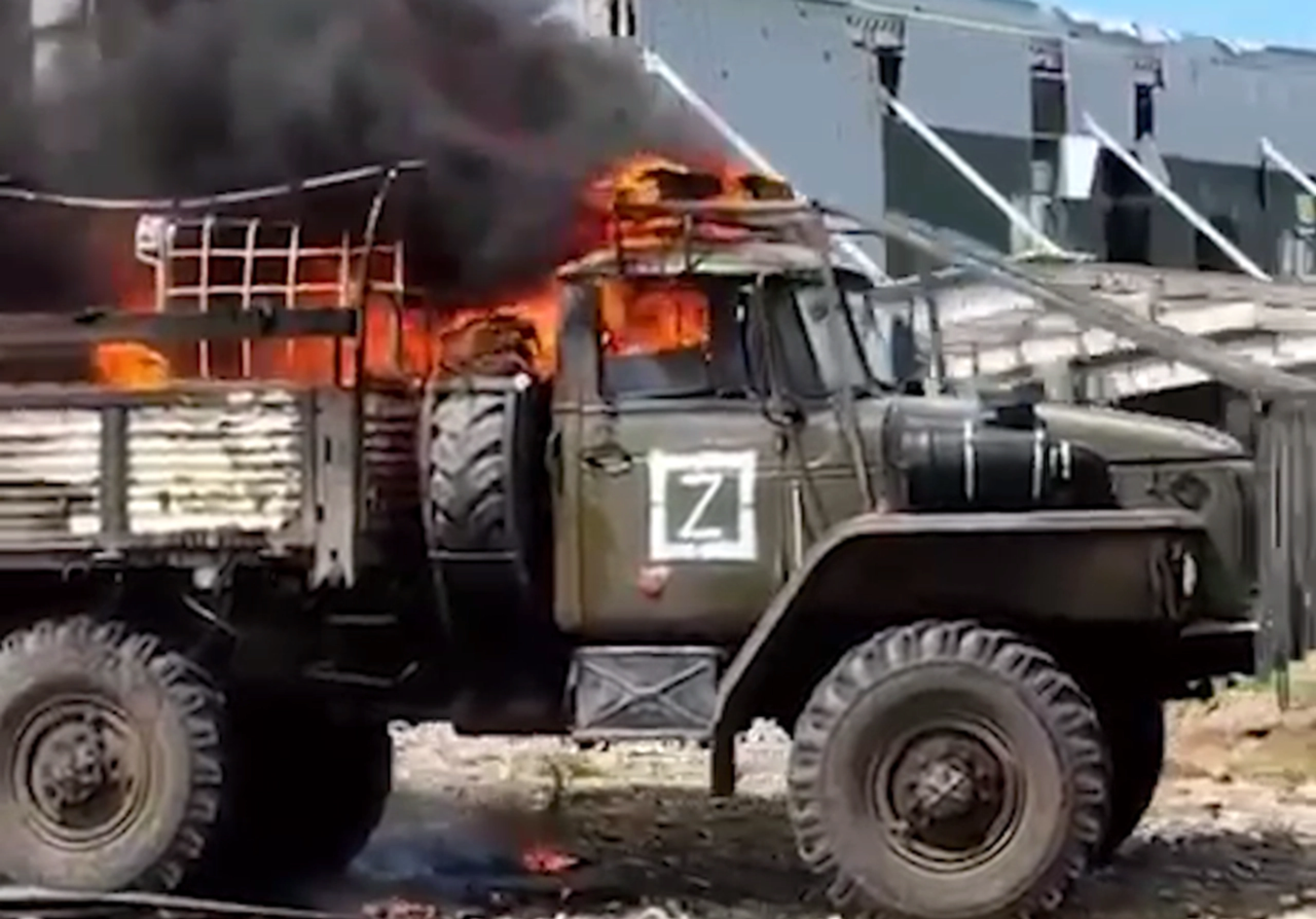
The road has been largely closed to civilian traffic since late May due to sustained strikes. Drivers and military observers have increasingly reported destroyed trucks along the route, while Ukrainian units have openly described it as being under constant surveillance.
A Ukrainian assault regiment said earlier this week: “We see all movements and fully control the enemy’s repair efforts. We are ready to make our long-range adjustments at any moment.”
According to Ukrainian drone operators cited in the report, dozens of Russian logistics vehicles, including fuel and ammunition convoys, have been destroyed in recent months as part of what Kyiv describes as a “middle strike campaign.”
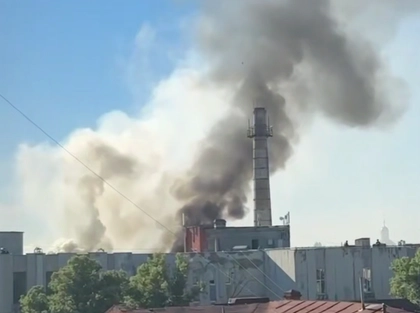
Ukraine Hits Targets 1,300 km Inside Russia, Striking Ufa Oil Refinery and Penza Missile-Linked Plant
The campaign is aimed at disrupting supply lines 20 to 200 kilometres (12 to 124 miles) behind the front line.
Ukraine intensifies strikes
Last month, President Volodymyr Zelensky said Ukrainian strikes on Russian targets had sharply intensified since February, describing a sustained escalation in long-range operations.
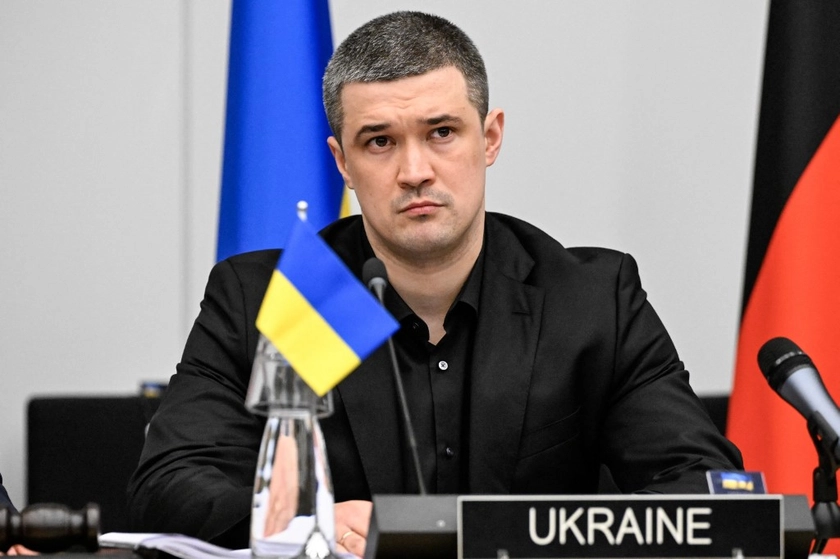
Three weeks later, Ukraine’s Defense Minister Mykhailo Fedorov said the objective was a “logistics lockdown,” with additional funding and drones being directed toward the most effective units.
“Our task now is to... create a complete logistics lockdown for the enemy,” Fedorov said, adding that the goal is to ensure the adversary “will no longer feel safe even at a great distance from the frontline.”
Ukrainian drone units have not disclosed full operational details, but reports suggest the campaign increasingly relies on drone swarms targeting logistics infrastructure, including roads, railways, and bridges, in coordinated attacks that have reportedly surprised Russian forces.
According to the Guardian report, US-made Hornet drones are said to be widely used, with operators relying on AI-assisted targeting to identify and track convoy movements.
These drones, roughly the size of a surfboard with a range of about 150 km (93 miles), have been used in near-continuous patrol-and-strike operations against Russian supply routes.
One reported consequence has been fuel shortages in occupied Crimea.
Ukraine is also deploying newer systems, including a locally produced lightweight fixed-wing drone known as “Morrigan,” which can be launched without runways using a sling or rail system.
Some reports also indicate the use of airdropped mines in affected areas.
A Russian official quoted by Meduza suggested that such mines form part of a “comprehensive remote mining system” triggered by movement, warning drivers to “limit trips unless absolutely necessary.”
Disruption to Russian logistics
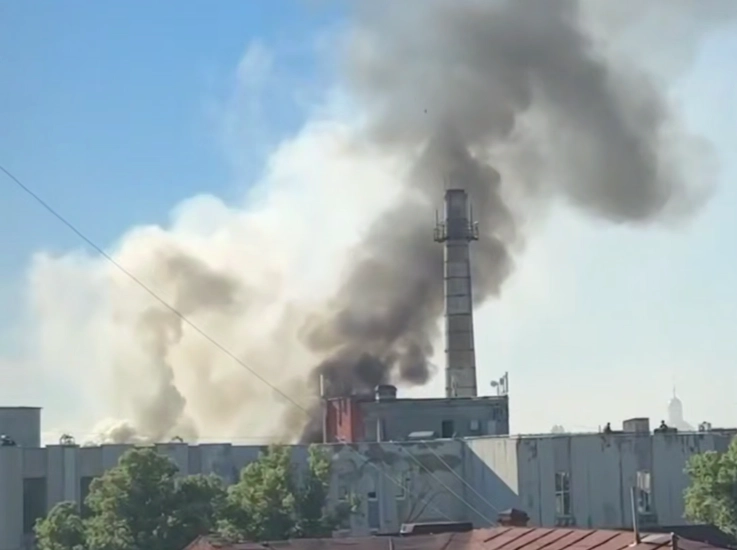
The impact on Russian logistics has been visible on the ground, with reports of destroyed vehicles and convoys increasingly forced to divert off main routes, leaving burned-out trucks along key corridors.
Independent analysts, including the US-based Institute for the Study of War (ISW), say the strikes are producing measurable operational effects.
“Ukrainian intermediate-range strikes are already achieving notable operational effects, including degrading Russia’s ability to use the key Russian highway connecting Russia to occupied Crimea and GLOCs around Donetsk City,” it said in a recent assessment.
On May 21, Vladimir Saldo, the Kremlin-installed head of the partially occupied Kherson region, introduced restrictions on civilian truck movements along the R-280 corridor.
He compared the situation to the blockade of Leningrad, calling it “cynical barbarism.”
Supply lines targeted
On Tuesday, Robert Brovdi, commander of Ukraine’s Unmanned Systems Forces (USF), said military cargo traffic along the highway had dropped by 71% over the past two weeks.
Posts from the Center for Strategic Communications (SPRAVDI) and OSINT analysts on X reported new Ukrainian strikes early Thursday morning on several key crossings linking Crimea with occupied southern Ukraine.
These include two bridges over the North Crimean Canal, a road bridge on the Perekop-Armyansk route, and another near Stavky, which OSINT analyst “Visioner” confirmed Ukrainian forces struck in an overnight attack.
New details have emerged regarding Ukraine's overnight strikes on Russian logistics in Crimea, continuing to isolate the penninsula and Russian forces in Kherson.
— SPRAVDI — Stratcom Centre (@StratcomCentre) June 11, 2026
According to the "governor" of the occupied part of Kherson region, several key crossings were hit:
- two bridges… pic.twitter.com/agIdS21w5B
The analyst described the attacks as “absolute madness,” claiming they are part of a systematic effort to place key logistics routes under sustained pressure and reduce Russia’s ability to move personnel and supplies between Crimea and mainland occupied territories.
The latest reported strikes follow earlier damage to key crossings in Chonhar and Henichesk, which had already significantly reduced the number of functional routes connecting Crimea with Russian-held parts of Kherson and Zaporizhzhia regions.
“Systematic strikes began on bridges along various sections of the highway to neutralize the bypass road passing through Armyansk,” the post claimed, adding that this could leave Crimea increasingly isolated from southern front logistics corridors.
The OSINT account also suggested that Ukrainian forces are seeking to establish “fire control” over remaining crossings, a term commonly used to describe the ability to strike targets repeatedly and prevent repair or reuse.
The analyst pointed to earlier Ukrainian attacks on the Mariupol-Berdiansk highway, which he said had already disrupted one of Russia’s key supply arteries in occupied southern Ukraine.
Per the post, Ukrainian forces are now extending pressure to alternative supply lines, including bridges, ferries, and rear-area infrastructure used to sustain Russian positions in Crimea and southern Ukraine.
However, the claims could not be independently verified. Neither Ukrainian nor Russian officials have provided full confirmation of the extent of damage to the reported crossings.
Aerial disruptions
Notably, at the end of May, Ukraine’s 3rd Army Corps launched a coordinated aerial campaign aimed at disrupting Russian supply lines across the occupied Luhansk region, marking what it described as an expansion of its long-range strike capabilities near the Russian border.
According to the Corps, unmanned systems units carried out precision drone strikes that bypassed electronic warfare defenses and hit Russian military assets, including armored vehicles and forward ammunition depots.
The deepest strike reached over 205 kilometers (127 miles) into occupied territory, targeting logistics infrastructure at the Izvaryne border checkpoint – a key supply route linking Russia’s Rostov region with the Donbas front.
Brig. General Andriy Biletsky, commander of the 3rd Army Corps, framed the operation as a direct response to Russian claims of control over the Luhansk region.
“Luhansk, Starobilsk, Alchevsk, Bryanka, Kadiivka are now under the control of the UAVs of the 3rd Army Corps,” he said, referring to the scale of drone activity over occupied areas.
The operation was reportedly led by the unmanned aerial vehicles (UAV) platoon commander with the callsign “Skhid,” a Luhansk native and Hero of Ukraine, who has returned to service after earlier fighting in Mariupol and Azovstal.
You can also highlight the text and press Ctrl + Enter