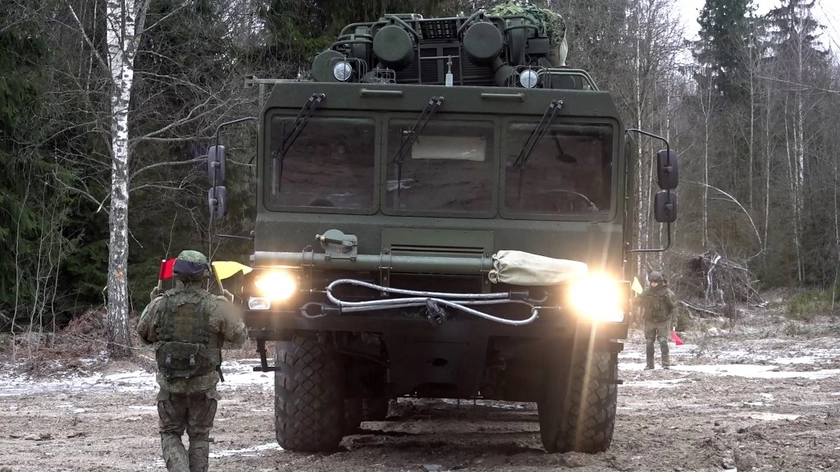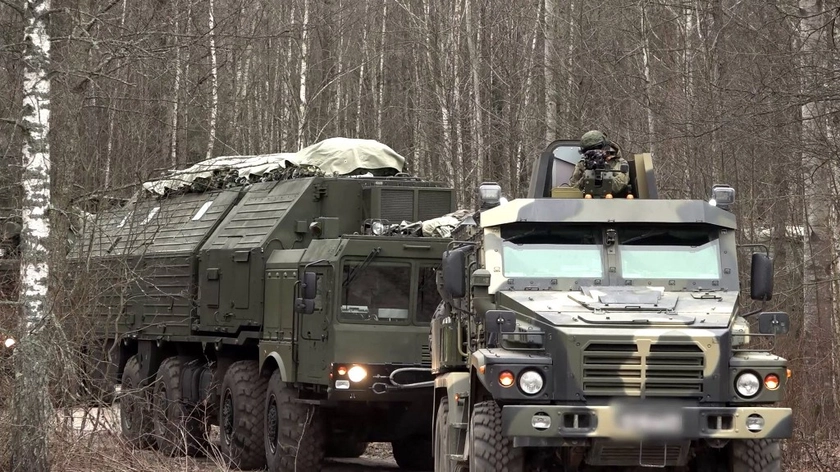
Ukrainian forensic experts have strongly challenged the Kremlin’s strategic narrative surrounding its hypersonic, nuclear-capable “Oreshnik“ intermediate-range ballistic missile, demonstrating that the weapon is nearly a decade old and contains zero Western-sourced electronic components, Reuters reported.
An “experimental” weapon made in 2017
According to technical analysis conducted by Ukrainian rocket-forensic specialists, material fragments recovered following a major Russian attack on a gas depot in the Lviv region in early January 2026 definitively pinpoint the weapon’s manufacturing timeline.
JOIN US ON TELEGRAM
Follow our coverage of the war on the @Kyivpost_official.
The data indicate that the specific Oreshnik missile deployed in the strike was assembled back in 2017, using individual electronic components manufactured in 2016 or even earlier.
“We were somewhat surprised because they say it is a very new missile, but if you look at the year of manufacture, it indicates 2017,” the expert said.
The physical evidence sharply undermines public assertions made by Russian President Vladimir Putin, who has consistently lauded the Oreshnik as a “state-of-the-art” device that does not rely on the modernization of legacy Soviet-era architectures.
Instead, the forensic data aligns with earlier assessments from the US Department of Defense, which classified the Oreshnik as an experimental, ground-based system heavily derived from Russia’s older RS-26 Rubezh intercontinental ballistic missile (ICBM) project.

Russian Region Deploys Police at Gas Stations As Fuel Crisis Deepens
Exclusively Russian and Belarusian components
Furthermore, the presentation highlighted that the Oreshnik’s internal guidance and processing systems rely exclusively on localized technology platforms manufactured within the Russia and Belarus. This industrial footprint suggests that the system’s design parameters were deliberately insulated from Western supply chains long before the imposition of sweeping international technology sanctions following Russia’s 2022 full-scale invasion.
The Oreshnik, which has an operational range between 3,000 and 5,500 kilometers, utilizes an atmospheric reentry system equipped with multiple independently targetable vehicles (MIRVs) capable of carrying nuclear payloads. While Moscow has utilized the platform three times throughout the war – initially targeting Dnipro in 2024, followed by the Lviv region in January 2026 and Bila Tserkva in May 2026 – none of the strikes carried active nuclear warheads.
While the Kremlin claims that the missile’s terminal entry speed of Mach 10 makes it entirely impossible for modern Western air defense shields to intercept, both Ukrainian and international military analysts continue to question these claims.
Experts from the Polish Institute of International Affairs (PISM) have noted that unlike authentic advanced hypersonic weapons, the Oreshnik’s warheads fail to perform complex, unpredictable evasive maneuvers during their final descent phase.
This technical limitation means that while the incoming munitions travel at high velocities, they move along fixed, predictable ballistic trajectories, leaving them theoretically vulnerable to modern anti-ballistic interceptors currently deployed on NATO’s eastern flank.
You can also highlight the text and press Ctrl + Enter

Russia Hit by 660-Drone Overnight Barrage Targeting Moscow, Crimea and Key Military Sites