Two bombs exploded near the hotel where French President Emmanuel Macron was holding meetings in Damascus on July 7, injuring 18 people, including four police officers
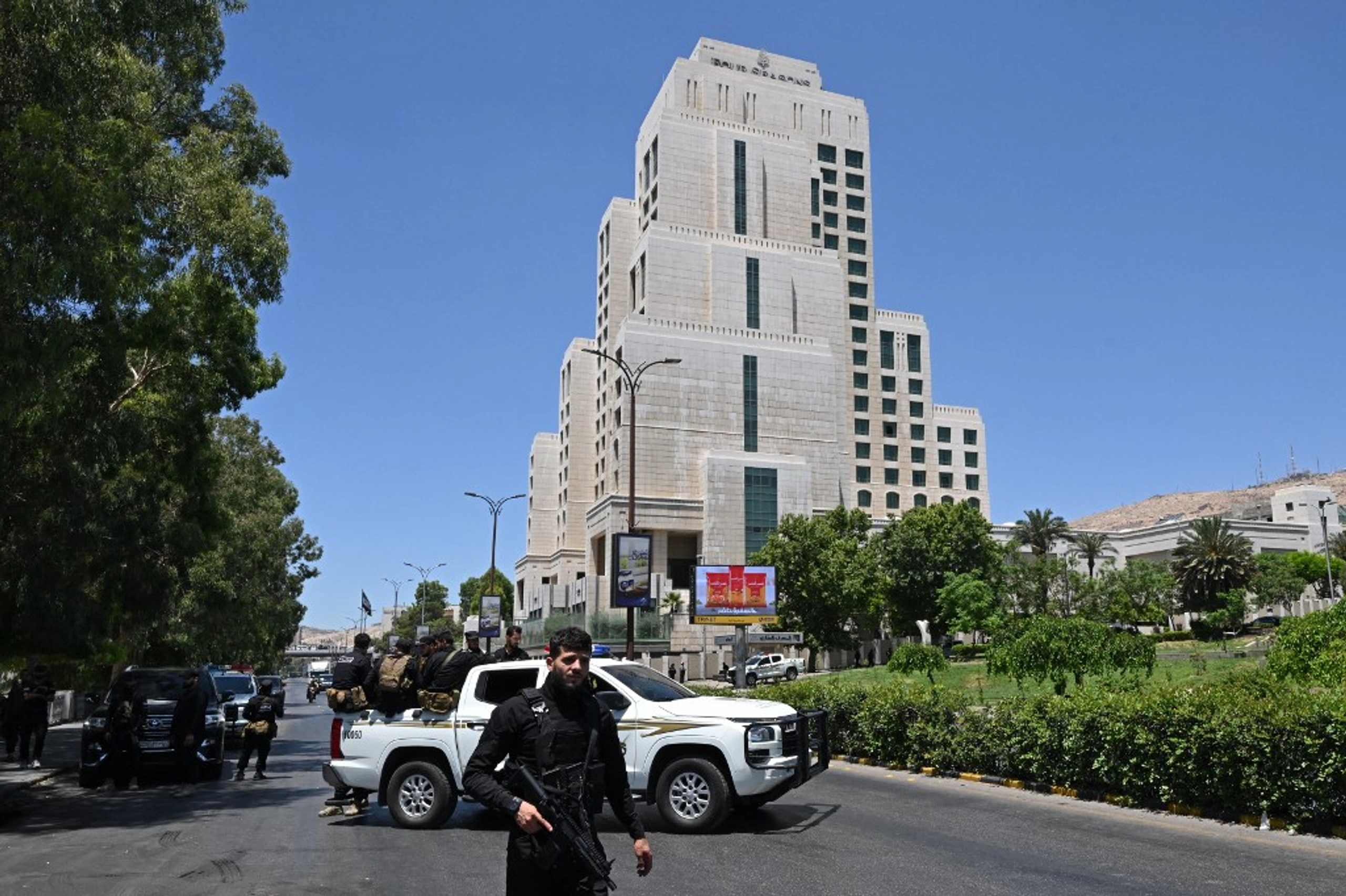
The blasts occurred in a busy area between Syria’s Tourism Ministry and the National Museum, across the street from the Four Seasons Hotel, where Macron met with civil society representatives during the first visit to Syria by the leader of a major European Union country since the overthrow of Bashar al-Assad in 2024.
JOIN US ON TELEGRAM
Follow our coverage of the war on the @Kyivpost_official.
According to Reuters security sources, the explosions occurred shortly before midnight. Roads around the area were immediately sealed off and security measures were tightened as witnesses reported hearing multiple blasts and seeing smoke rise from the scene.
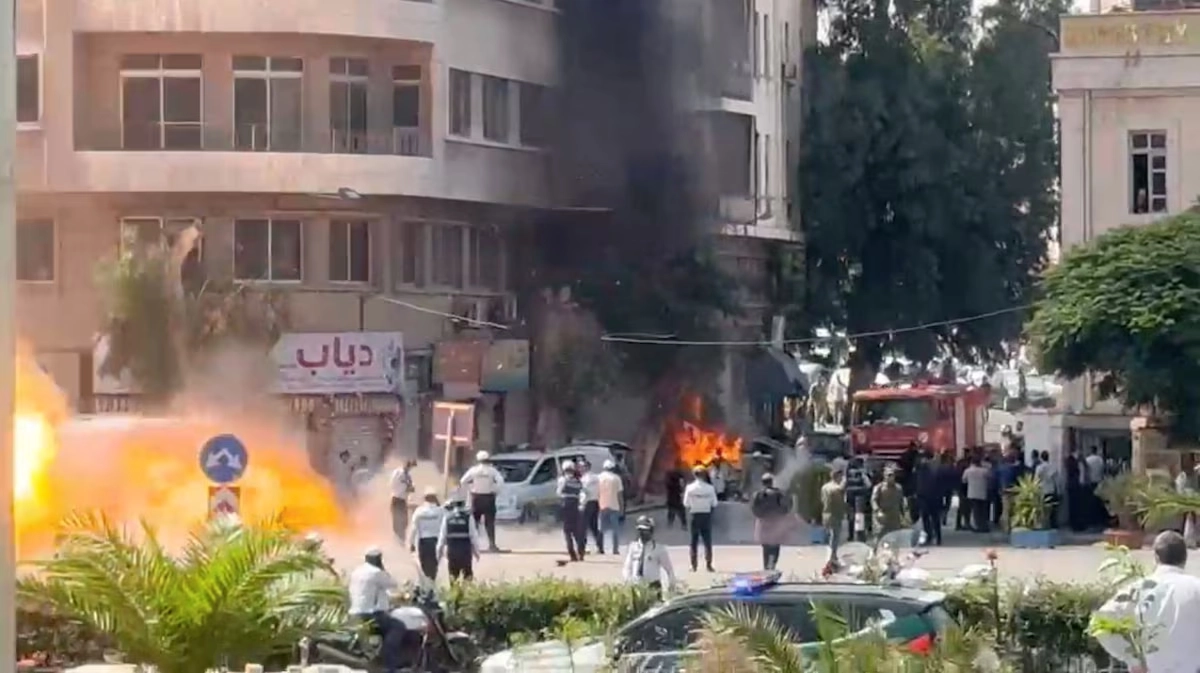
The first explosion occurred shortly after Macron’s motorcade departed for the presidential palace, where he later met Syrian President Ahmed al-Sharaa. Reuters footage showed flames and smoke rising from a trash bin before a second explosion, captured on camera just meters away, erupted next to an ambulance that had arrived at the scene.
Thick black smoke and flames were seen in the vicinity of nearby shops as emergency crews extinguished the fire.
Europe Seeks Trump’s Backing for New Ukraine Talks
Despite the explosions, the French Presidency said the blasts were not audible from the presidential motorcade and a Reuters journalist with the press group accompanying Macron did not hear the blast or see any commotion during the French president’s morning events.
The persistent security challenges facing Syria despite the country’s political transition under Sharaa, who has sought closer ties with Western and Middle Eastern governments since taking power after Assad’s ouster. Just last week, a bomb attack on a café in Damascus killed nine people and wounded 20 others, underscoring the continuing threat posed by militant violence.
New Syrian regime’s diplomatic tightrope between Kyiv, Moscow
Syria’s new regime had swung between Kyiv and Moscow after Assad’s ousting, though recent diplomatic signals suggest it has now chosen to maintain some ties with Moscow.
Russia had agreements with the Assad regime to keep two permanent military bases in Syria, along with numerous outposts across the country. Kremlin forces supported Assad’s assaults on rebel positions – including through airstrikes – following Moscow’s initial intervention in 2015.
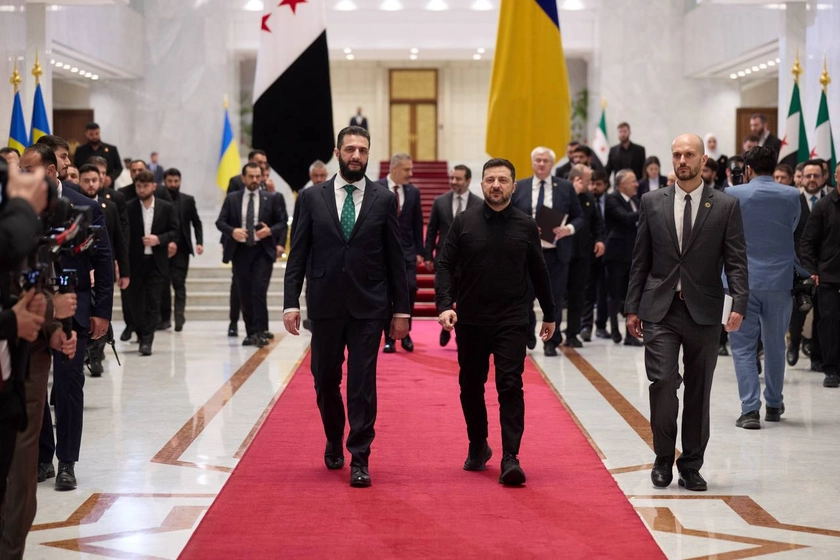
In late December 2024, Ukraine’s foreign minister visited Damascus for talks with the new administration, and Syria received 500 tons of flour from Ukraine under the UN program a month later.
Kyiv and Damascus restored diplomatic ties in September 2025.
After Assad’s ousting, the new government had for months shown caution on the prospect of Russia’s military bases, but in July 2025, Damascus and Moscow signaled they would bolster ties and review agreements made under the Assad regime.
Last October, Russia resumed military flights to the Hmeimim Air Base in Syria after nearly six months of inactivity, suggesting that some agreement has been reached.
You can also highlight the text and press Ctrl + Enter