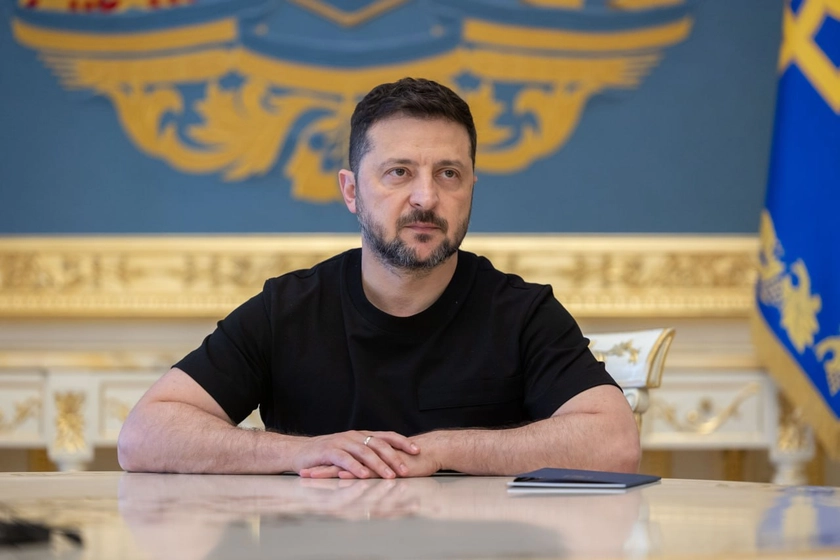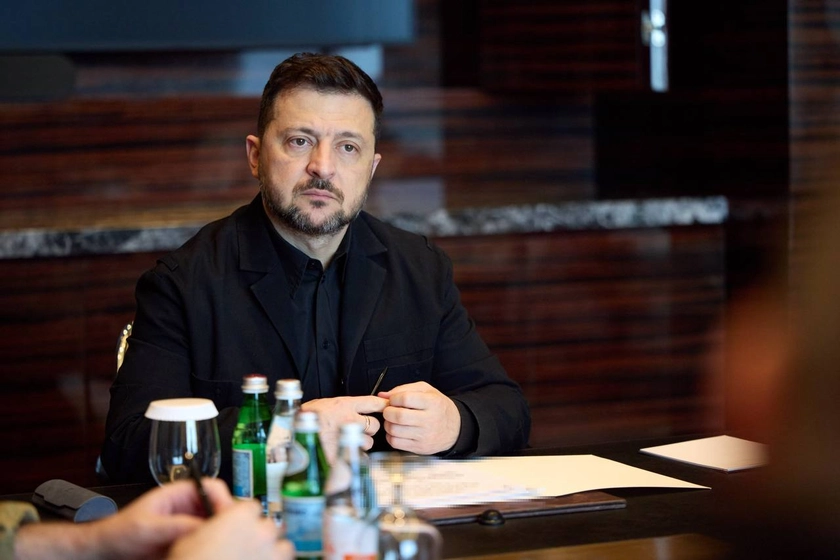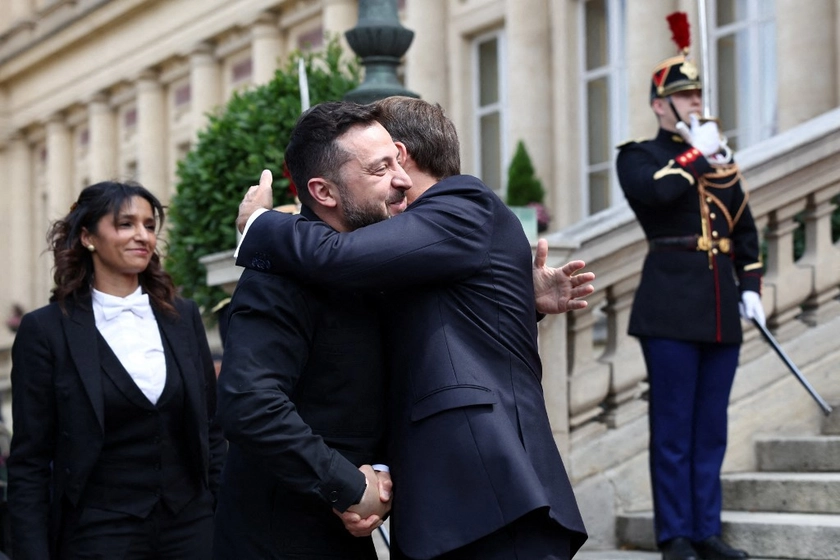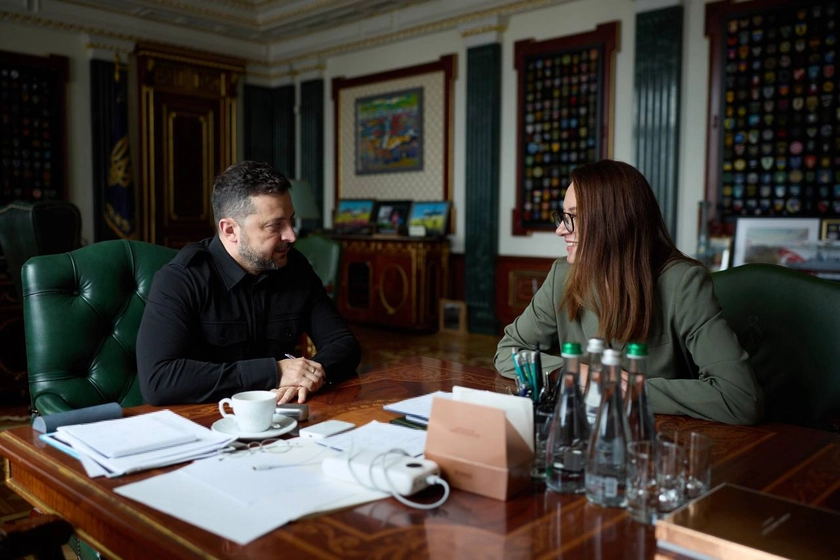
When President Volodymyr Zelensky announced Yuliia Svyrydenko’s resignation as prime minister on Sunday, the news was largely overshadowed by what appeared to be more significant stories – the destruction of Russian vessels in the Black Sea, and the scandal surrounding the abduction and murder of two civilians by servicemen of the 155th Separate Mechanized Brigade.
Amid these widely discussed stories, one headline stood out unexpectedly: President Zelensky had decided to remove Svyrydenko from office.
JOIN US ON TELEGRAM
Follow our coverage of the war on the @Kyivpost_official.
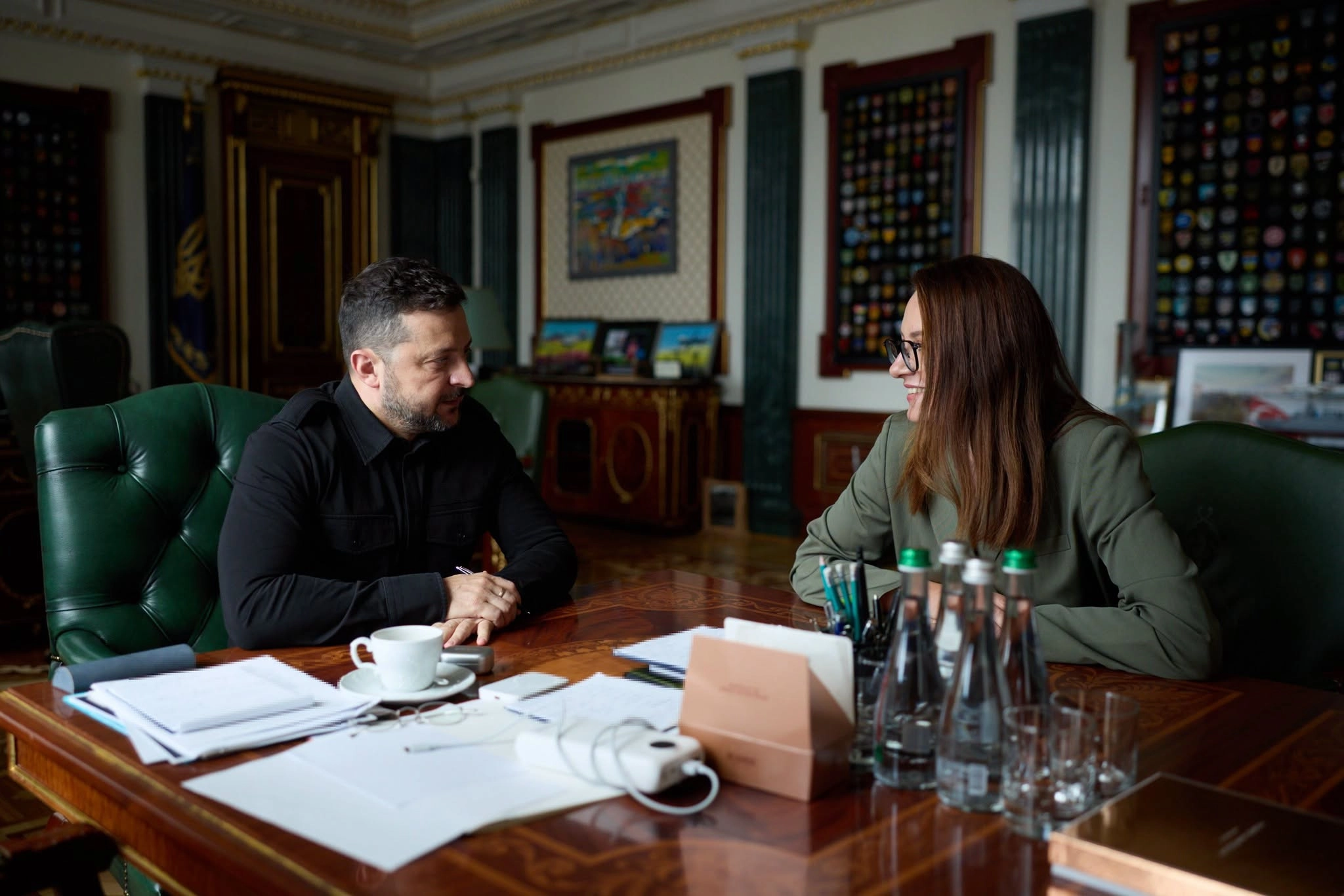
“We discussed the details with Prime Minister of Ukraine Yulia Svyrydenko. We agreed that the changes ahead require a renewal of the Cabinet of Ministers,” the presidential statement said.
The prime minister herself appeared to offer no resistance.
“I am grateful to the president for his trust and for his high assessment of our team’s work. I am proud to have had the honor of leading the government during the most difficult period in Ukraine’s modern history,” Svyrydenko said in her own statement.
This is a highly unusual fate for a Ukrainian prime minister. Few have left office voluntarily. More often, they had to be forced out after fierce political battles.
Svyrydenko’s departure was entirely different. Her compliant resignation – coming almost exactly one year after her appointment (she took office on July 17) and following an equally smooth ascent to the premiership – was a surprise.
'Russian Leadership Has Gone Crazy Over War' – Zelensky After Fresh Drone Attacks
A year in the shadows
Yulia Svyrydenko’s year as prime minister will be remembered for the harshest winter in Ukraine’s history, escalating tensions with Poland, and several populist measures, including social payments tied to the purchase of a certain amount of gasoline to compensate motorists for the sharp rise in fuel prices that followed the start of the US military campaign against Iran.
At the same time, Svyrydenko herself never appeared to be a sufficiently independent prime minister, despite taking responsibility for virtually every government initiative, even those that were notoriously difficult to develop and implement.
Her cabinet was widely regarded as one of the more progressive governments Ukraine has had. Economy Minister Taras Kachka, Finance Minister Serhii Marchenko, and Social Policy Minister Denys Uliutin – two of whom joined the cabinet together with Svyrydenko – were considered by experts to be among its strongest members. Overall, the government made remarkably few serious mistakes.
So what went wrong?
Part of the answer lies with Svyrydenko herself.
She joined the government from the Office of the President (OP), where she spent 2020-21 overseeing economic policy. This was nothing unusual. Minister for Communities and Territories Development Oleksiy Kuleba also came from the OP, and such appointments were not considered problematic. For years, the OP (and before it, the Presidential Administration) has maintained departments responsible for analyzing policy and developments in key sectors – including defense, the economy, foreign affairs, and social policy – to support the president’s decision-making. In practice, it functions as a parallel government.
It was from this institution that Svyrydenko moved to the post of economy minister in 2021, a position she held for nearly four years.
During that time, she worked on stabilizing Ukraine’s wartime economy, relocating enterprises away from frontline areas, coordinating reconstruction efforts, and even negotiating the landmark US-Ukraine “Resource Agreement” in the spring of 2025.
The problem, however, was that many continued to see her primarily as a representative of the OP. Opposition politicians even nicknamed her “Yulia-Whatever-You-Want,” suggesting that she lacked political independence.
Indeed, according to Kyiv Post sources within the cabinet, Svyrydenko’s government relied heavily on close coordination with the OP and its then-powerful chief, Andriy Yermak.
That changed in the fall of 2025.
Following the major corruption scandal known as “Mindichgate,” Zelensky was ultimately forced to dismiss Yermak as his chief of staff. His successor as head of the OP, Kyrylo Budanov, has shown far less interest in involving himself in the day-to-day management of the government.
The scandal also affected several members of Svyrydenko’s cabinet. The ministers of energy and environmental protection became implicated in corruption accusations and had to be removed from office on an emergency basis.
In this new political reality, the cabinet lacked the degree of autonomy it had enjoyed under Denys Shmyhal. At the same time, bringing Shmyhal back as prime minister during the country’s most difficult winter made little sense. He had taken over the Energy Ministry and was fully engaged in emergency efforts to prevent the collapse of Ukraine’s energy system – a task in which he ultimately succeeded.
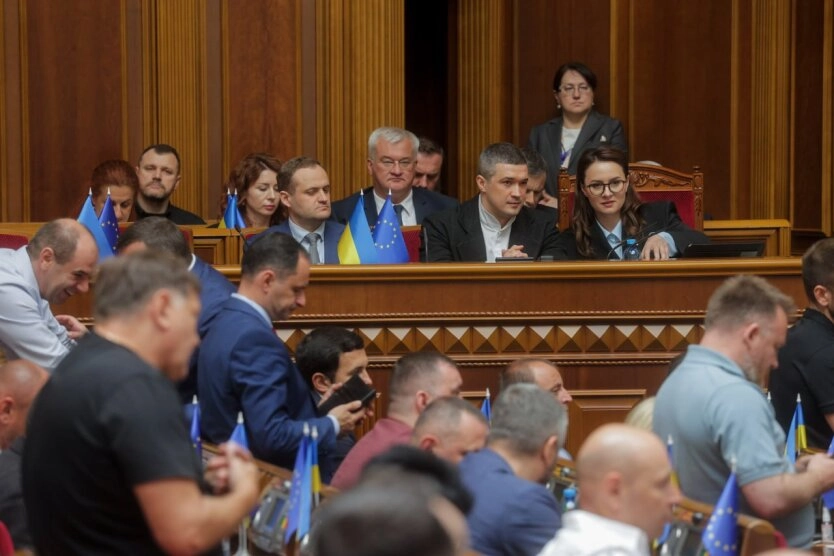
Svyrydenko’s cabinet also lacked political legitimacy in parliament. She rarely attended the weekly “Question Hour for the Government” – the Thursday afternoon session during which ministers and the prime minister answer lawmakers’ questions – and it was there that she faced the strongest criticism. Many MPs, including members of the ruling faction, never forgave the way she had been appointed a year earlier, when her nomination was effectively handed down to them without consultation.
Strengthening the government ahead of winter has become a necessity.
Despite Ukraine’s successes in the spring and summer of 2026, Donald Trump’s shift toward a more pro-Ukrainian position, and successful strikes against Russia’s oil industry, Moscow has shown no intention of ending the war.
With long-range missile strikes remaining Russia’s principal military advantage, and global stockpiles of ballistic missile interceptors nearing depletion, Ukraine is likely to face another wave of attacks this winter against virtually every target Russia can still reach.
There is little reason to believe the coming winter will be any easier than the last.
There were also concerns about several individual ministers whom the authorities have decided to replace.
Negotiations with the European Union have been progressing slowly on the economic front. Education Minister Oksen Lisovyi has faced mounting criticism over the administration of the National Multi-Subject Test, which many students in frontline regions were unable to complete under normal conditions and which many experts believe should be simplified. He has also come under criticism from the academic community over broader education policy, including publication requirements for university faculty that, according to educators themselves, undermine their ability to focus on substantive teaching and research.
For now, however, no concrete decisions regarding ministerial appointments have been announced.
Under Ukraine’s constitution, the resignation of the prime minister automatically entails the resignation of the entire cabinet. Nevertheless, Kyiv Post sources are convinced that a number of ministers will remain in office. Most of the economic bloc is expected to stay. Denys Shmyhal will almost certainly remain in government, although it is unclear in what capacity. Mykhailo Fedorov is also expected to stay, particularly after his work at the Ministry of Defense helped establish what many now describe as Ukraine’s “drone dominance.”
What comes next for Svyrydenko?
Nothing has been officially announced, but virtually all Ukrainian media outlets have pointed to a possible appointment as Ukraine’s ambassador to the United States.
And Zelensky himself also wrote in his statement: “I have offered her the opportunity to lead a new and important area of relations with a key partner.”
Well, that looks like a good deal. Especially knowing that Svyrydenko enjoys good working relations with members of Donald Trump’s team, with whom she negotiated the US-Ukraine Resource Agreement.
Who will replace Svyrydenko?
Sources point to one clear frontrunner among Svyrydenko’s potential successors, along with several less likely candidates.
President Volodymyr Zelensky met last night with Sergii Koretskyi, Mykhailo Fedorov, Denys Shmyhal, Oleksandr Klymenko, and Kharkiv Mayor Ihor Terekhov.
Our sources do not believe the meeting with Terekhov concerned the premiership. Rather, it was likely about a possible ministerial appointment. As the mayor of a frontline city of more than one million residents, Terekhov has accumulated considerable experience managing a large urban community under wartime conditions.
Moreover, Zelensky has already relied on a similar approach. Two years ago, Serhii Sukhomlyn, the mayor of Zhytomyr who modernized the city during Ukraine’s decentralization reform, was appointed head of the State Agency for Restoration.
Shmyhal, Klymenko and Fedorov are already members of the cabinet.
Shmyhal, a former prime minister, holds the record as the longest-serving head of government in independent Ukraine, having spent more than five years in office. With a professional background in the energy sector, he has devoted the past six months to stabilizing and restoring Ukraine’s energy system.
The prospect of Shmyhal’s return sparked a flood of memes and jokes on social media. However, our sources argue that keeping him focused on his current responsibilities ahead of another difficult winter would be the more logical course of action. Bringing him back to the premiership after only a year under Svyrydenko could also cast doubt on Zelensky’s judgment, raising questions about whether such a move would amount to an admission that appointing Svyrydenko had been a mistake.
“I don’t think so. Former prime ministers usually stay former prime ministers. Besides, Shmyhal seems quite comfortable in his current position,” one cabinet member told Kyiv Post.
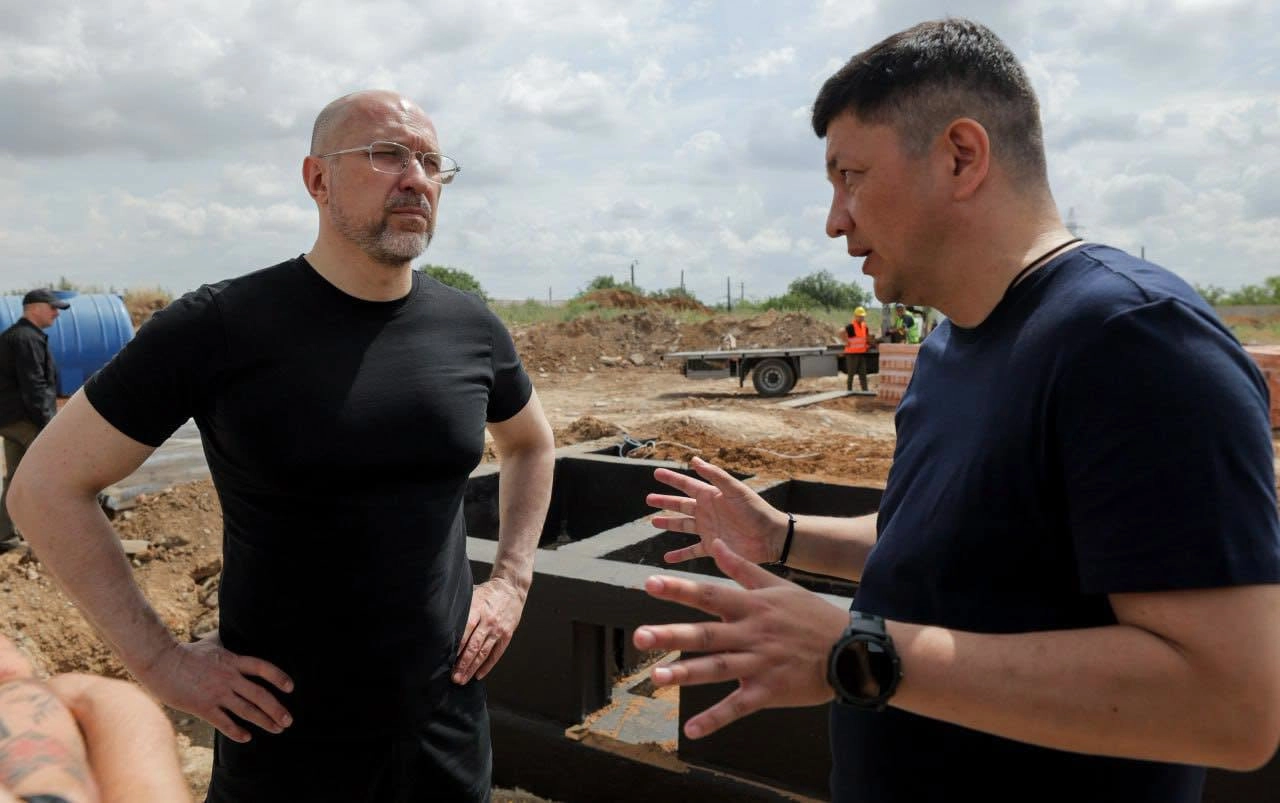
A similar argument applies to Mykhailo Fedorov. The reform-minded minister has only recently begun implementing his agenda at the Ministry of Defense. His efforts to overhaul procurement procedures and streamline bureaucratic processes have already generated resistance, but those reforms are still in their early stages.
Oleksandr Klymenko, the minister of interior, was named by some sources as a possible replacement for Fedorov as minister of defense, but only if Fedorov would agree to become prime minister. Otherwise that scenario looks unlikely.
That leaves one candidate: Sergii Koretskyi.
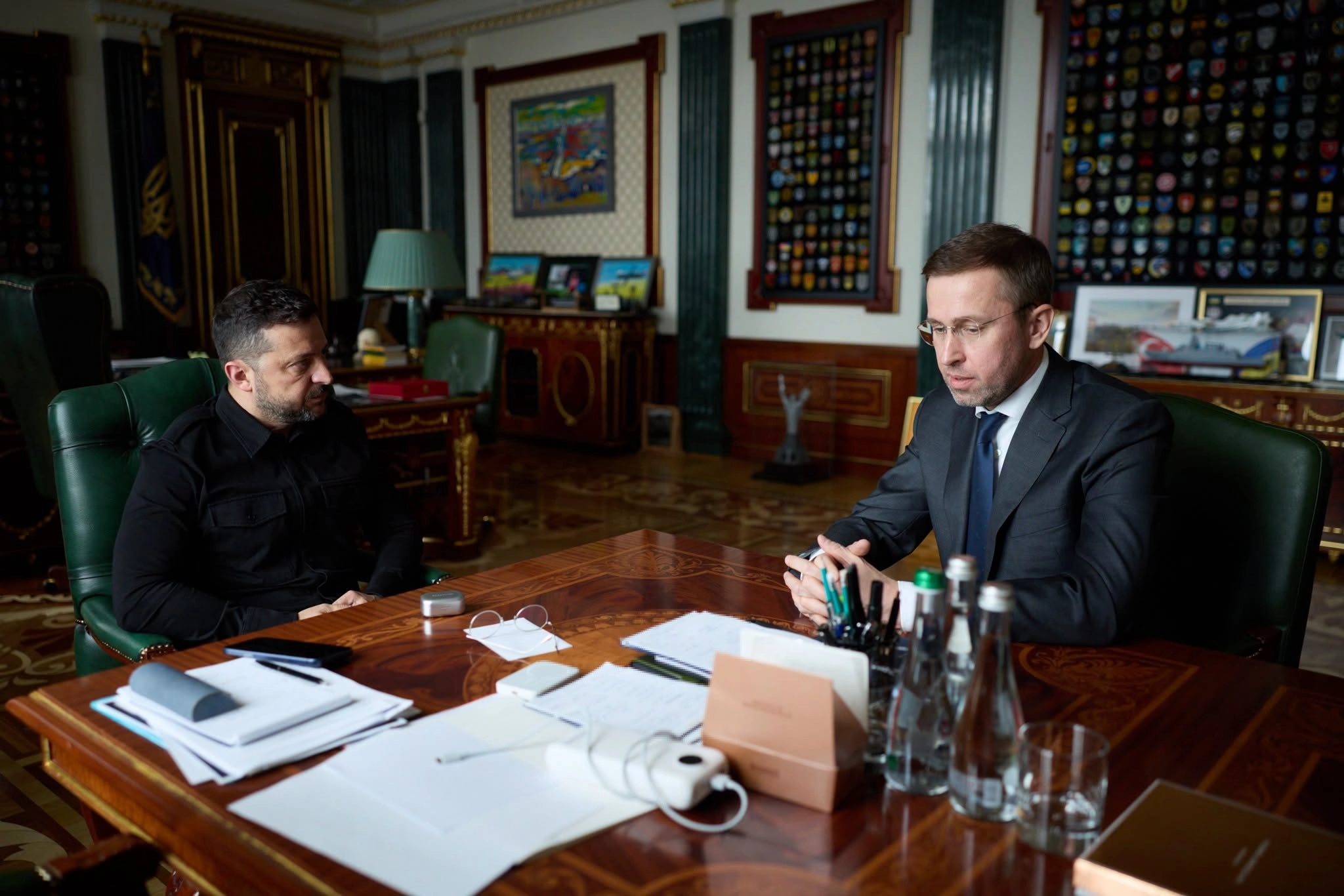
The 48-year-old has spent the past year as CEO of Naftogaz, Ukraine’s state-owned energy giant. Before that, he headed Ukrnafta, the state oil company that operates Ukraine’s largest chain of filling stations, transforming it from a loss-making outsider into a profitable business while elevating its service standards to compete with the country’s leading premium fuel retailers.
Earlier in his career, Koretskyi spent two decades (1998-2018) at the oil trading company Kontynium, serving as its CEO during the final five years. The company became best known for developing the WOG (Western Oil Group) network, which pioneered the concept of premium filling stations in Ukraine, combining high-quality fuel services with restaurants and large convenience stores.
“Koretskyi is an exceptionally capable modern manager – a sharp, clear-thinking professional. I worked with him as a contractor, and his decision-making was always precise. There was never the slightest hint of corruption, kickbacks, or anything of that sort,” one businessman who worked with Koretskyi for several years told Kyiv Post.
Several other people familiar with his work offered similar assessments.
The impression is that Zelensky continues to look for a strong operational manager. In 2020, that role was filled by Denys Shmyhal, who also came from the energy sector. But according to our sources, Koretskyi possesses another important quality.
“He never showed much interest in politics and never came across as someone eager to become a major politician or senior government official – at least that’s certainly not the impression he gave us,” said another person who worked with Koretskyi.
The outcome of Zelensky’s meetings with each of the potential candidates remains unknown. The president himself didn’t give enough clear comments on the meeting with Koretskyi. He merely said: “Today, we discussed the steps our country needs to strengthen Ukraine’s resilience and deliver the expected results under our state’s updated political strategy.”
However, the most likely scenario is that Ukraine will soon have a somewhat reshuffled and more autonomous government led by an experienced senior operational executive from the energy sector.
And yes – just like Shmyhal’s cabinet before it – this one will be a government of wartime struggle.
You can also highlight the text and press Ctrl + Enter

Trump Says US Will Let Ukraine Build Patriot Systems: ‘We’ll Show Them How to Make Them’