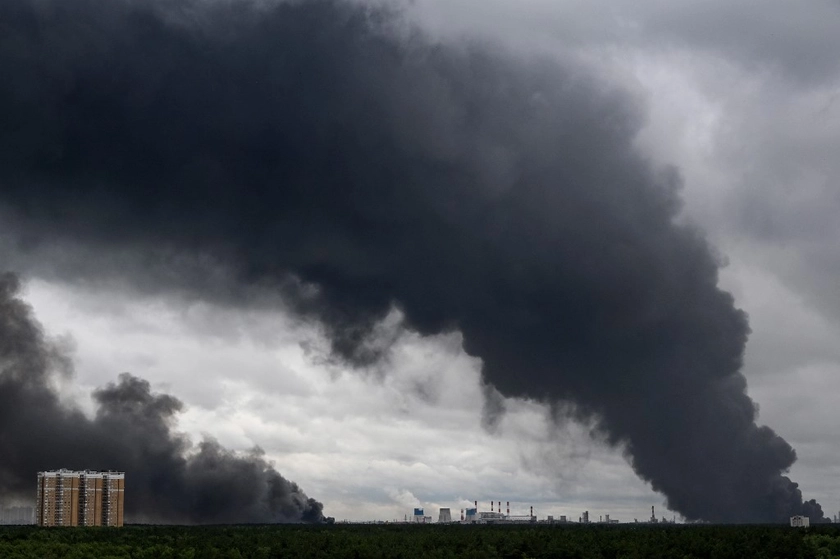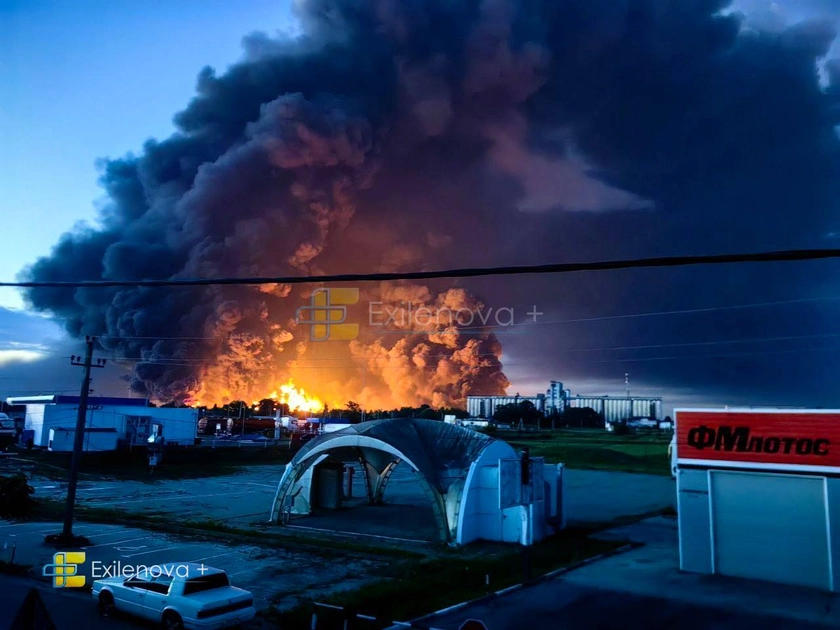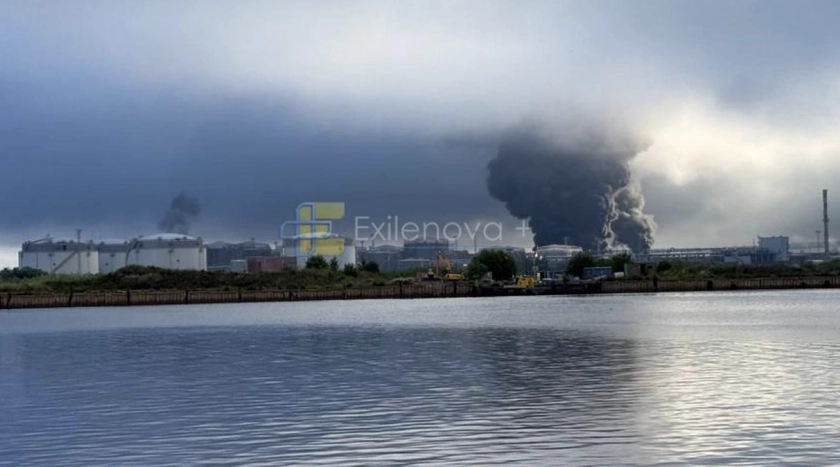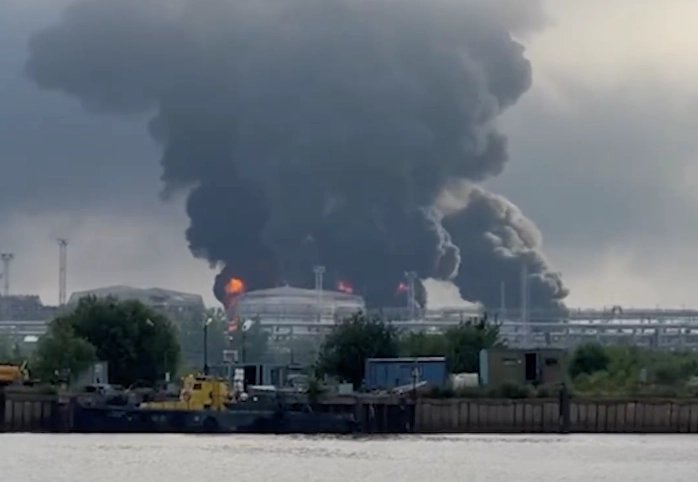
Ukrainian Defense Forces launched coordinated drone strikes against port oil infrastructure in St. Petersburg and a military facility in Kronstadt in Russia on July 4.
President Volodymyr Zelensky confirmed the operation in a statement, noting that the targets were located more than 850 kilometers from the Ukrainian state border.
JOIN US ON TELEGRAM
Follow our coverage of the war on the @Kyivpost_official.
“This night, our Ukrainian long-range sanctions against Russia for this war worked near St. Petersburg,” Zelensky stated. “The Ukrainian Defense Forces hit port oil infrastructure that generates revenue for the Russian war effort, and there were also hits on Kronstadt – an important military target.”
The Command of the Special Operations Forces (SOF) of the Armed Forces of Ukraine provided additional details, confirming that their drones struck the St. Petersburg Oil Terminal. The operation was conducted jointly by SOF Deep Strike units, the Unmanned Systems Forces, the Main Intelligence Directorate (HUR) of the Ministry of Defense, and the Security Service of Ukraine (SBU).
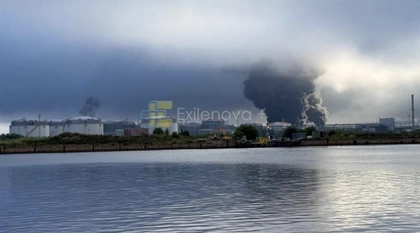
According to military officials, several drones successfully reached the target, resulting in an active fire at the facility. The St. Petersburg Oil Terminal is one of the primary Baltic hubs for the export of Russian oil products, with an annual processing capacity of 12.5 million tons.
Drone Strikes Target Energy Infrastructure in St. Petersburg, Belgorod, and Moscow
The facility manages tanker shipments to regions including Africa and the Middle East, serving as a significant source of revenue for the Russian military budget.
Wider regional impacts in Leningrad
The confirmed strikes align with reports from local residents and open-source intelligence analysts who recorded multiple fires at the terminal located within the city’s port.
The Leningrad region experienced broader drone activity overnight. Governor Alexander Drozdenko reported that drone debris fell in the port of Vysotsk on the Baltic Sea, situated 90 kilometers from St. Petersburg, which houses a Lukoil oil terminal.
Russian authorities stated that air defenses intercepted a total of 67 unmanned aerial vehicles (UAVs) over the Leningrad region on Saturday morning.
Simultaneous strikes on Belgorod and Moscow
The operation in the Baltic region coincided with a series of drone strikes targeting energy and industrial facilities across multiple other Russian regions.
In the southern city of Belgorod, e explosions on July 4 resulted in widespread electricity and water supply disruptions. Belgorod Governor Alexander Shuvayev characterized the incident as a “massive strike” that damaged local infrastructure. Local media reported that the strikes triggered a fire at the Luch thermal power plant, prompting the deployment of emergency response teams.
The incident followed a previous attack on Friday, July 3, which damaged a 110 kV substation at the Michurinskaya gas-turbine thermal power plant in Belgorod, causing similar utility outages.
Additionally, drone activity was reported near the Russian capital. Early on Saturday, Moscow Mayor Sergey Sobyanin stated that air defenses intercepted a wave of 16 drones flying toward the city. Emergency services were dispatched to manage falling debris, with no immediate official reports of casualties.
The weekend strikes follow a confirmed Ukrainian military operation on Thursday that targeted the Lukoil-Nizhegorodnefteorgsintez refinery in Kstovo. Preliminary assessments indicate that the strike damaged the AVT-6 primary oil processing unit, triggering a fire. The Kstovo facility is Russia’s fourth-largest oil refinery and serves as a primary fuel supplier for the Moscow region.
You can also highlight the text and press Ctrl + Enter