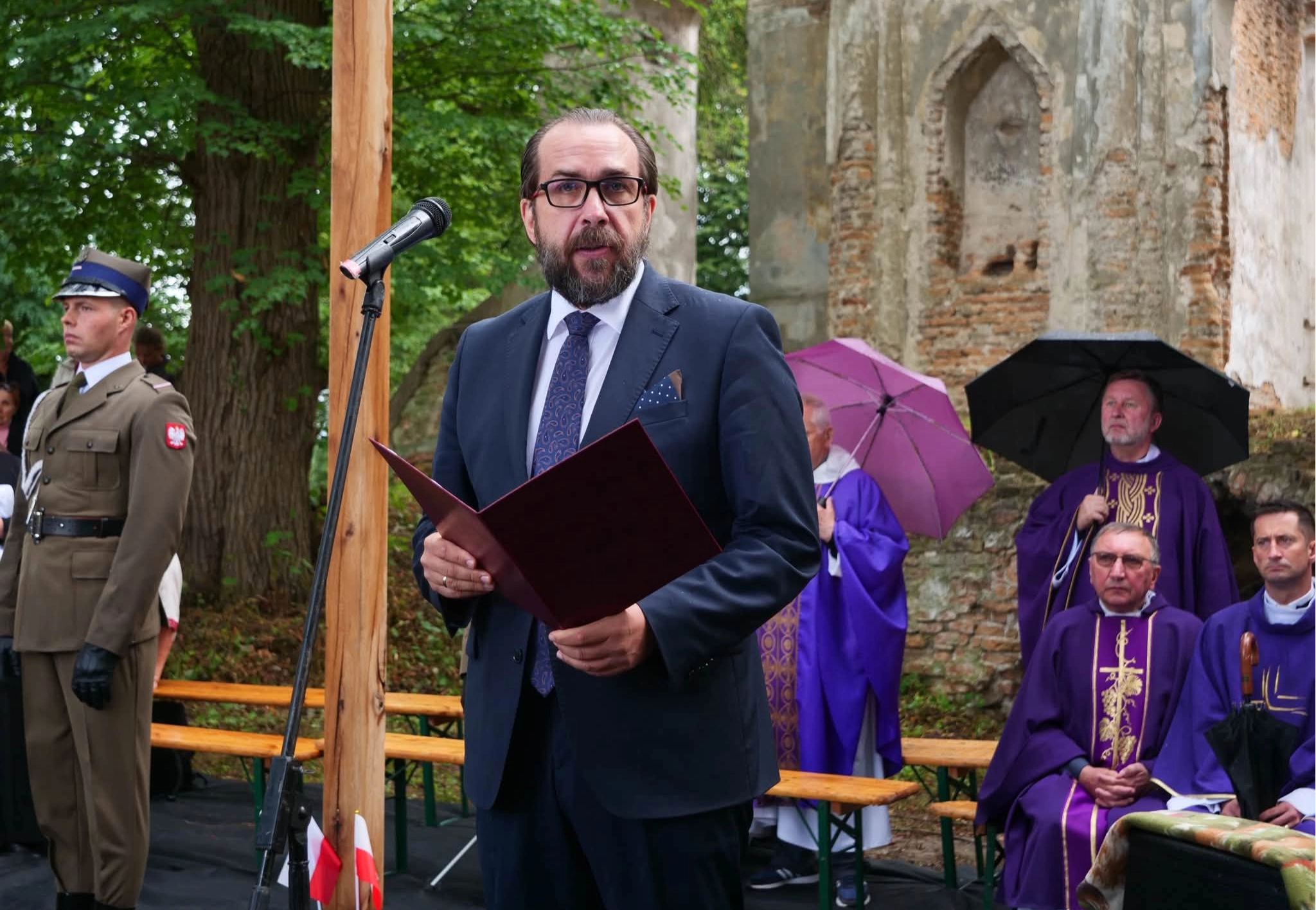
Poland’s chargé d’affaires in Ukraine, Piotr Łukasiewicz, has come under criticism in Poland following remarks he made during a ceremony commemorating the victims of the Volhynia massacres in Olyka, western Ukraine, on Saturday.
According to Wiadomosci outlet, speaking at the event marking the 83rd anniversary of the Volhynia massacres, Łukasiewicz said:
JOIN US ON TELEGRAM
Follow our coverage of the war on the @Kyivpost_official.
“While bowing my head before the Polish victims of Ukrainian violence in Volhynia, I cannot fail to mention the Ukrainian victims of the Polish state before and during the war. I am not creating a false equivalence, but we also remember what was shameful and unworthy.”
The remarks sparked debate in Poland, with critics arguing that referring to Ukrainian victims in the context of the Volhynia commemorations risked drawing an inappropriate comparison between the Volhynia massacres and retaliatory actions carried out by Polish forces.
Among the critics was former Polish ambassador to Ukraine Jan Piekło, who told Wirtualna Polska that he viewed the remarks as an example of “false equivalence” that could harm both Poland’s national interest and Polish-Ukrainian relations.
Piekło also questioned whether the speech had been prepared solely by Łukasiewicz or coordinated with Poland’s Foreign Ministry.
He added that the diplomat appeared to read the speech from prepared notes, suggesting the text may have been approved in advance, though he offered no evidence to support that claim.
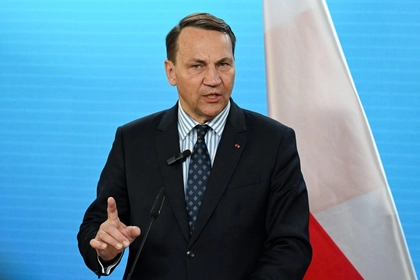
‘No Panic’: Russia Lacks Capacity to Attack Poland, Says Foreign Minister Sikorski
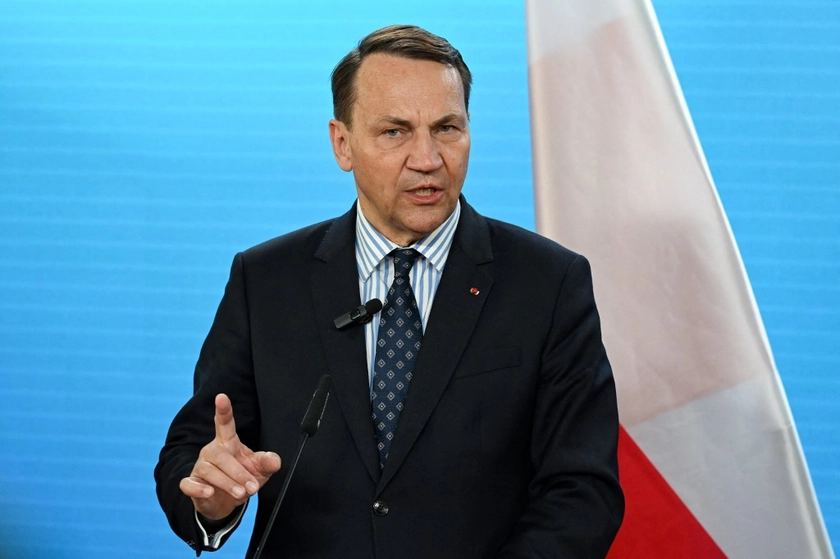
Polish Foreign Minister Radosław Sikorski defended Łukasiewicz, while Piekło argued that the speech departed from the Polish government’s broader messaging on historical issues.
He also criticized the delivery of the address, saying speeches at such commemorations are generally more effective when delivered without reading from a prepared text.
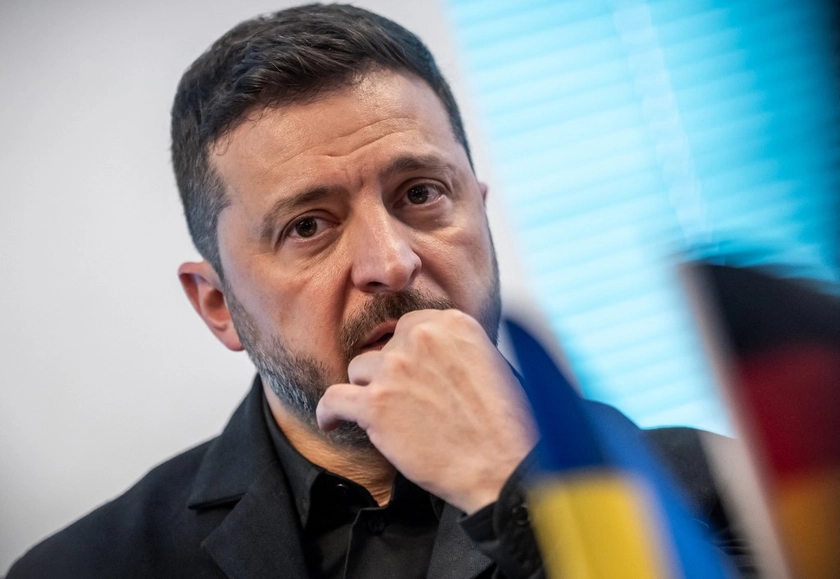
On July 11, President Volodymyr Zelensky, following joint Ukrainian-Polish commemorative events, said Ukraine is committed to accelerating search and exhumation efforts related to the victims of the Volhynia tragedy.
“Ukraine is doing its part to honestly establish the facts about those who died during those years. Search efforts are underway to identify the locations of former villages and burial sites. Ukraine is interested in accelerating this work. Exhumation efforts will begin in two days in the villages of Ostrivky and Volya Ostrovetska,” Zelensky wrote.
According to the president, establishing the historical truth and ensuring a dignified commemoration of all victims are essential for mutual understanding between Ukrainians and Poles.
At the same time, he stressed that historical disputes must not undermine the future of bilateral relations.
“We must not forget that today Ukraine and Poland share a common threat – a deadly threat to our independence, our states, every city and every village. That threat is Russia,” Zelensky wrote.
“While acknowledging what happened in the past, we must not put the future of our peoples – the future of Ukraine, Poland, and all of Europe – into question,” he added.
Poland’s Deputy Prime Minister and Defense Minister, Władysław Kosiniak-Kamysz, traveled to Ukraine to take part in the commemorative events in Olyka alongside Ukrainian officials.
During the ceremony, Kosiniak-Kamysz said he had come “with a message of peace” and urged both nations not to allow historical memory to become a source of renewed hostility.
“We cannot fall into a deadly spiral of hatred. It is impossible to move forward without ensuring a dignified commemoration of the victims,” he said.
July 11 is observed in Poland as the National Day of Remembrance for the Victims of the Genocide Committed by Ukrainian Nationalists against the Citizens of the Second Polish Republic. Since 2025, the anniversary has been commemorated as an official state remembrance day.
The mass killings of civilians during World War II – referred to in Ukraine as the Volyn tragedy and in Poland as the Volhynia massacre – remain one of the most sensitive issues in Polish-Ukrainian relations.
Ahead of this year’s anniversary, Poland’s Institute of National Remembrance (IPN) reiterated that, under international law, the killings committed by Ukrainian nationalists against Polish civilians constitute genocide. The institute estimates that around 100,000 Poles were killed.
The Ukrainian Institute of National Remembrance, meanwhile, says the identities of approximately 30,000 Polish victims have been established. According to the Ukrainian Catholic University’s research program Victims of the Ukrainian-Polish Conflict, 1939-47, researchers have also identified more than 30,000 Ukrainian victims, over 20,000 of them by name.
You can also highlight the text and press Ctrl + Enter

OPINION: The Bill for Crimea Comes Due for Putin