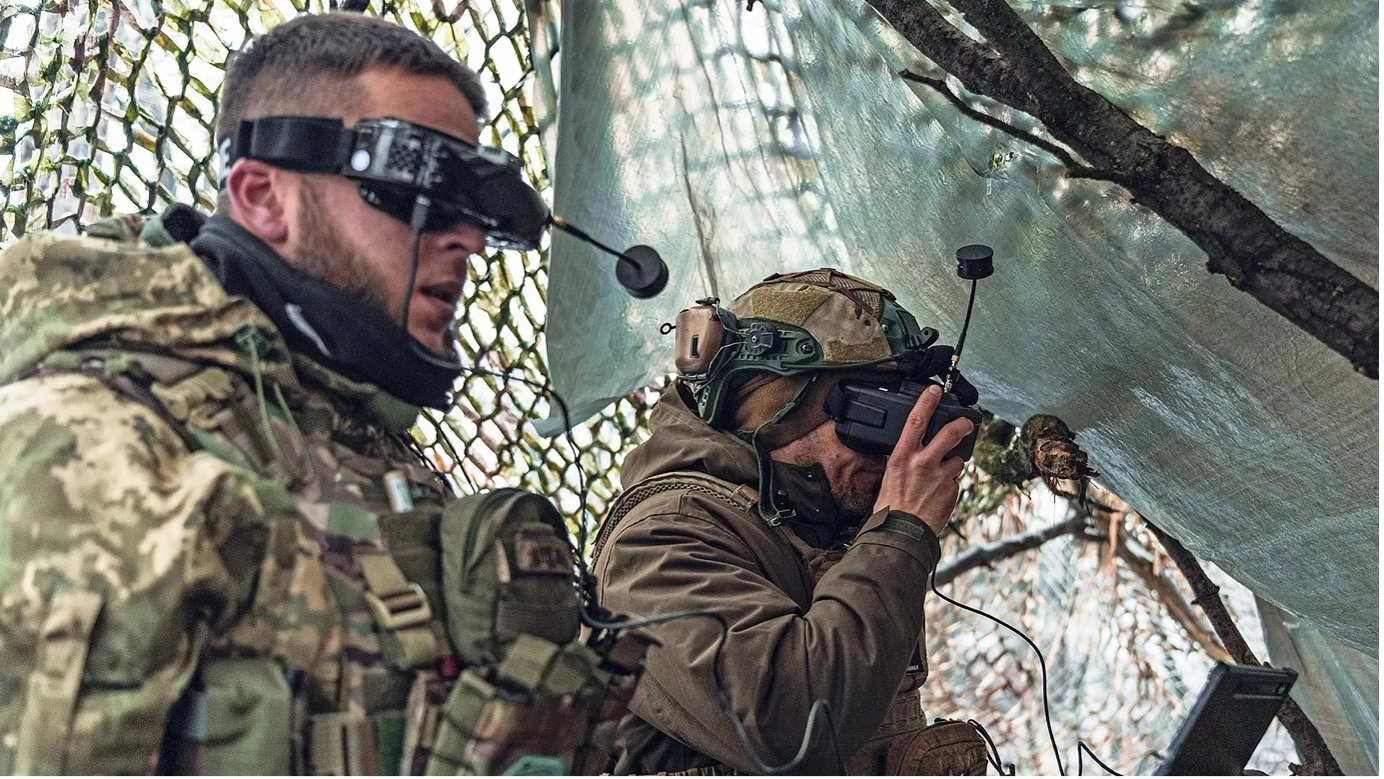
At the start of Russia’s full-scale invasion of Ukraine, conventional and rocket artillery ruled the battlefield and inflicted most troop casualties and destruction of armor and other heavy weapons.
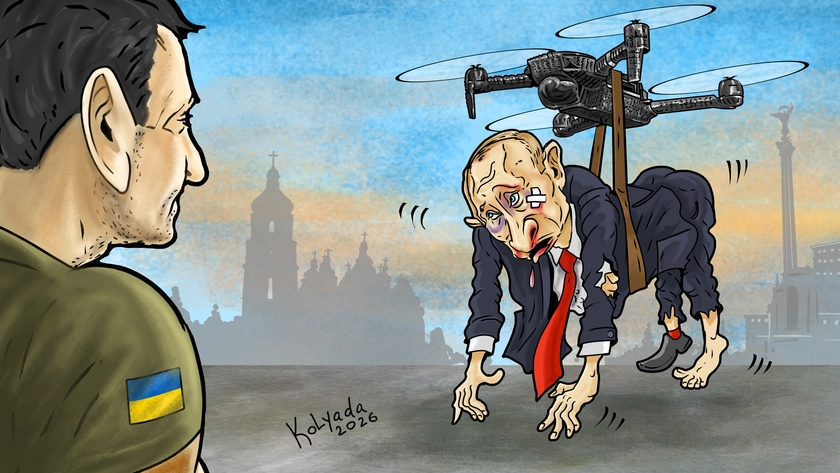
As the war continued, the attrition of conventional weapon systems led Ukraine to rely more heavily on the use of first-person view (FPV) drones to make up the shortfall. The success of these unmanned aerial vehicles (UAVs) to kill and destroy was such that they have become Kyiv’s weapon of choice – and Russia has followed.
JOIN US ON TELEGRAM
Follow our coverage of the war on the @Kyivpost_official.
Now, the lethality of drones is such that they have replaced traditional conventional weaponry as rulers of the battlefield.
An article in the independent Russian news site Inside Stories, published on Tuesday, shows the reality of that assertion. It says that as much as 75% of Moscow’s battlefield casualties, along with considerable destruction of its heavy weapons systems, have been caused by Ukrainian attack drones.
It cites statistics published in the March issue of the Russian Ministry of Defense’s Military Medical Journal. The document is based on interviews with more than 6,000 wounded servicemen. In addition, it found that around 20% were injured by artillery strikes, with only 4% injured by small arms fire.
Even more revealing was the fact that these losses were largely suffered during periods that Moscow termed as “inactive combat actions,” periods where neither side was engaged in direct offensive action.

Trump Hints at Scrapping ‘Anchorage Understandings’ on Donbas at G7 Summit
It also added that the continuing presence and threat from kamikaze drones also impacted the ability to evacuate casualties and the chances of survival – these were now, on average, over 14 hours according to the authors.
This compares with a similar study carried out in July last year, which focused on troops involved in active combat, that said more than 90% of casualties were caused by explosive and fragmentation hits.
Although this did not separate out drone-inflicted wounds from those caused by other weapons, it suggested that the proportion of these had risen as more drones with increased accuracy and lethality were appearing on the battlefield.
A wide-ranging explainer in the New York Times (NYT) on March 3, entitled “ A Thousand Snipers in the Sky” suggested similar levels of casualties were being inflicted on Ukrainian troops by Russian drones. Although this was based more on anecdotal evidence than formally published statistics, it did suggest that more efficient casualty evacuation was at least increasing Ukrainian casualty survivability.
The article cites Ukrainian commanders and officials who say that of the more than one million fighters killed and wounded on both sides, drones are now responsible for more than all of the other battlefield weapons combined.
Unlike the Russian report, which was produced by medics, and so, focused on human casualties, the NYT also underlined how drones were also effective in destroying Western military equipment, using the US-provided Abrams main battle tanks as an example.
It says that of the 31 provided by Washington in 2023, 19 have been put out of action, many by drones, according to a high-ranking Ukrainian official.
The Abrams, one of the world’s most highly armored tanks, designed for combat in conventional tank-on-tank engagements, exemplifies the vulnerability of many of the current generation of heavy weapons to FPV drones.
You can also highlight the text and press Ctrl + Enter

Attack on Moscow Oil Refinery: Putin Under Pressure?