Reports that the Kremlin is considering new forms of escalation raise an obvious question: Now in the fifth year of full-scale war, how much higher can Russia’s escalation ceiling actually rise? While Moscow has already crossed numerous military and humanitarian thresholds, it still retains options that could broaden both the scale and geography of the conflict.
To understand what Russian escalation might look like, it is necessary to break down escalation ceilings, what Russia has done so far, and why the Kremlin might take certain actions now.
JOIN US ON TELEGRAM
Follow our coverage of the war on the @Kyivpost_official.
Escalation ceilings in war
An escalation ceiling is the practical limit beyond which an actor is either unwilling or unable to continue increasing the costs it imposes or the costs it absorbs without fundamentally changing its strategy.
In practice, four elements define an escalation ceiling.
First is capability, meaning the types of weapons being used in its war effort. The one that people pay the most attention to is nuclear capability, but there are many different types that can reshape the landscape of wars.
Second is scale and effect, which is the level of costs being imposed. Some wars focus on limited engagements in specific arenas, while others stretch to points where entire populations feel their impacts.
Third is targeting, or the places, people, and objects a party chooses to attack. The basic distinction is between military and civilian targets, but in war, this can be much more nuanced when considering critical infrastructure and third party locations.
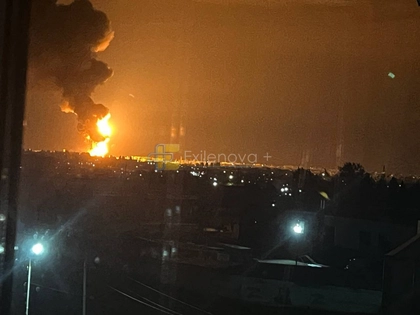
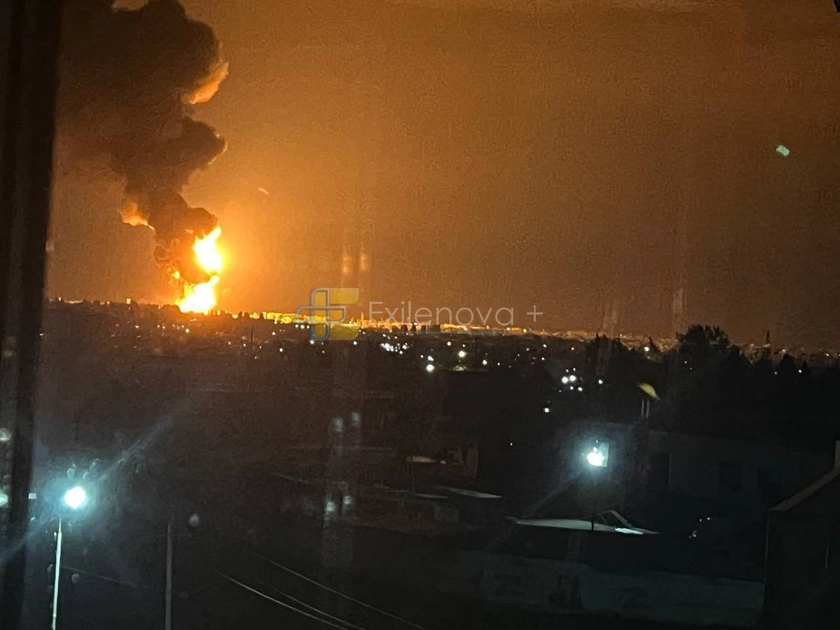
Ukraine Hits Russian Energy Sites as Drone Barrage Reaches Moscow
Fourth is the nature of warfare. Some war efforts are precise and calculated, with clearly defined rules of engagement. Others are meant to sow chaos and discord, with little regard for international humanitarian law.
Escalation ceilings differ from one actor to another. They are shaped by military resources, political constraints, legal and moral considerations, and each side’s assessment of the risks associated with further escalation.
Russia’s current escalation ceiling
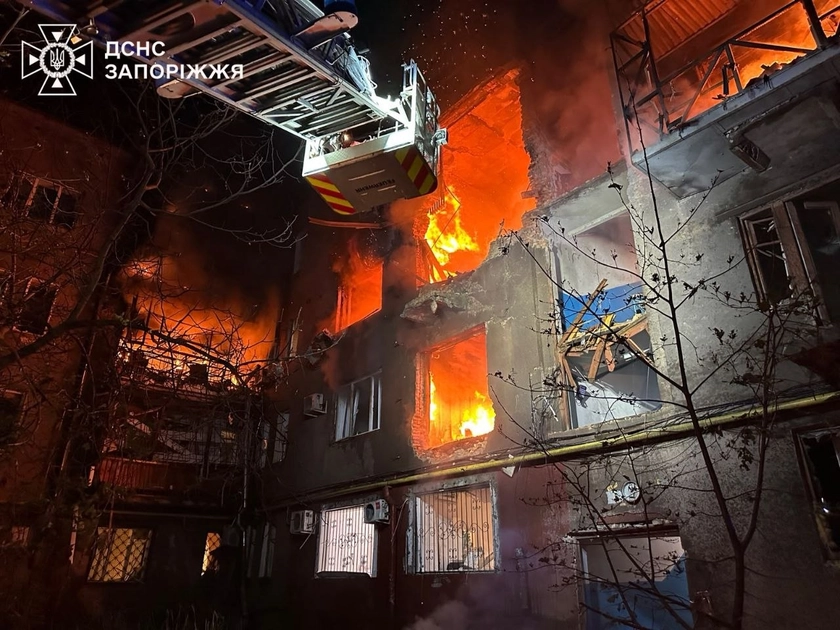
From a Ukrainian perspective, it is fair to ask how much further Russia could actually escalate. They can point to the countless attacks against civilian populations and non-military structures, the destruction of the Kakhovka Dam, the deliberate strikes against energy infrastructure in wintertime, the seizure of Zaporizhzhia Nuclear Power Plant, and the mass graves in Bucha as examples of how far the Kremlin has already been willing to go.
However, there is still room for Russia to elevate its escalation ceiling.
The immediate courses of action on the table involve a return to the heights of escalation witnessed in the early stages of the full-scale invasion. This would mean increased mobilization of ground troops, more attacks on civilians, targeting of critical infrastructure, and scorched earth tactics along the battle line.
Russia could also engage in what is known as “horizontal escalation,” setting its sights on third parties. It may do so both by working to incorporate its allies’ capabilities into the war effort and attempting to impose costs on Ukraine’s partners.
The introduction of North Korean forces already raised the escalation ceiling in the conflict, and Putin has recently been courting Alexander Lukashenko. This was illustrated in Putin’s recent summoning of the Belarusian leader to Moscow for hours-long, closed-door discussions.
Meanwhile, Russia may seek to target NATO countries in attacks. The Kremlin may seek to exploit what it assesses to be a low point for NATO unity given President Donald Trump’s threats of withdrawing US troops from Europe, pressure against NATO allies amid the Iran War, and fixation on Greenland. This would likely manifest as a series of small scale attacks against NATO’s eastern front. The Russians could try to avoid attribution through strikes on civilian infrastructure, or they could attack what they claim to be legitimate military targets.
Finally, the Kremlin could opt to use “CBRN” attacks – that is, the use of chemical, biological, radiological, or nuclear effects in its war effort. The obvious but untenable option is the use of nuclear weapons, but Russia could achieve similar effects in other ways. While Russia controls the Zaporizhzhia Nuclear Power Plant, there are three other nuclear facilities that Russia could potentially target to trigger nuclear disasters. Russian forces could also foster conditions that spread pathogens – something that Ukraine’s Military Intelligence Directorate is already monitoring with the potential spread of anthrax among livestock.
Purpose of the escalation
With ordinary Russians feeling the bite of Ukraine’s long-range attacks and only marginal gains by its forces on the battlefield, there are several reasons why the Kremlin may now choose to elevate its escalation ceiling, some logical and others emotional.
It could try to disrupt Ukrainian military operations. If Kyiv is dealing with wider scale destruction and unanticipated manmade disasters, it could drain resources and attention away from the main war effort.
The Kremlin may also be trying to reduce support and to compel concessions. Increasing costs against Ukrainian civilians has been a part of the Kremlin’s strategy since the beginning of the war, and the intent has been to erode resolve and drive the government towards accepting concessions it otherwise would not accept; namely, surrendering the rest of Donetsk oblast to Russian occupation.
This logic extends to foreign partners. If Russia were to expand the war into NATO’s sphere, it could seek to drive a wedge between Washington and its European allies. Essentially, the rationale would be that the White House, wanting to avoid a widening war in Europe, would use the threat of abandonment to block any NATO responses against Russia and to put pressure on Ukraine to deliver additional concessions to finish the war once and for all.
Whether or not these moves would be effective, there is a certain logic driving them. However, the Kremlin may seek to escalate based on enmity or desperation. The escalation could serve as punishment for Ukraine’s successful long-range attacks in Russia – not with any specific strategic objective in mind, but simply to retaliate.
Meanwhile, desperation can sometimes trump logic in war. A leader who feels pressure to concede may instead look at the military options that remain and say: “There is still more we can do,” even if it is counterproductive to one’s rational interests.
Any or all of these could factor into the Kremlin’s decision-making now.
Off-ramps to escalation
The escalation has not yet happened, and there are steps that Kyiv and others can take to provide off-ramps.
The first is clearly identifying potential escalation that Russia could pursue. Misinformation, confusion, and disputes over assessments offer the Kremlin maneuver space both in its military operations and diplomatic measures. It is necessary to highlight what actions Ukraine and its partners are preparing for to stay ahead of Russian moves.
The second step is to increase international commitments to Ukraine. If the Kremlin believes it can widen seams through escalation of the conflict, then it is necessary to sew those seams shut. This means identifying how the partners would respond to each of the potential escalatory acts Russia would take and developing a clear understanding of their respective roles should it occur.
The third step is to signal the costs of escalation early. Kyiv already gave a useful example of how this works with the recent threat of increased Belarusian involvement in the war. The Ukrainian government set a clear red line and warned Lukashenko against direct contributions to the fight. This signaling of costs to both Russia’s partners and the Kremlin itself is critical.
Finally, it is necessary to table a new proposal for war termination. If there is not a clearly implementable off-ramp available, then the decision to escalate becomes much easier for a belligerent to justify. This proposal does not need to be conciliatory; rather, it just needs to be realistic.
Ultimately, escalation is not guaranteed, but as the Kremlin sees its chances of success slipping further away, the risk certainly increases. Preparing for these possibilities before they materialize is far less costly than responding after Russia has already chosen how it will raise its escalation ceiling.
The views expressed in this opinion article are the author’s and not necessarily those of Kyiv Post.
You can also highlight the text and press Ctrl + Enter