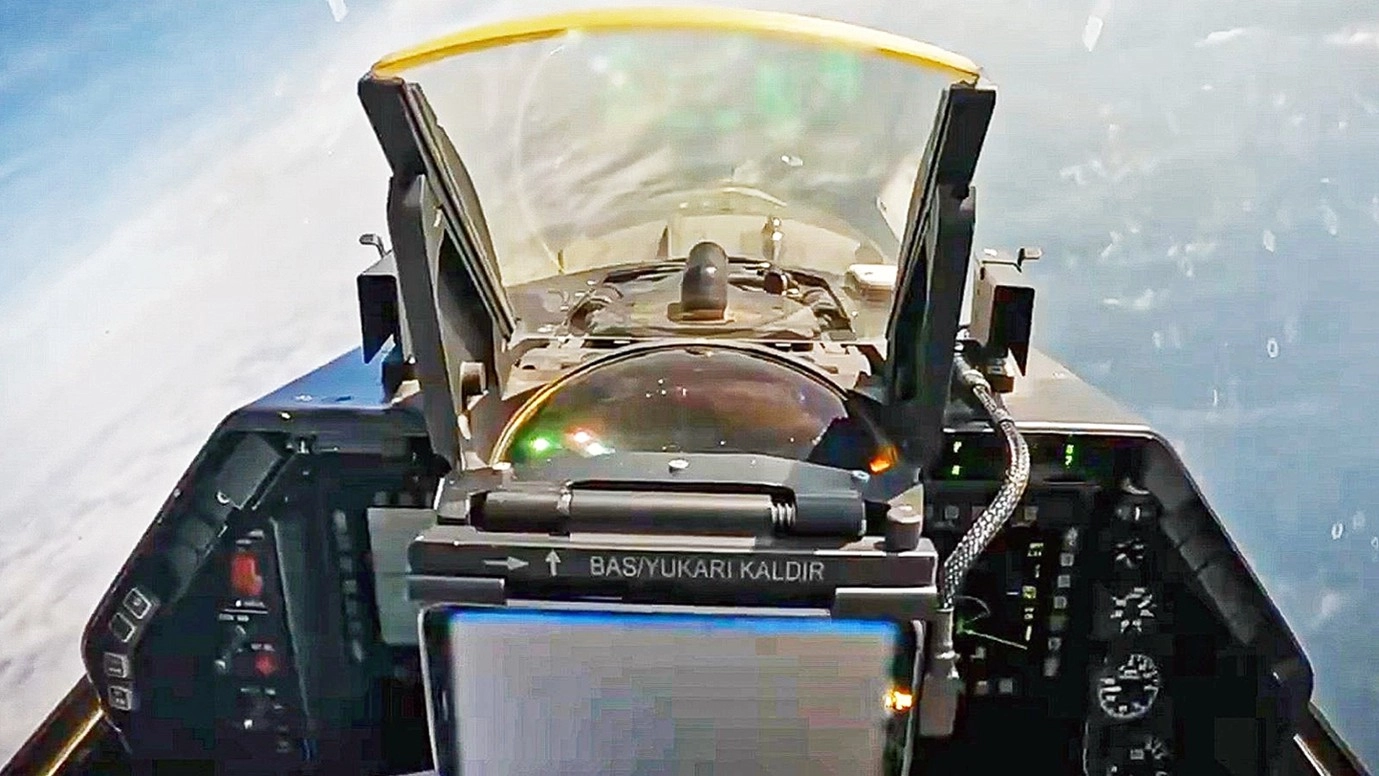
The military issues website The War Zone (TWZ) reported that the Turkish Air Force is using tablet-based systems inside its F-16 fighter aircraft to operate domestically developed air-to-ground weapons.
The tablet uses specifically developed software known as UBAS, a Turkish acronym that translates as the “Aircraft Independent Firing System.” UBAS enables an independent interface between the aircraft and newly developed weapons without the need to access to the Operational Flight Program (OFP) source codes of the US-made F-16s.
JOIN US ON TELEGRAM
Follow our coverage of the war on the @Kyivpost_official.
The system currently operates in Turkey’s upgraded Block 40 and Block 50 F-16s, which were modernized under the Common Configuration Implementation Program (CCIP) that was completed in 2015.
A video posted on X by Mehmet Fatih Kacir from Turkey’s Minister of Industry and Technology on March 21 shows the test firing of the latest Stand-Off Missile (SOM-J). It shows a tablet mounted on the F-16s Input Control Panel (ICP) with a second tablet on the pilot’s knee. Using the devices the pilot is able to support mission operations, weapons deployment, and navigation tasks.
Yeni yetenek yüklendi! 🚀🌊✅
— Mehmet Fatih KACIR (@mfatihkacir) March 21, 2025
TÜBİTAK SAGE tarafından geliştirilen SOM-J seyir füzemiz, suüstü bir platforma karşı yapılan ilk test atışında hedefi başarıyla vurdu. 🎯
SOM-J; modern harp ortamında Türk Silahlı Kuvvetlerimiz için etkin bir kuvvet çarpanı olacak ve uzun menzilden… pic.twitter.com/8hX92zaaMB
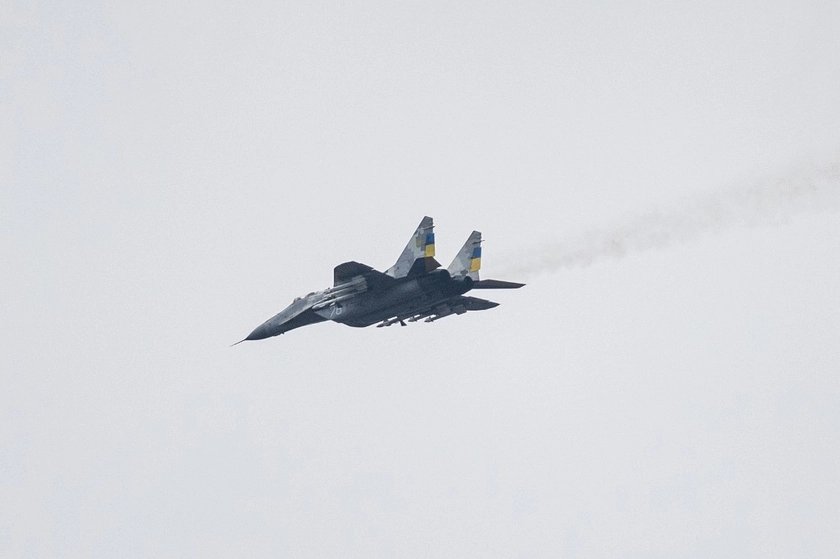
It was reported in 2024 that Ukraine was using iPad-type tablets in the cockpits of its Soviet-era aircraft to allow them to control the Western air-to-ground weapons provided to Kyiv. The US Undersecretary of Defense for Acquisition and Sustainment, William LaPlante, confirmed the work around without providing details of how the system exactly operated.

Turkey Offers to Host Ukraine-Russia Peace Talks
In April 2024 a video posted on X showed a Ukrainian Air Force (UAF) Su-27 (NATO: Flanker) conducting a low level standoff strike against Russian radars with the US-supplied AGM-88 High-speed Anti-Radiation Missile (HARM) using a tablet to control it.
The SOM-J missile seen in the Turkish video was originally developed for use with the F-35 fighter program, which Turkey left in 2019 over security concerns following its purchase of Russian S-400 surface-to-air missile systems.
Roketsan, the producers of the missile continued its development which is said to have a range of 280 kilometers (175 miles) and uses a combined GPS and inertial navigation system for guidance, with an imaging infrared seeker for the terminal phase. The SOM-J missile is 3.9 meters (12.8 feet) long and weighs around 540 kilograms (1,190 pounds).
According to the Turkish media the UBAS is not limited to the SOM-J missile but can be used to supports other locally developed munitions, including the HGK GPS-guided bomb, KGK glide bombs, and the LGK-82 laser-guided bomb, which are variations of Western designed munitions.
You can also highlight the text and press Ctrl + Enter

Russia Hit by 660-Drone Overnight Barrage Targeting Moscow, Crimea and Key Military Sites