As US support for Ukraine wanes, evangelicals are divided. While all seek a peaceful resolution, opinions on Trump’s negotiation approach vary. His “America First” policy energizes his evangelical base – nearly a quarter of Americans, 81% of whom backed him in 2020 – who see him as flawed yet a defender of Christian values. As Trump turns against Ukraine, most US evangelicals follow suit, leaving their Ukrainian counterparts feeling abandoned by both his administration and their American peers.
US evangelicals played an important role in the growth and development of Ukrainian evangelism. It was through the efforts of Ivan Voronaev, an Assembly of God missionary, that the first Pentecostal church was created in Odesa, Ukraine. Additionally, during the height of Soviet religious oppression, US evangelicals smuggled religious literature across the Iron Curtain, utilized short-wave radio waves to broadcast religious shows, and lobbied to improve religious freedom in the USSR.
JOIN US ON TELEGRAM
Follow our coverage of the war on the @Kyivpost_official.
Even after the collapse of the Soviet Union, Catherine Wanner, Professor of Anthropology, History, and Religious Studies at Pennsylvania State University, notes, “mission funding and overall financial support from the United States were critical to the rapid growth of ‘church planting.’” This decades-long bond is now being tested under Donald Trump’s presidency.
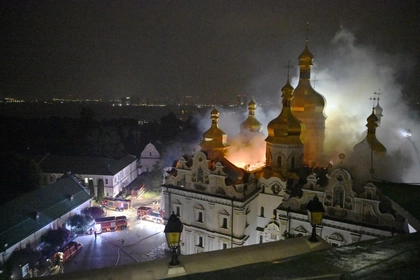
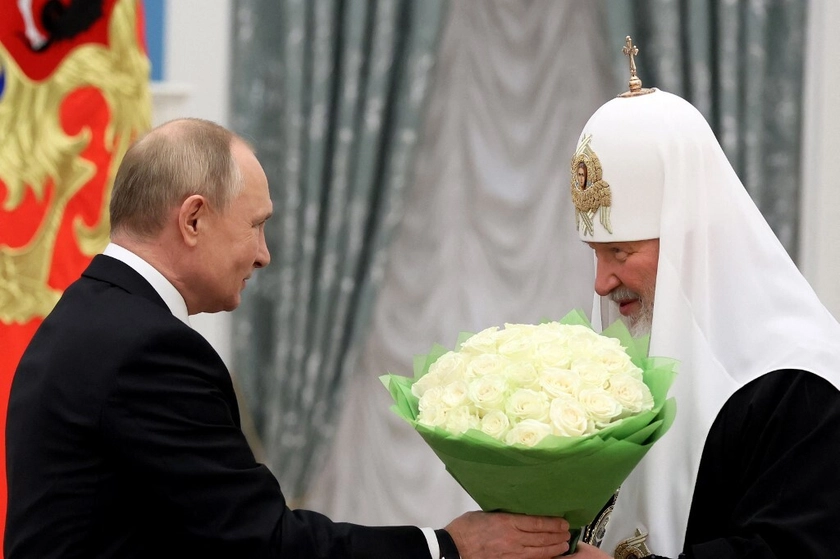
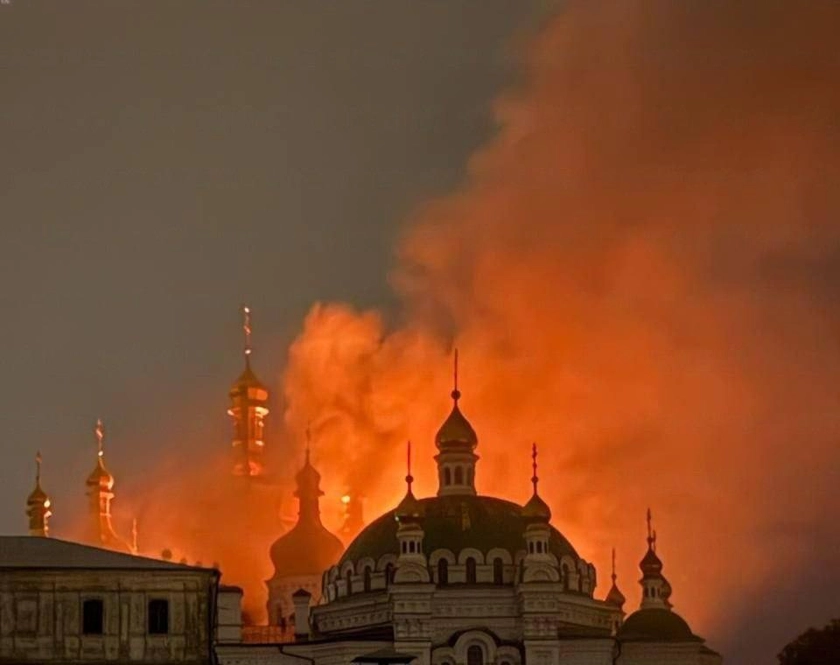
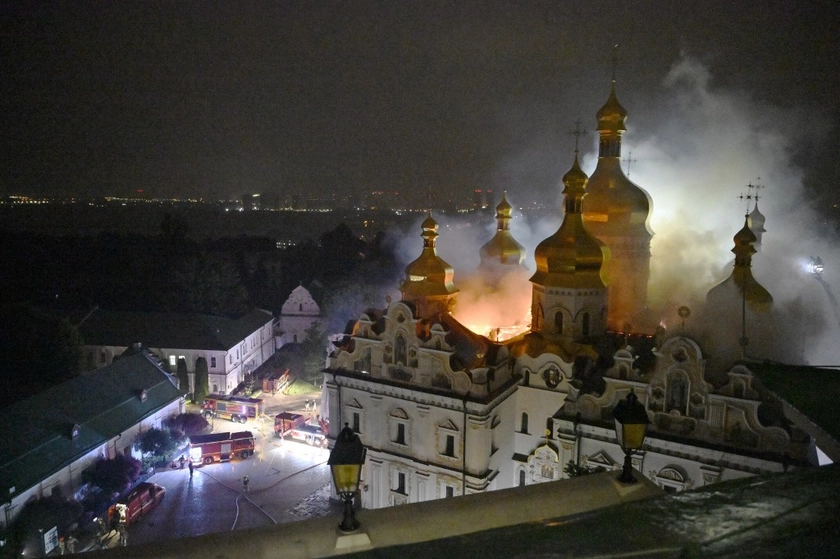
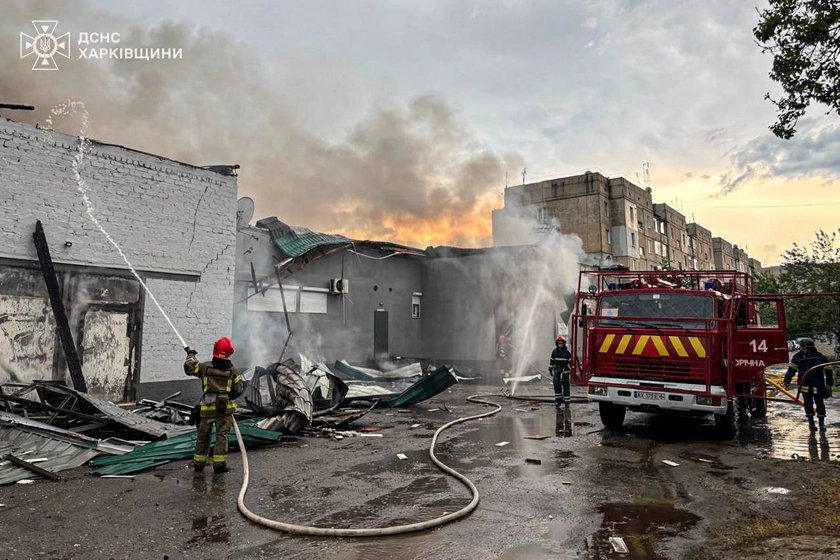
Russia’s Sermons and Russia’s Missiles
Ukrainian Protestant groups have viewed the protection of Christians as nonnegotiable in the peace negotiations.
Trump’s turn against Ukraine
During his campaign trail, Trump repeatedly stated that he would bring an end to the war, arguing: “They’re dying, Russians and Ukrainians. I want them to stop dying. And I’ll have that done – I’ll have that done in 24 hours.” Although his previous praise of Vladimir Putin as a “genius” and “savvy” had raised eyebrows, his message of peace generated an optimistic sense of hope, with 45% of Ukrainians believing he would bring peace closer. Unfortunately, this hope seemed ill-placed. Instead of bringing peace, he waged a diplomatic war against Ukraine, attempting to turn the victims into the aggressor.
This was on full display through Trump’s berating behavior towards Ukrainian president Volodymyr Zelensky. Utilizing propaganda, Trump has called him a “dictator” and falsely asserted that he has a 4% approval rating. Following Trump’s heated exchange with Zelensky in the Oval Office, Trump has pushed for Ukraine to hold presidential elections, implying that Zelensky is the bottleneck in the peace process.
To add salt to the wound, the administration placed a freeze on shared intelligence and the delivery of US military aid. This led a Ukrainian military officer to claim that “as a result of this pause, there are hundreds of dead Ukrainians.” Russia’s organized efforts to influence the US public with its propaganda appear to be paying dividends through Trump’s rhetoric and have influenced evangelicals.
Popular personalities such as Charlie Kirk, Dinesh D’Souza, and Tucker Carlson amplify Russian narratives, spreading misinformation about NATO expansion, Ukrainian corruption, forced conscription, and the alleged Ukrainian persecution of Christians. These podcasters have vast audiences and are especially popular within right-wing evangelical circles. Tucker Carlson’s profound influence on this group is especially noteworthy, leading one commentator to state that he is “more powerful in Christian politics than virtually any preacher alive.”
There are vocal critics of the current administration’s who say that Ukraine has a right to sovereignty and self-defense while criticizing American Christians for utilizing fallacious arguments to justify their anti-Ukraine stance
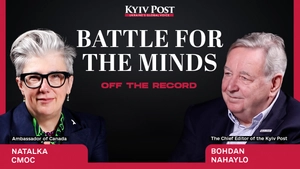
US evangelicals divided in opinions on Ukraine
US evangelicals have mostly agreed with Trump’s assessment of Ukraine: death must end, “America First.” Although Trump received pushback for spreading misinformation, many notable figures chose to remain silent. Some have accepted Trump’s America First policies, saying that “their situation is not necessarily our situation,” while others, such as Franklin Graham, have remained neutral. Commenting on Zelensky’s meeting with Trump, he wrote on X that the meeting “was tense and unfortunately did not end well. The progress we had all hoped for is again delayed.”
Other leaders view Trump’s peace process optimistically. Albert Mohler, the president of the Southern Baptist Theological Seminary, is a notable example. A supporter of Ukraine, who previously stated that Joe Biden is “worthy of our admiration” for visiting the war-torn country, in a recent episode of The Briefing offered a positive assessment of Trump’s peace initiative.
While reviewing Zelensky’s visit to the Oval Office, he criticized Ukraine’s military goals as unrealistic and argued that Trump is “indicating that he intends for an American initiative to lead to what will eventually be a settlement agreeable to Russia and Ukraine.” In line with most evangelicals, he avoided criticism of Trump’s belligerent actions towards Ukraine.
On the other hand, there are vocal critics of the current administration’s policies toward Ukraine. Russell Moore, the editor-in-chief of Christianity Today, in his op-ed, stated that Ukraine has a right to sovereignty and self-defense while criticizing Christians for utilizing fallacious arguments to justify their anti-Ukraine stance.
He pointed out that those arguments stem from points such as Zelensky being a dictator, Ukraine opposing religious liberty, and Ukraine being destined to lose. On a similar note, Mark Tooley, the president of The Institute on Religion & Democracy and editor of the journal Providence, argued that Americans must follow our “national character” of “liberty and a friend to the oppressed” and apply these principles to Ukraine’s current suffering. Even within Trump’s inner circle, some figures have revised their stance after direct exposure to the realities of the war.
[PHOTO: Mark Burns in Bucha with rabbi] !!!!!
Mark Burns, who was labeled as Trump’s top pastor, is a notable example. Having previously called Ukrainians “war-mongering” and “globalists,” his recent visit to Ukraine at the invitation of Moshe Azman, the Chief Rabbi of Ukraine, was a turning point in his view. His trip included visiting sites such as Babyn Yar, joining a Ukrainian religious forum, and meeting with Andriy Yermak, the head of the office of the president of Ukraine. Following his meeting with Yermak, he wrote on X, “My eyes have been opened about the war in Ukraine. You have a friend in me.”
US evangelicals may desire a peaceful end to the war, but influenced by propaganda and refusing to split from Trump on this issue, many have opted to accept this administration’s views on the war. Seeing these events unfold, Ukrainian evangelicals have started to voice their frustrations and feelings of abandonment by their American brothers.
In carrying out his peace initiative, Trump has preferred personal ambitions over the deliverance of lasting peace.
Ukrainian evangelicals’ desire for a just peace
Although composing only 2-4% of the Ukrainian population, evangelicals are, as one scholar argued, “gradually becoming full participants in Ukraine’s religious and social life, reducing stereotypes about their “otherness.” Initially a pacifist group, evangelicals have begun slowly stepping away from their political apathy and taking a more active role in society – their work in humanitarian aid and as chaplains is well regarded.
Additionally, evangelicals have played an important role in public advocacy by organizing a Ukrainian Week in Washington and speaking at various think tanks. Their efforts have been noted by government officials such as Andriy Yermak, who pointed out that many Protestants “have risen to prominence in various fields.” In this context, evangelicals do not view this war as outsiders but are actively involved in supporting their country.
The evangelical community sees this war through an existential and spiritual lens. The country is fighting to preserve its sovereignty and religious freedom. The religious persecution of Christians in the occupied territories is a vital topic for evangelicals. As a recent report by Mission Eurasia highlights, many pastors have been imprisoned or exiled from the occupied territories, while 47 have been killed.
The report also documents cases of local government officials taking and repurposing church buildings for their use, forcing most Christian groups to operate underground. As one pastor from Zaporizhzhia pointed out in the report: “The Russians have only brought us pain, destruction, cruelty, and suffering.” In light of this, Ukrainian Protestant groups have viewed the protection of Christians as nonnegotiable in the peace negotiations.
After years of relentless bombing, Ukrainians are exhausted from Russia’s invasion and desire peace. Polls indicate that although Ukrainians want a quick peace, it must be fair and just. As Zelenskyy stated in his UN General Assembly speech, “peace is needed, and it must be a real, just peace.” Unfortunately, Trump’s peace process doesn’t display a sense of justice.
Commenting on these events, Valery Antonyuk, the head of the All-Ukrainian Union of Evangelical Christian Baptist Churches, bemoaned that “this is a reconciliation with evil and violence rather than rooting out evil and bringing about complete peace.” Ruslan Dobrytskyi, a platoon commander in the 23rd Separate Mechanized Brigade, who was injured in battle and is now recovering in a hospital, echoes Antonyuk’s concerns. “Ukraine wants peace,” he says, “but not at any cost.”
He critiques the US administration’s “path of least resistance,” noting that despite widespread US support for Ukraine, Trump’s approach mirrors a reluctance to confront aggression head-on. “I wonder,” he adds, “if Americans would have negotiated with those who struck civilians on September 11?” In carrying out his peace initiative, Trump has preferred personal ambitions over the deliverance of lasting peace.
This apparent turn by Trump against Ukraine and the US evangelical hesitancy to criticize Trump has ignited a feeling of betrayal for Ukrainian evangelicals. Oleksandr Geychenko, President of the Odesa Baptist Seminary, writes, “I personally feel betrayed, despised, and turned into the means to political ends. The last bits of hope for just peace are evaporating.” Roman Soloviy, Director at Eastern European Institute of Theology, laments, “Perhaps more than ever in these past three years, we Ukrainians feel doomed and alone. The rope holding us over the abyss seems to have broken, and we are falling down, awaiting the last fatal blow.”
Commenting on the prevailing sentiment, Oleksandr Trofimchuk, rector of the Rivne Theological Seminary and Academy, describes a deep sense of betrayal among Ukrainians. He notes that “the vast majority feel abandoned” and emphasizes the emotional and physical toll of the war. “People are exhausted – physically, but especially emotionally. They just want the war to end, even if it means accepting an outcome they once considered unthinkable.”
Seemingly, evangelicals have chosen to believe the words of Tucker Carlson over those of their missionaries on the ground.
It is not only the changing political landscape that is discouraging, but it’s the increasing American acceptance of Russian narratives that is disheartening. As one missionary explains: “In the beginning, we felt amazing support from the American churches and government. But since Trump has taken office, we don’t feel the support from the American government. Even some of our supporting churches in the United States are questioning what is really going on in Ukraine.” Seemingly, evangelicals have chosen to believe the words of Tucker Carlson over those of their missionaries on the ground.
Since the spat in the Oval Office, Volodymyr Zelensky has issued an apology, and peace talks between both delegations have reopened. Ukrainians may be hurt, but they need US support. As the Dispatch notes, “Millions of Ukrainians are praying for US support. America, they implored, must not turn away.” Still, the war carries on. Russia has increased its brutal bombing of Ukrainians, and the end of Ukrainian suffering does not appear in sight. Yet the biggest blow is not the Russian bombing but the cold shoulder given to Ukrainian evangelicals by their American brothers.
Dobrytskyi, the recovering Ukrainian commander who is a Protestant, captures this anguish in a plea to US Christians: “Pray that the Lord grants your leaders the understanding of where evil lies and who are the victims of this aggression.”
You can also highlight the text and press Ctrl + Enter