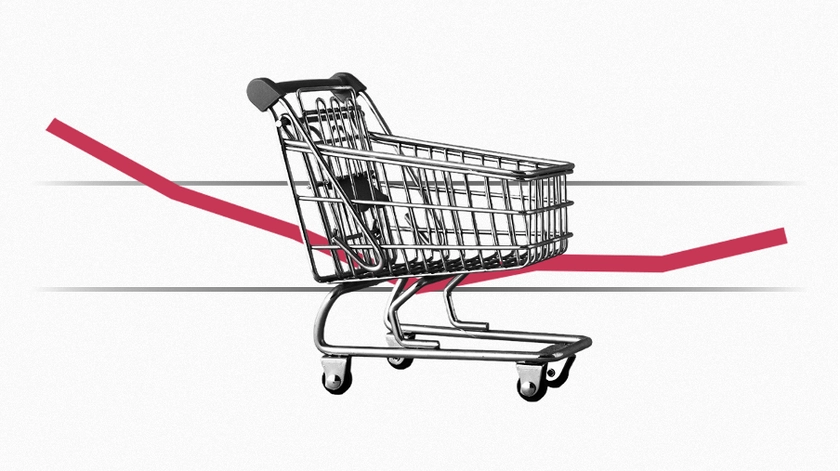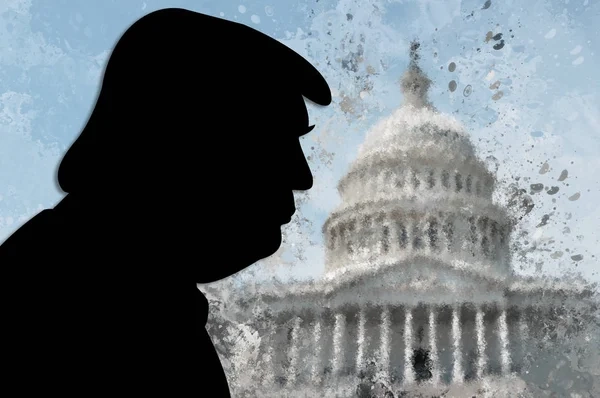
One might be forgiven for mistaking the plummeting Standard and Poor (S&P) futures for a scene from ancient prophecy – markets ablaze, portfolios reduced to ash, and investors left to survey the wreckage of what was, until Wednesday two weeks ago, a reasonably buoyant economic landscape.
The precipitous 4.8% fall in the S&P 500 and 6% collapse in the Nasdaq represents the most violent market reaction since the great COVID lockdown of March 2020. Including a pre-announcement decline measured by Motley Fool as 5.8% from the Feb 19 to March 31 peak.
JOIN US ON TELEGRAM
Follow our coverage of the war on the @Kyivpost_official.
The Wall Street Journal’s editorial board has worded it rather well, but the policy shock comparison dates back further, to the time of Hoover and the Smoot-Hawley Tariff Act of 1930. It is noteworthy that this act led to a deepening of the post-crash recession, triggering the entrance into depression and allowing the pendulum to swing toward the rise of FDR’s state interventionist, outright socialist authoritarian and “planned economy” policies.
These policies hid behind the New Deal vernacular of stabilization but came with disastrous overbearing approaches such as the insidious Agricultural Adjustment Act (AAA). This act “regulated” farm production by reducing acreage – which begat intensive farming – that led to soil erosion and the Dust Bowl, destroying crops and millions of livestock, creating famine, forcing farm consolidation, and generating intergenerational long-term consequences for how America farms and eats.
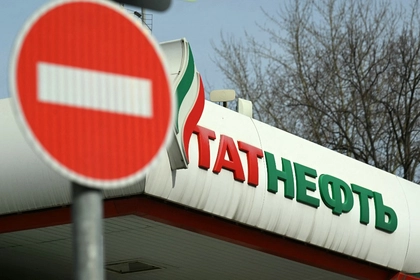
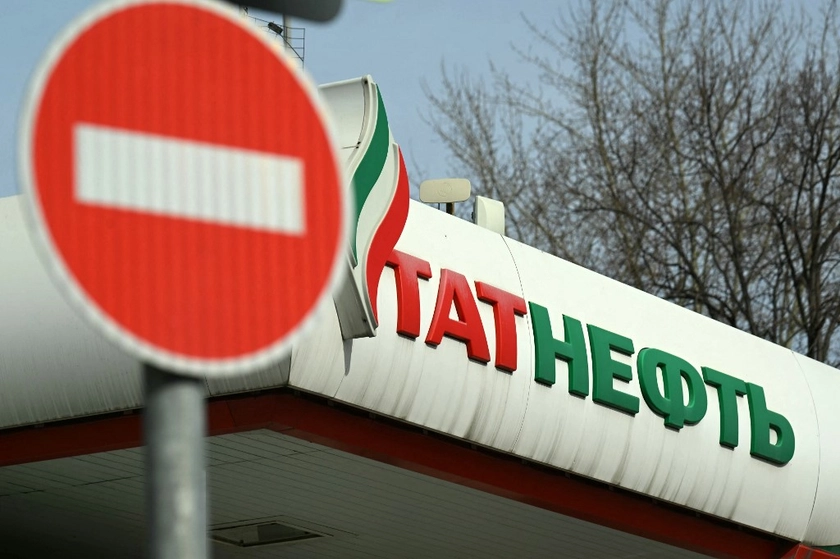
Fuel Rationing Spreads to Moscow and St. Petersburg
Further – and this bears particular emphasis – the National Industrial Recovery Act (NIRA) did considerably more than merely establish industry codes. It effectively formalized cartels among major industries and implemented those pesky price controls so beloved by interventionists. These controls froze industries already in a depressed state, preventing market adaptation and recovery.
In conjunction with wage provisions, these measures disproportionally harmed small and medium enterprises (SMEs), the backbone of the economy, vocational training, and employment, as they were unable to absorb the complexity costs of harsh, micromanaging regulation and high wage mandates. All this led to centralization, suppressing market dynamics and making 1937 to 1938 a furnace of the Depression.
As the Austrian-British economist and Friedrich Hayek so astutely noted in his “The Road to Serfdom,” such centralized planning tends to reduce economic freedom and efficiency while expanding bureaucratic control.
The US was in poor shape to defend freedom in an existential global conflict due to its preceding isolationism, tariffs, depression, and interventionism. It took a massive effort, change of direction, heart, and considerable blood and financial cost to turn that ship around. The world was fortunate that freedom ultimately prevailed, albeit only in part, as Stalinist Russia and Maoist China remained – the consequences of which we still suffer from today.
This was all kicked off because of a stubborn, idealistic, overbearing and overconfident Republican president in cahoots with a Republican-led Congress that allowed an isolationist, protectionist, nativist spirit and minority within its ranks to overtake its better senses due to a perceived necessity to act decisively vis-à-vis a crisis.
Doing something rather than doing the right things right.
After Hoover and the Smoot-Hawley insanity, the political pendulum swung to further state interventionism when the existential global conflict sparked by rising fascism, communism, and totalitarianism had to be faced. The lesson of history is clear: economic isolationism weakens nations precisely when they most need strength to confront gathering threats.
The key economic difference today is a combination of excessive indebtedness hand-in-hand with socialist entitlements and massive monetary oversupply from the Obama-Bernanke Quantitative Easing era – now called QE3 Infinity. What we are witnessing, which one might cheekily dub the Trump-Tariff Ineptitude Disaster (TTID), appears calculated to drive us toward another unnecessary crash.
History’s pendulum seems poised to swing again, but this time with potentially graver consequences. The free-market nations cannot afford to let a self-induced asymmetric shock rug-pull the world economy. Economic weakness encourages evil enemies at the very moment when Western resolve must be unwavering. This is a time for swift action and ballsy diplomacy.
We must jointly prevent it from spiraling in the same fashion as the 1930s, particularly given today’s precarious geopolitical landscape.
The strategy expressed in recent Senate Armed Services Committee hearings with Generals Cavoli and Langley must remain in place: victory in Ukraine and defeat of Russia, thus defanging and deterring all other enemies of freedom, so that free nations’ sovereignty remains unimpaired. This grand strategy works best by keeping free market economies free and integrated, not fragmented, dismembered, and weakened by a needless trade war that serves only to embolden our adversaries.
As the Wall Street Journal noted: “Congress has circumscribed the President’s power to impose tariffs, allowing it on imports that threaten national security (Section 232) or in response to ‘large and serious’ balance-of-payments deficits (Section 122), a surge of imports that harms US industry (201), and discriminatory trade practices (301). None of these trade provisions empowers Mr. Trump to impose tariffs on all imports from all countries based on an arbitrary formula.”
While WSJ correctly observes that, “Mr. Trump’s tariffs represent the biggest policy shock to the world trading system since Richard Nixon blew up Bretton Woods in 1971,” this misses the more profound and relevant historical comparison. Nixon’s action, whatever its flaws, was at least a response to genuine structural constraints in the international monetary system.
The true parallel is Hoover’s monumental unforced error with Smoot-Hawley – a self-inflicted wound born of misguided economic nationalism that set in motion not just economic decline but a dangerous swing of the political pendulum. The “disturbance” might not be as “little” as Trump imagines, nor as contained as his advisers suggest. The WSJ concluded: “Not to worry, the White House says tariffs will eventually be worth the pain. Feeling better?” Probably not. A look at the futures market is sobering.
The initial market hangover can still be cured but we must not embark on this ship of fools; threats of primaries notwithstanding, Congress must assert itself, and someone must sue. Without pressure at home, a stubborn “hoover-like” president will needlessly battle with the America’s main allies and trading partners: Europe, Japan, and South Korea for no reason other than overbearing, overconfidence and idealist belief in his own exceptionalism twinned with isolationism.
The pendulum of history swings inexorably from excess to excess. What began with Hoover’s misguided protectionism led to Roosevelt’s overreaching interventionism. What begins now with Trump’s tariff folly may lead to consequences equally dire but uniquely modern. Not putting America First but leading to America Alone and Freedom in the World Undone.
The views expressed in this opinion article are the author’s and not necessarily those of Kyiv Post.
You can also highlight the text and press Ctrl + Enter