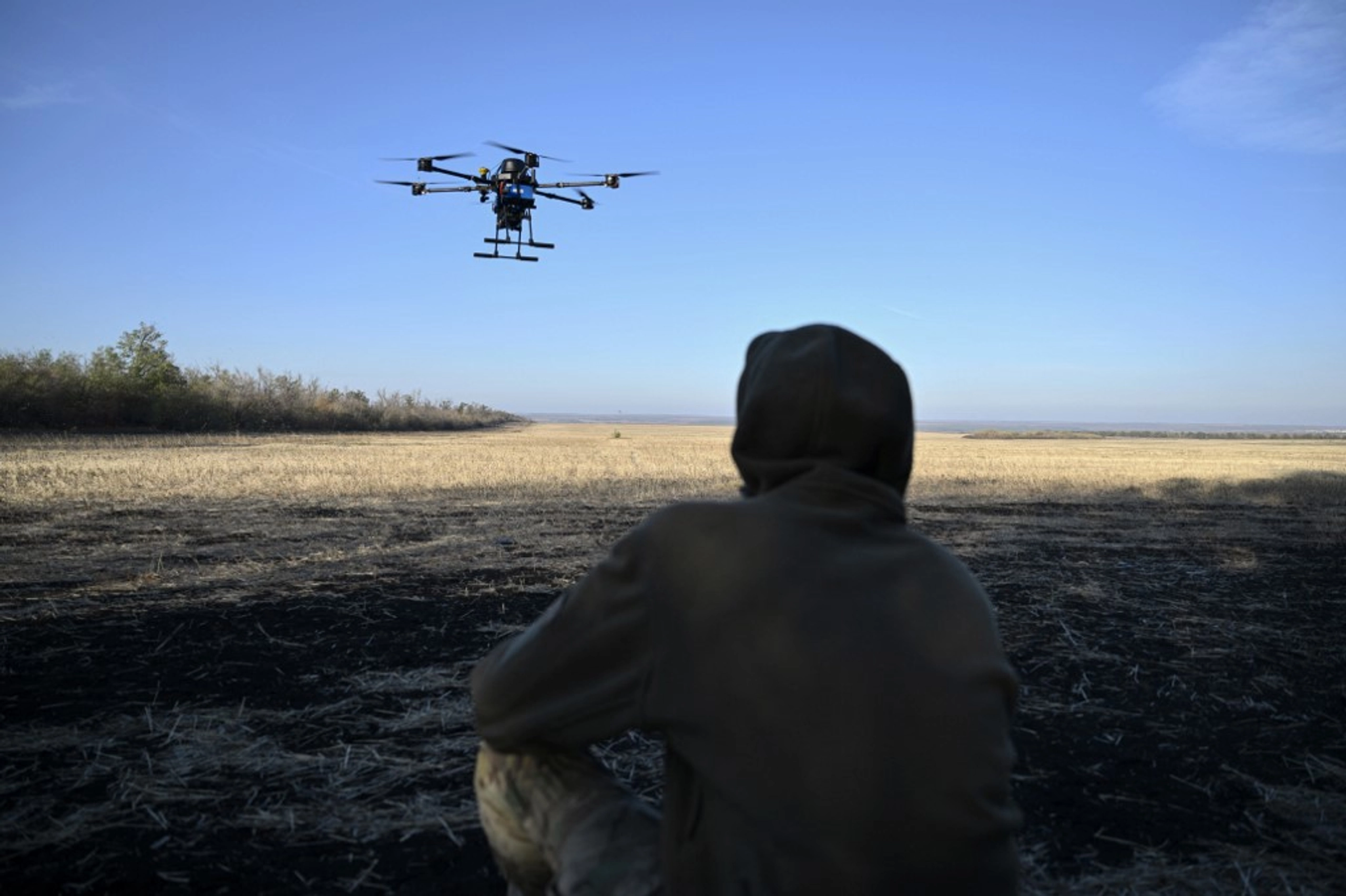
The war in Ukraine has, without question, taught us many lessons, none of which is more important than the impact drones and robotics have had on tactics, operations, and strategy.
The concept of drones is not new. Most people are aware of nation-state capabilities from over two decades of large platforms like the US Predator remotely piloted vehicle (RPV) being used in various conflict zones. However, the advent of the small drone platforms accessible to the public that have become a weapon of choice is far less understood.
JOIN US ON TELEGRAM
Follow our coverage of the war on the @Kyivpost_official.
Reports estimate that 70-80% of casualties on both sides of this conflict are a direct reflection of drone use.
Conditions at the Zero Line
Let’s start with some changes that have developed based on drones.
First, from a survival perspective, the concept of large, cumbersome command posts is no longer viable. No area of conflict cannot be reached by some type of drone platform. Additionally, the signals that are emitted from such operations centers make them an undeniable high-value target; hence, the days of the tactical operations center as commonly practiced are gone.
Second, the rise of small units and tactics decentralized for operations and execution is the way of the future. Small, skilled, self-supported, and lethal teams of drone pilots and operators are deployed as a standard operating procedure. These teams have small footprints, low signatures, and are agile, moving quickly and often if needed.
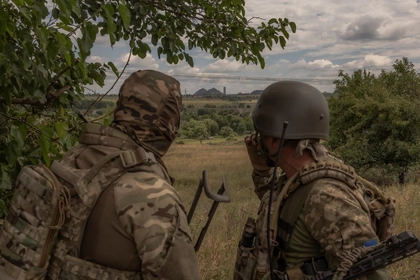
Infantry Up Close, More and Better Bombardment, Helping America ‘Win’
Third, equipment and tactics are practiced, changed, and implemented with ease. The levels of bureaucracy are eliminated in environments where target identification, hit rates, and validity of operations are confirmed through trial and error and quickly adapted. Comparing this to current US tactics would be a leap.
We are beginning to see pockets of excellence emerging in each Service, but a holistic change to organization, training, tactics, and operational execution is in the nascent stages. The concept of man, train, and equip is still developing as organizations understand changing battlefield requirements.
Based on the evolution of small unmanned aerial systems (sUAS) technology, leaders must think about offense and defense in this complex operating ecosystem with special emphasis on small drones.
Furthermore, while understanding signal emissions is important, it didn’t carry the weight of priority that it does now. Units must understand what they look like from this perspective as they consider defense for survivability.
A must is for units to conduct a drone vulnerability and risk assessment (DVRA) of the operating area and environment. This planning tool is a needed addition to the standard planning frameworks used by the Services. Lastly, since units were not under constant threat of an air domain attack, day-to-day business-as-usual for operations and logistics was the norm. This is strikingly different from Ukraine.
Pilots, support, and kit
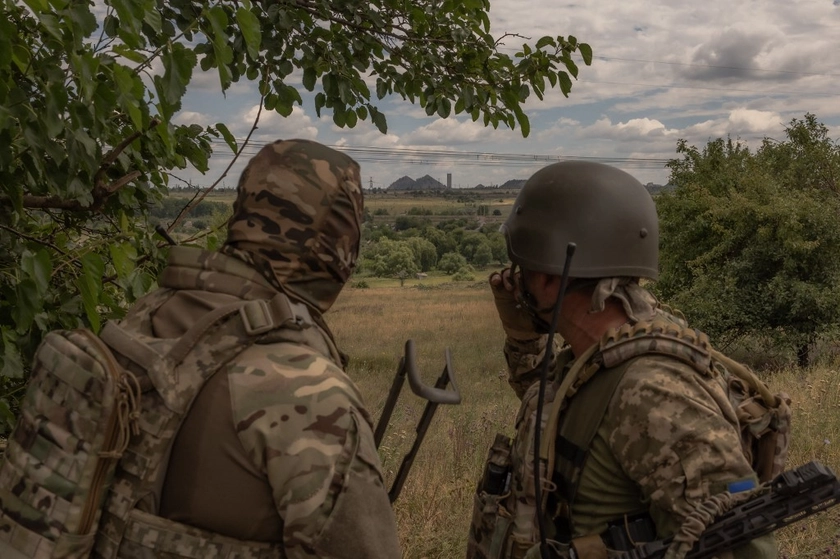
The teams operating in this new age of warfare are small, agile, often local, and know the terrain and the area of operations. A common composition is three-to-four person teams, consisting of an intelligence, surveillance, and reconnaissance (ISR) capability and drone (DJI Matrice), a First Person View (FPV) pilot, a support/maintenance expert, and an observer, all utilizing mobile transportation like a pickup truck for speed and maneuverability. If lucky, a team has at least one shotgun as its primary tool for counter-unmanned aerial system (cUAS) operations at close range while stationary and on the move, but teams favor rifles for engagements at a distance if the enemy platform is identified early.

Photo Courtesy of Troy Smothers
In some instances, teams consist of two people flying fiber optic FPV drones, which emit a lower signature and therefore require less planning and equipment to conduct the mission.
Furthermore, teams at the zero-line often work together even if not associated with one another. For example, one team might provide intelligence, surveillance, and reconnaissance (ISR) for another team in the same area of operation and use WhatsApp, a platform commonly known for security and reliability, as the primary means of communication.
In this case, the Commander, the ISR element, and the FPV strike team coordinate efforts in this manner.
The drones used vary by mission, though the primary attack platform is normally a purpose-built Ukrainian 10-inch carbon fiber FPV small unmanned aerial system (sUAS). As for the Russians, it is typical to see a purpose-built aluminum frame platform. Note that using carbon fiber versus aluminum offers advantages and disadvantages.
While carbon fiber is lightweight, gives off a low radar signature, and provides for less vibration on components and extensions, it is much harder to produce at scale. As for aluminum, it is very easy to manufacture and can be mass-produced, which easily explains the Russian platform, but electronic components cannot be grounded to the frame. Experts recommend using both materials as an option. Using aluminum for the frame and carbon fiber for the components is a potential way forward.
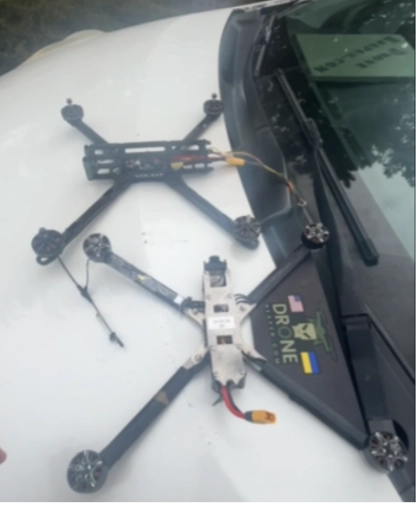
Photo Courtesy of Troy Smothers
For ISR and signal repeating operations, the primary platform is the DJI Matrice, which is built by a Chinese manufacturer with a command of the global market.
These systems give off a powerful signature, which raises the issue of signature reduction and the importance of knowing exactly what one’s position looks like and how to reduce the signature for survival. Knowing what a particular footprint looks like is critical in this war of signals.
Lastly, each platform is equipped with a ground control station (GCS), and FPV drones can shift from radio control, even changing between frequencies (signal hopping), to fiber optic for survivability.
Navigating electronic warfare
Throughout the conflict, brute force Electronic Warfare (EW) has been the tool of choice since most drones are controlled using radio frequency.
However, as with any conflict, the nature of action and reaction is in full force on this battlefield, and a myriad of counter-EW solutions have emerged that include frequency hopping, terrain navigation using AI, use of uncommon frequencies, and optical payloads.
Leading the pack of EW defeat measures is the technique of flying an FPV drone using a fiber optic cable. In a recent engagement, the jamming systems used at the zero-line covered frequencies from 350 MHz to 950 MHz, but an attack drone recovered by combatants was operating on 150 MHZ, something they had not seen before.

Photo Courtesy of Troy Smothers
This technique shows that war is indeed the mother of innovation when it pertains to mission success and survival, hence the implementation of FPV platforms controlled through fiber optic.
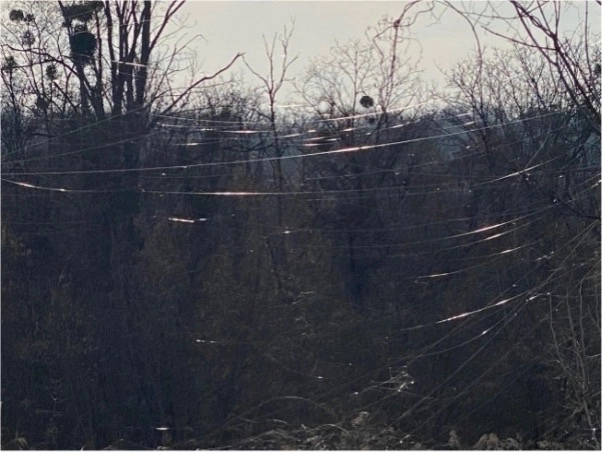
The use of this control method has become so prevalent that the battlefield is littered with expended fiber cable, creating a web that now even affects ground vehicle operations. Some areas of the battlefield are covered in so much fiber that it creates a spider web-like environment never seen before. The two images below reflect the reality of Ukraine’s fight.
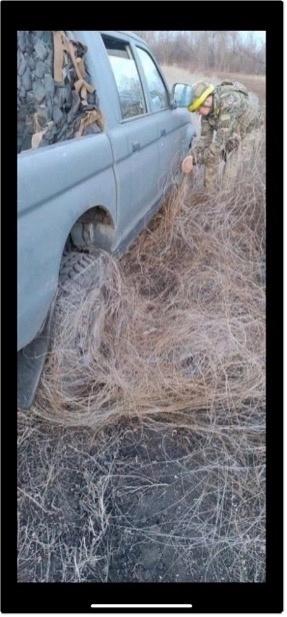
Photos Courtesy of Troy Smothers
Conclusion
The lessons learned from the Russo-Ukrainian War are staggering, and the US must pay attention. The war at the zero-line is unlike any other conflict when unmanned aerial systems UAS (Drones) are factored in. A true revolution in military affairs (RMA) has taken shape, and we must understand its importance, but also the cost of not taking action to develop, manufacture, equip, and train our forces for this reality. Let’s be conscious and focused. We can no longer afford not to look up.
The views expressed in this article are the author’s and not necessarily those of Kyiv Post.
You can also highlight the text and press Ctrl + Enter

Russia Hit by 660-Drone Overnight Barrage Targeting Moscow, Crimea and Key Military Sites