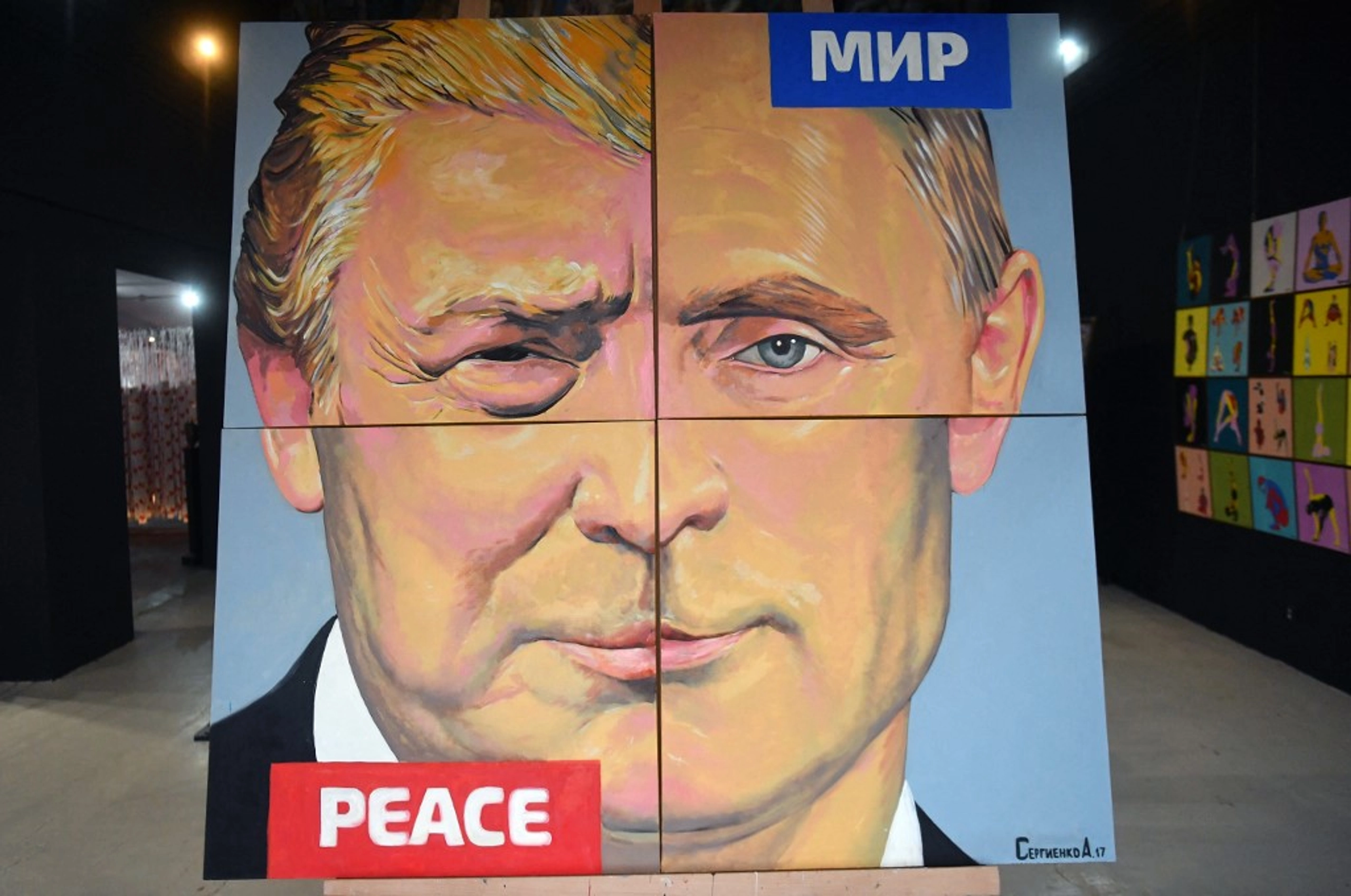
The Trump Administration followed through on their threat to “walk away from efforts to broker a Russia-Ukraine peace deal unless there are clear signs of progress.” Secretary of State Marco Rubio and Special Envoy Steve Witkoff took their ball and went home on Wednesday.
Ukrainian President Volodymyr Zelensky and EU High Representative Kaja Kallas each said they would never recognize the Russian-occupied Crimea peninsula as legally Russian, not to mention the other six points contained in Team Trump’s seven-point plan.
JOIN US ON TELEGRAM
Follow our coverage of the war on the @Kyivpost_official.
But what did they expect? Ukraine’s deputy prime minister Yulia Svyrydenko reiterated that Ukraine is ready to negotiate with the US, but is “not willing to surrender.” The Trump plan basically calls for the total capitulation of Ukraine.
Putin’s unexpected announcement of his willingness to engage in direct negotiations with Ukraine on Tuesday and his proposal to the United States to halt his full-scale invasion of Ukraine along the current front line the day prior to the US – Ukraine/E3 (United Kingdom, France, Germany) ceasefire talks in London on April 23 sealed the deal.
His sudden reversal came after Russian drones struck civilian targets in Odesa on Monday, and his public acknowledgement on Tuesday that he deliberately targets Ukrainian civilians.
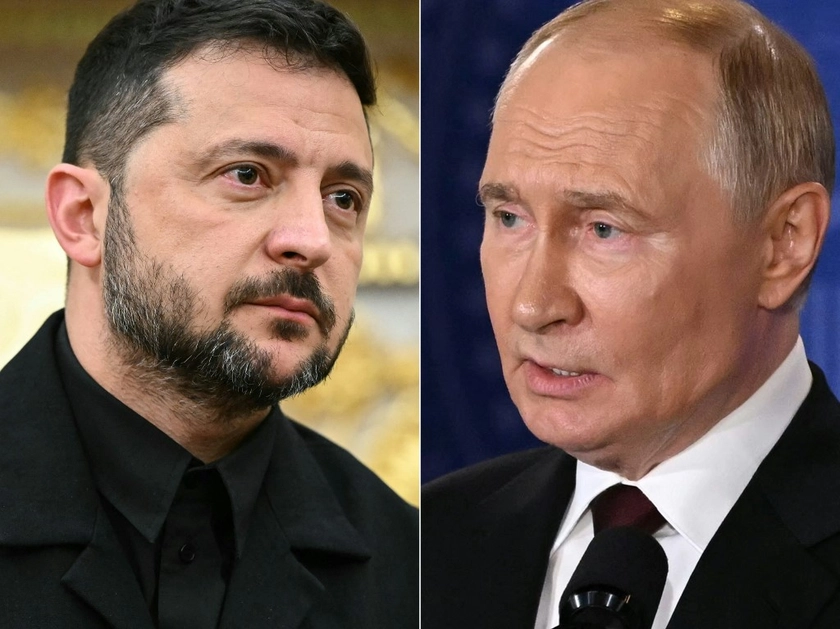
This is the same Putin who stated unequivocally that Ukrainian President Volodymyr Zelensky is not a legitimate president, adding Russia could hold peace talks with Ukraine, but ruled out speaking directly with Zelensky.
Germany Warns of Russian Orbital Nuclear Threat
This is also the same Russian Foreign Minister Sergey Lavrov who has stated repeatedly that Russia is not interested in freezing the war along the current front lines – specifically stating that the prospect of ending hostilities at the current line of contact, “will not happen.”
So what changed? Has Russia finally hit its high-water mark?
Maybe – or was it just a “gesture” to demonstrate to President Trump Putin’s willingness to show progress in the Russia-Ukraine peace deal talks?
The second order effect was likely to secure a Ukraine rejection – thus reinforcing the narrative that Zelensky is not serious about a ceasefire to end the war. He is – just not under the impractical conditions proposed by Team Trump.
Putin got the reaction from Trump he wanted, as the President lashed out at Zelensky on Truth Social and X – blaming him for the breakdown in talks. He then responded by attacking Kyiv with more missiles and drones overnight, killing at least 8 people, wounding more than 70 – six of whom were children – destroying multiple buildings in the Sviatoshynskyi district.
The gesture was more likely a familiar Russian tactic to introduce a new variable to the process – thus prolonging talks. That would afford Russian ground forces time to build combat power, reposition troops, and continue their assaults on Ukraine.
No one knew this better than former Chechen President Dzhokhar Dudayev. His assassination, ordered by Boris Yeltsin, occurred 29 years ago on April 21, 1996, and it reminds us that “Russia always offers negotiations when it is struggling, when plans are falling apart, in order to buy time, regroup, correct mistakes, find a weak spot, and then strike again with renewed strength.”
Let’s be blunt, Trump’s seven-point plan is nothing more than a business deal with Russia in need of a ceasefire.
Why?
Retired US Army Lt. Gen. Ben Hodges reminds us that US Army Gen. Christopher Cavoli – US European Command and NATO Supreme Allied Commander – testified before the House Armed Services Committee and Senate Armed Services Committee three weeks ago that Ukraine is winning on the battlefield.
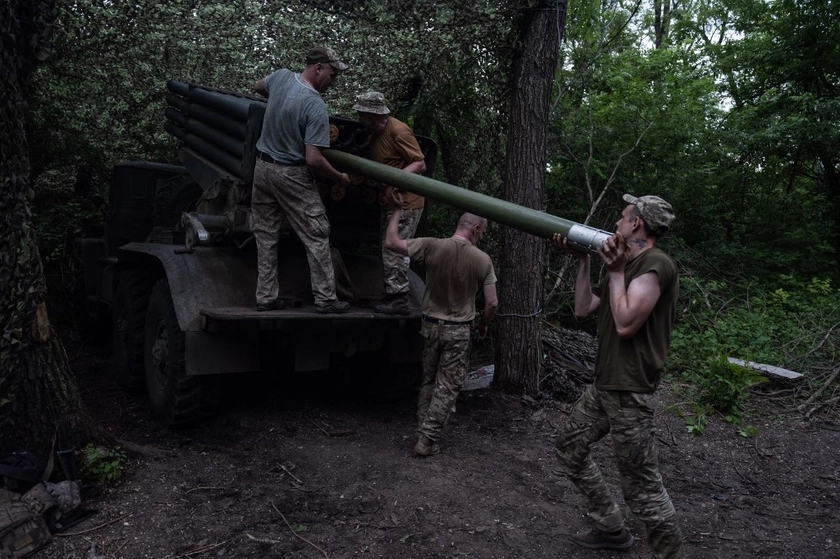
The Armed Forces of Ukraine continues to successfully repel multiple Russian assaults across the battlefront daily. As of Wednesday, Russia has sustained over 945,330 casualties; 4,070 in the past 3 days. They are on pace to reach 1 million by June.
Ukraine continues to strike deep within the interior of Russia. On Tuesday they struck the 51st Arsenal of the Main Missile and Artillery Directorate (GRAU) – a facility designed to hold 264,000 tons of munitions – located a little over 35 miles (56 km) from Moscow.
On Wednesday, they struck a Russian facility producing combat drones located more than 621 miles (1,000 km) from Ukraine’s border in the Alabuga Special Economic Zone of the Republic of Tatarstan.
After Russia’s Palm Sunday attack on Sumy, incoming German Chancellor Friedrich Merz said he was willing to send its Taurus long-range missiles to Ukraine “if it were done in conjunction with allies.” This precision deep strike weapon, coupled with the French SCALP and UK Storm Shadow missiles, would significantly enhance Ukraine’s ability to defeat Russian ground forces – and would put Crimea squarely in the crosshairs.
Much to the chagrin of President Trump, European nations have coalesced around Ukraine providing much needed support in the absence of the US. In mid-April, the Economist reported that some Trump administration officials were dissatisfied with European countries’ ongoing support for Ukraine, underscoring a growing rift between Washington and Europe.
But not just Europe. On Monday, Japan’s Kyushu University Institute for Q-shu Pioneers of Space agreed to provide Ukraine’s military intelligence agency with synthetic aperture radar imagery.
The Kremlin needs time to adjust. Significant losses leading up to the May Day Parade in Moscow on May 9 would be detrimental.
But let’s be blunt, Trump’s seven-point plan is nothing more than a business deal with Russia in need of a ceasefire. He needed Zelensky to sign the deal, so, as Steve Witkoff commented, he could “reshape the Russian-US relationship through some very compelling commercial opportunities that I think give real stability to the region too. Partnerships create stability.”
On Sunday the President posted on X, “Hopefully Russia and Ukraine will make a deal this week. Both will then start to do big business with the United States of America, which is thriving, and make a fortune!” That did not happen – and his response was more akin to a 10-year-old who did not get his way than the president of the United States trying to negotiate a peace deal with both parties.
Despite strongarm tactics, Zelensky rejected the “deal” and Trump was quick to cast blame saying “it’s inflammatory statements like Zelensky’s that makes it so difficult to settle this War” and that he was harming peace talks with Russia.
No, he simply rejected a business deal of no value to Ukraine.
Zelensky chose to forego profit over independence and sovereignty. Trump tried to reduce him to Scooby-Doo villain status, who when captured at the end of each show would say: “And I would have gotten away with it too [the business deal] if it wasn’t for you meddling kids [Zelensky].”
The President would be well served to read the Institute for the Study of War’s Russian Offensive Campaign Assessment, April 22, 2025, which succinctly details the Kremlin’s course of actions. Their end-state is not rooted on a business deal dependent upon Ukraine; rather, it hinges on the complete destruction of all things Ukraine. Like it or not, President Trump and his negotiators have become Putin’s huckleberries – setting conditions for the Kremlin.
The views expressed in this opinion article are the author’s and not necessarily those of Kyiv Post.
Copyright 2025. Jonathan E. Sweet and Mark C. Toth. All rights reserved.
You can also highlight the text and press Ctrl + Enter