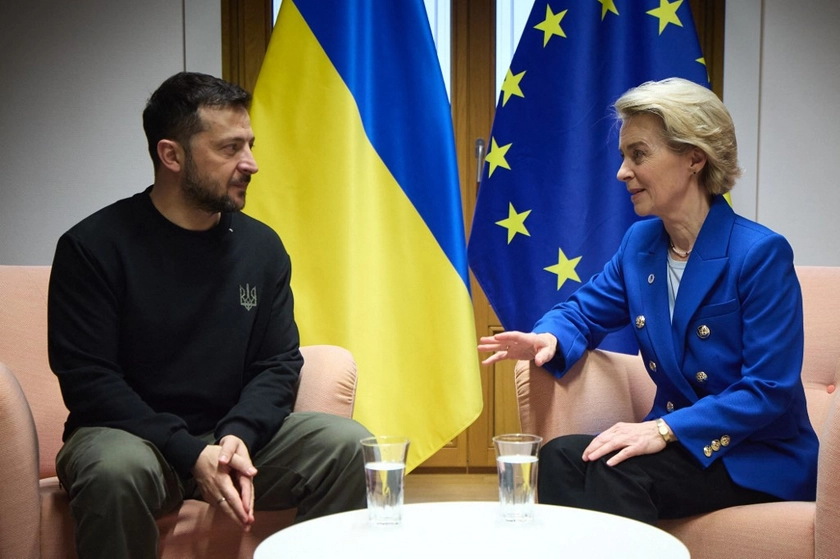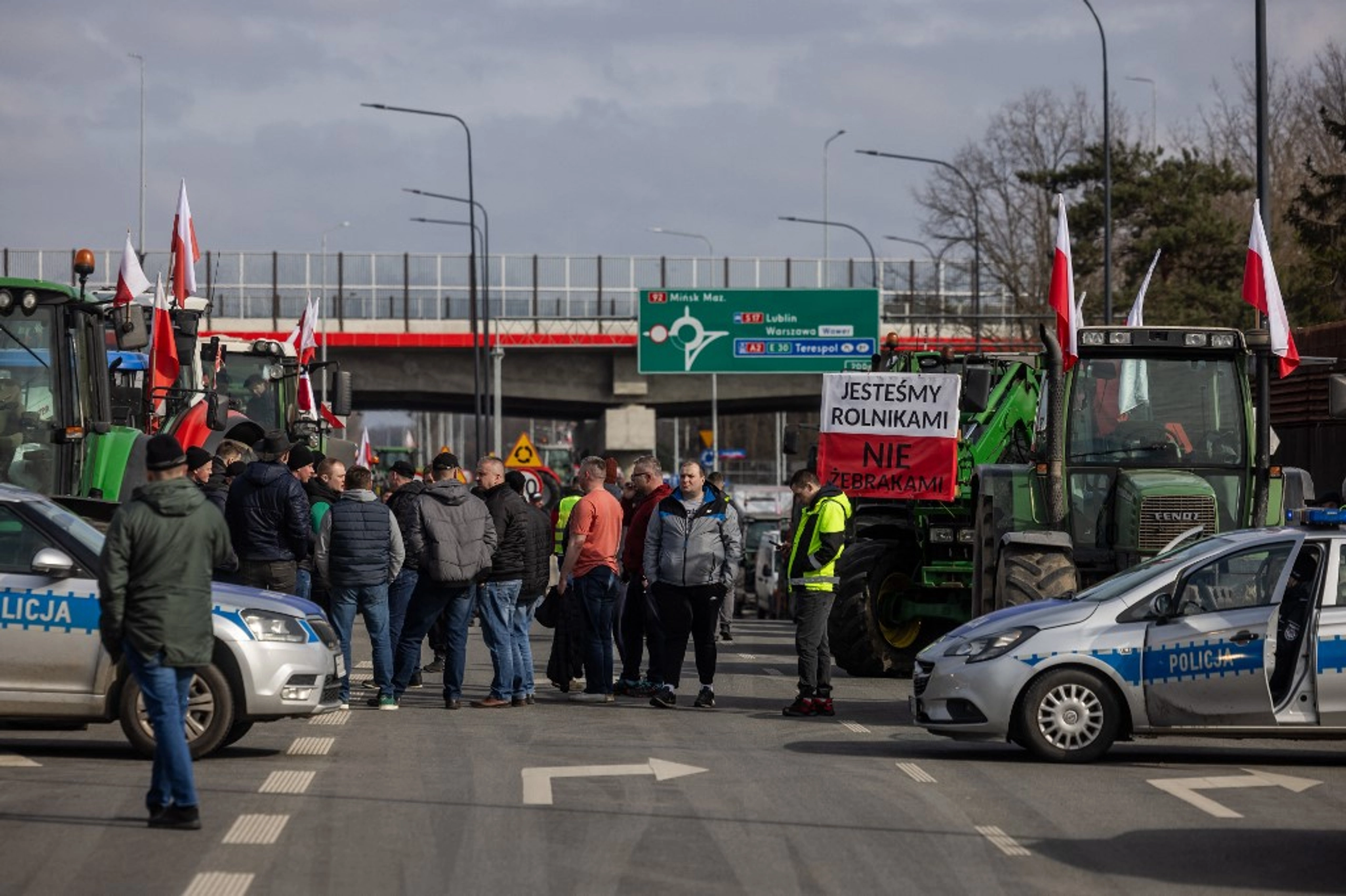
The European Commission confirmed that it will not extend the suspension of import duties on Ukrainian exports after it ends on June 5. Instead, Ukraine and the EU will update their current trade deal to set the rules for future preferential trade.
“We intend to ensure a smooth transition to a new regime, where all trade arrangements will be set out in the [Deep and Comprehensive Free Trade Area] DCFTA agreement that we have with Ukraine,” EC spokesperson Olof Gill announced at a briefing on Wednesday, April 30 in Brussels, European Pravda reported.
JOIN US ON TELEGRAM
Follow our coverage of the war on the @Kyivpost_official.
Gill said he “cannot say when this process will begin,” but that it will happen soon and will be structured so that “there will be no room for uncertainty.”
“We are going to ensure that there is no need for a rollback. We will put in place a process so that, after the expiry of the [autonomous trade measures] ATMs, the way we trade with Ukraine on a bilateral basis will be fully integrated into our DCFTA,” Gill said.
The EU’s ATMs, or so-called “trade visa-free” regime, was adopted in the summer of 2022, after Russia launched its full-scale invasion.
It removed tariff rate quotas on 36 categories of Ukrainian import goods to provide support to the country during the war.
While barriers for Ukrainian exports to the EU will not be fully abolished – the core provisions on trade liberalization will be incorporated into the DCFTA, Gill said.
Kasparov: Ukrainian Flag in Sevastopol Is the Shock Russia Needs to Accept Empire Is Dead
On April 23, the European Delegation to Ukraine also confirmed to Kyiv Post that Ukraine will transition from the ATM framework to the trade regime under Article 29 of the Association Agreement.
“This process aims to ensure economic stability and predictability for farmers and businesses in both Ukraine and the EU,” Nicolò Gasparini, spokesperson for the EU Delegation to Ukraine, told Kyiv Post by email.
Switching to a free trade agreement may bring Ukraine an advantage – predictability, Veronika Movchan, research director of the Institute for Economic Research and Policy Consulting, previously told Kyiv Post.
Under Article 29 of the free trade agreement, Ukraine and the EU could reach a compromise establishing less restrictive tariff quotas or fully lifting them for all goods that are not considered sensitive, Movchan said.
“I also don’t like not extending Autonomous Trade Measures, because we will lose export volumes. But a revision of the agreement under Article 29 would be a better outcome,” Movchan told Kyiv Post. “It makes the situation more predictable, lowers tensions, and reduces the costs associated with implementing changes and constantly lobbying for them.”
You can also highlight the text and press Ctrl + Enter

EU Investigates von der Leyen Over Zelensky Chat
France Seizes Shadow Fleet Tanker Near Sicily
Russian Economy 'in Dead End' as War Costs Devour Budget