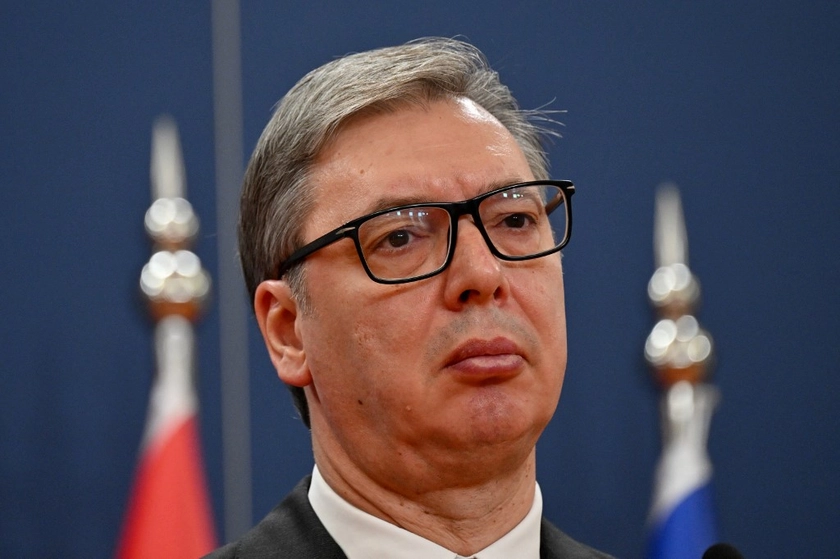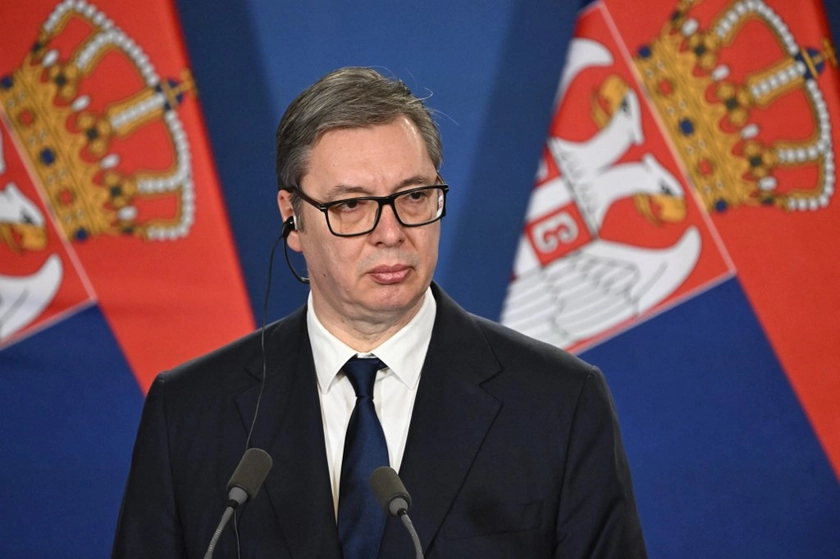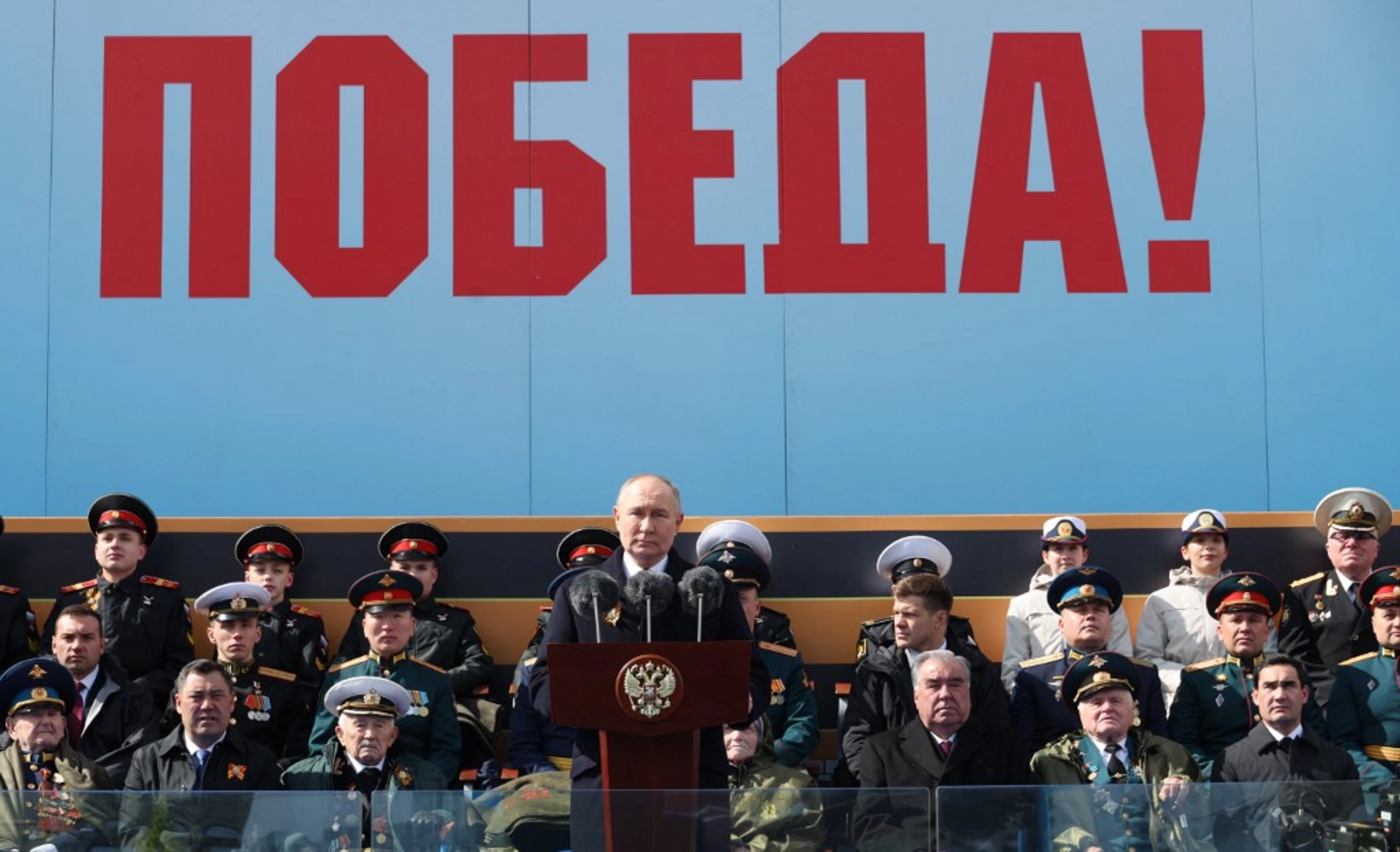
Serbia’s President Aleksandar Vucic arrived in Moscow Wednesday for celebrations marking 80 years since the victory over Nazi Germany, risking European Union anger as he tries to balance ties between Russia and Europe.
“After many years, back in Moscow,” Vucic wrote on Instagram, sharing a photo of himself at Moscow airport. The Kremlin said Vucic will have a meeting with its autocratic leader, Vladimir Putin, after Friday’s parade.
JOIN US ON TELEGRAM
Follow our coverage of the war on the @Kyivpost_official.
Vucic told Serbian television that he was confident Serbia would remain on a path to join the European Union and that only he would suffer any backlash. He said the visit was “important for very rational reasons.”
“The primary reason is the gas supply agreement,” the Serbian president stated. The EU has repeatedly warned it would look unfavorably at countries that deal with Russia since its invasion of Ukraine.
“Relations with Russia cannot be business as usual,” European Commission spokesman Markus Lammert said last week. But he declined to speculate on any consequences.
That has left room for maneuvre for Vucic, whom Putin honored with a top award in 2019 for promoting ties between the countries. In a sign of the tightrope he is walking, Vucic, who has been in power since 2012, received the Russian ambassador Wednesday before his departure for Moscow, swiftly followed by the British ambassador, just days after a visit to the United States.
Ukraine Regained Battlefield Initiative but Needs More Aid to Keep It – Fedorov
The Balkan country has long been close with Russia and been wary of NATO since the 1999 Kosovo war bombings.
Delicate balance
Belgrade has maintained relations with Moscow and imposed no sanctions since the Ukraine war started in 2022, yet supported UN resolutions against it.
Maintaining good relations with Putin without alienating EU favor is “one of the pillars” of Vucic’s foreign policy, even if “he has been more careful in recent years”, said Florian Bieber, of the University of Graz.
It is also about “calibrating the intensity of Serbia’s relationship with Europe”, said Eric Gordy, a Balkans specialist at University College London, who compared Vucic’s approach to that of former Yugoslav president Josip Broz Tito.
From the Russian side, having “the biggest country and the largest economy in the middle of the Balkans is a very significant lever, not to directly influence but simply to be present, to provoke... instrumentalize (or even) undermine EU projects,” said Nemanja Todorovic Stiplija, from the Belgrade-based Centre for Contemporary Politics think tank.
Ties include contracts for Russian Mi-17 helicopters and a Pantsir air defense system sold to Serbia. During the Covid pandemic, Russia provided medical equipment and vaccines, while Moscow has supported Serbia at the UN, particularly over Belgrade’s claim to its former province of Kosovo, which declared independence in 2008.
The Orthodox Church and the presence in Serbia of Russian media outlets such as Sputnik, TASS and RT Balkan provide useful communication channels for Putin, whose likeness adorns mugs, magnets, t-shirts and socks sold at kiosks in Belgrade.
Russia also retains a stranglehold through its gas supplies, with its energy giant Gazprom owning critical energy infrastructure in Serbia.
Vucic faces pressure there too, as Belgrade negotiates a new gas deal with Russia when the current agreement expires at the end of May.
Russian investment, though, is dwarfed by China, which has pumped billions of dollars into the Balkans in recent years, as it tries to expand its economic footprint in central Europe. But Serbia conducts most of its trade with the EU.
Stiplija said the Kremlin’s grip “is not that extensive but the Serbian government is trying to somehow use this misunderstanding... that there is a very big Russian political influence”.
For Bieber, there is a “shared influence”, pointing out that “most anti-Western media in Serbia are Serbian outlets”.
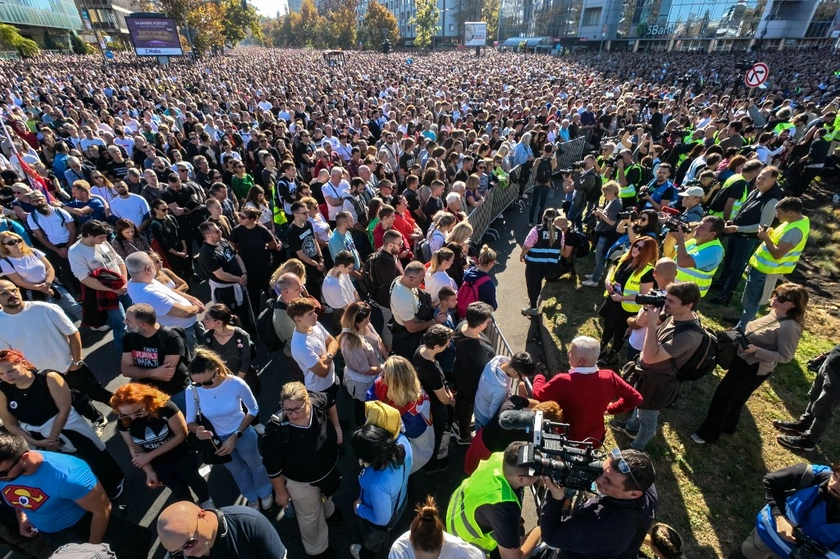
Gordy said that Vucic’s Moscow trip is “a populist gesture towards Serbia’s right-wing fringe” as he battles widespread protests stemming from a deadly railway station roof collapse in Novi Sad last year that has become a symbol of deep-rooted corruption.
You can also highlight the text and press Ctrl + Enter

Russia Hit by 660-Drone Overnight Barrage Targeting Moscow, Crimea and Key Military Sites