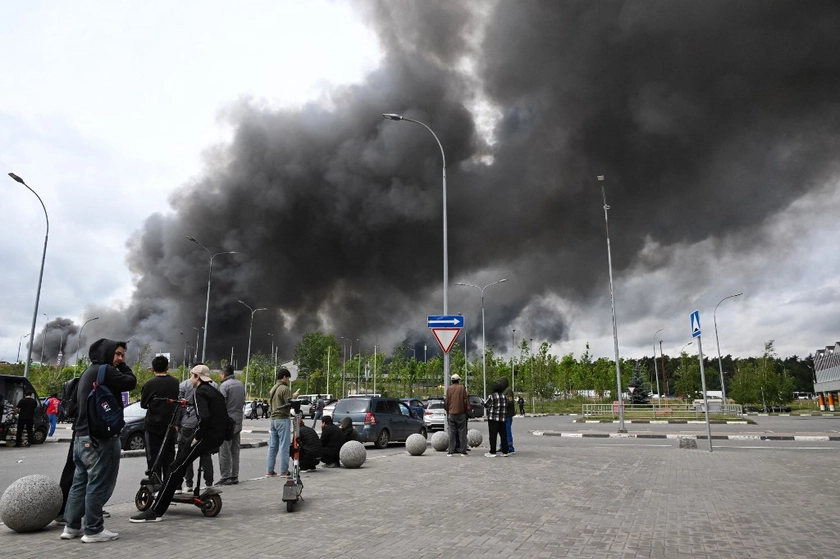
The threat of nuclear disaster is rising steadily, as Russia uses the Zaporizhzhia Nuclear Power Plant – Europe’s largest – to shield its artillery attacks on Ukrainian targets.
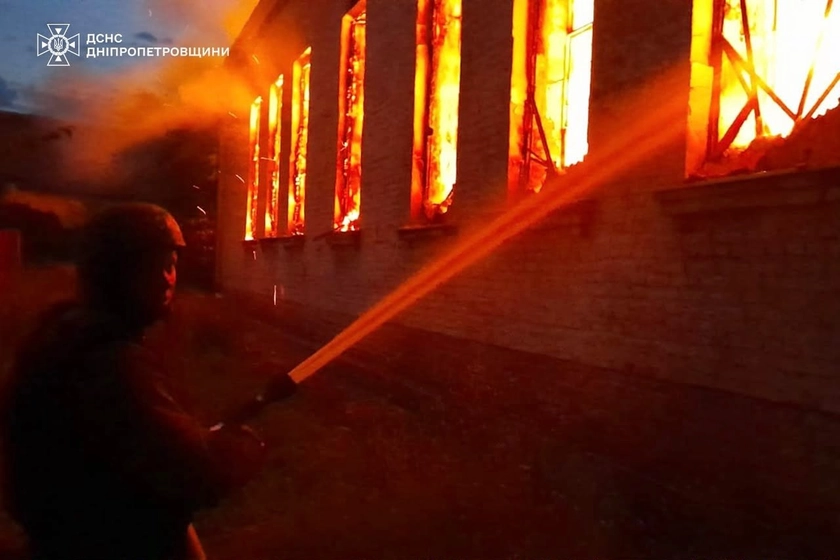
The Zaporizhzhia nuclear facility, which is the third-largest nuclear power plant in the world, has become a platform for Russian forces to launch attacks at the Ukrainian city of Nikopol and at Ukrainian military positions in the Dnipropetrovsk region – elevating the risks of a nuclear disaster to a new level.
JOIN US ON TELEGRAM
Follow our coverage of the war on the @Kyivpost_official.
US President Trump stressed that negotiations with Russia on a ceasefire must include discussing the status of the “Great Station” – its de-occupation, or at least demilitarization. He was referring to the Zaporizhzhia NPP, which has six reactors built in the 1980s and 1990s.

Ukraine is attempting to prepare for the worst. One thing it has going for it – the country already has extensive experience in overcoming the consequences of the nuclear accident, thanks to having dealt with the biggest nuclear disaster in history, the Chornobyl nuclear disaster of 1986.

Russia Says Nuclear Weapons the ‘Only’ Guarantee Against Global War
During the Soviet Union, the National Research Center for Radiation Medicine at the National Academy of Medical Sciences was established in Kyiv.

This large building is a multifunctional institution, unique in its work. Here, scientific research related to the effects of radiation on the human body is conducted, and at the same time, diagnostics, examination, and treatment of diseases caused by radiation exposure are carried out.

“This center is the leading scientific and medical institution dedicated to countering the health effects of ionizing radiation. We develop and improve methods for treating diseases caused by radiation exposure, including from low doses – and in children as well. Over the past 40 years, we have accumulated extensive knowledge and experience. In 1993-94, we participated in NATO exercises focused on countering nuclear threats, and in 1998, we joined REMPAN—the global network of WHO centers for responding to radiation accidents,” Dmytro Bazyka, Director General, says.

Scientists at the center, which was built back in the 1990s, created a database of victims of the Chernobyl accident and their children, and they’re examined free of charge.
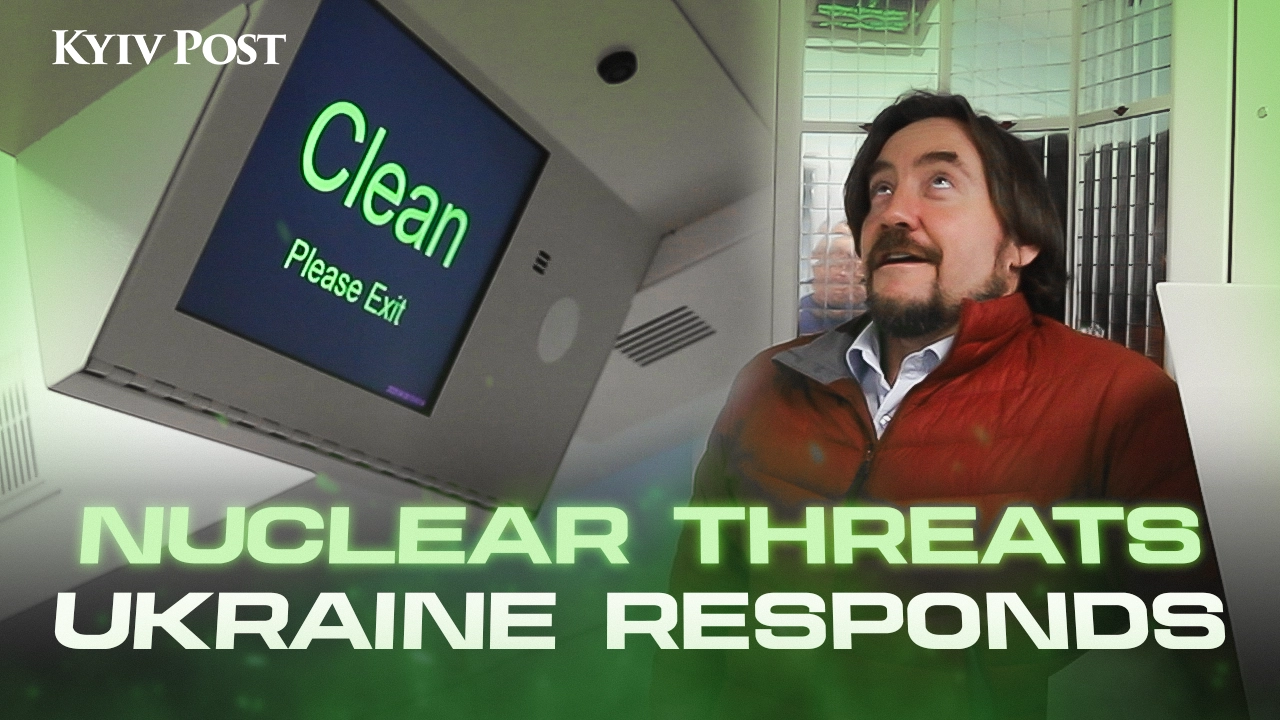
The center can detect health deterioration and deviations. In addition, those who work in the Chernobyl zone are examined here. We decided to undergo examinations. It starts with this device, which measures the presence of radiation on your clothes. The “Clean” sign means that you can go further.

If your clothes are contaminated, the person is undressed, washed in a special solution, and the clothes are destroyed.
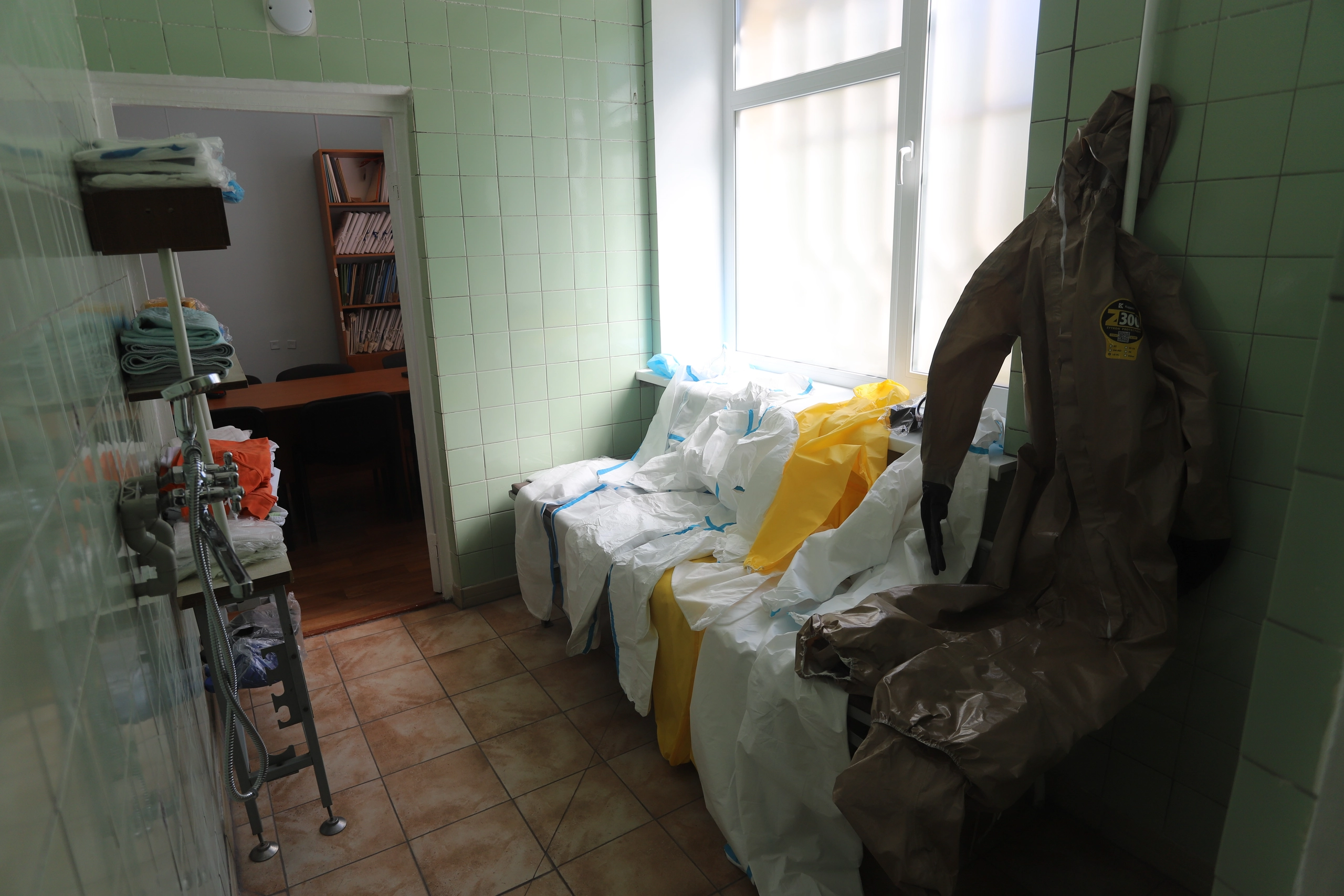
In our case, the next stage comes – measuring radiation inside the body.


This is done in a chamber with walls 20 centimeters thick, made of metal. This is necessary so as not to miss any radiation while the patient is inside. Scientist Victor Morozov explains how this chamber works.
“It is unique in that we can detect minimal levels of caesium activity and see its distribution in organs. For example, when you inhale radioactive dust, aerosols may settle in the lungs, and we can determine exactly where the caesium accumulates. The chamber is a gamma-ray spectrometer – a person is placed inside a shielded “house” that blocks external radiation,” Morozov says.

My colleague, Jeremy, is ready to enter the room made of 20-centimeter steel walls. The procedure lasts 10 minutes.

“In this chamber, we measure the caesium content in organs – especially from food intake. Why caesium? Human muscles are made of protein, and protein contains potassium. Chemically, potassium and caesium have the same valence. So, when a protein molecule forms, the plant absorbs potassium from the soil, and with it, caesium. Caesium enters the body through mushrooms, berries, and cow’s milk,” Morozov says.
At the finish, we get the result.
“It’s a really interesting experience for me – to get out of the chamber. You see the doors open slowly. But when you’re inside, you don’t feel anything happening. I mean, I felt some kind of vibration, but maybe it was my imagination. I didn’t see moving parts, flashing lights, or anything like that. But it’s fascinating, because we’re dealing with silent and invisible radiation – and the machines working with it are just as invisible,” Jeremy says.

Jeremy’s caesium level is normal, approximately at 160 Becquerel – not quite for an American, but for a resident of Ukraine. However, it’s not elevated. And his potassium level is in perfect condition.
“The table shows a good amount of caesium – 163 Becquerel. And over 5000 for potassium. That’s the norm, or even ideal, for potassium. As for caesium, this level is normal for a resident of Ukraine. The standard range is 50 to 200. A dangerous dose is over 1500,” Morozov says.

The center has existed for a long time. Despite funding problems, its researchers are doing everything possible to maintain operations at a high level.
“We’ve conducted exercises to respond should anything happen at the Zaporizhzhia NPP, for example. We are a top-level medical institution providing highly qualified care, including 534 beds, an intensive care unit, and more than 1,000 qualified doctors,” Bazyka notices.
Jarno Habicht, WHO representative in Ukraine, says Ukraine has great potential in this field — but the staff must be renewed, and so must some of the equipment.
“Today we handed over new equipment to the center, including dosimeters. We have been cooperating with this center for over 20 years. During the war, many humanitarian organizations brought dosimeters here. We ensure that this is a training center where all personnel know how to use the equipment. We have already provided technical support to over 100 such centers. Since Feb. 24, 2022, they have been actively engaged in chemical and radiological research. This center has been one of the main sources of knowledge since Chornobyl. But we need the younger generation to come here to study. This week, specialists from Rivne, Khmelnytskyi, and Zaporizhia are participating in training sessions. And we need more of them,” Habicht says.

In Ukraine, there are dozens of such research centers that combine science with medicine, mostly under the branch Academies of Sciences and the National Academy of Sciences. However, their future depends on funding, the ability to attract and train personnel, and cooperation with international partners.
You can find the video of this story here.
You can also highlight the text and press Ctrl + Enter