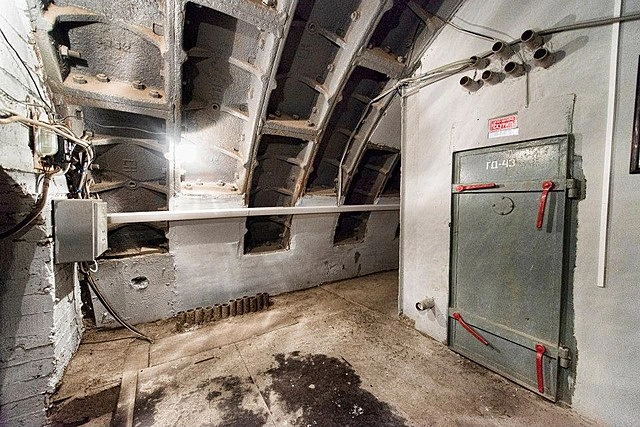
Russia’s Ministry of Emergency Situations will begin reconstructing and modernizing Soviet-era bomb shelters, Minister Alexander Kurenkov announced during a meeting with journalists.
It is estimated to cost around 155 billion rubles (approximately $1.7 billion USD).
JOIN US ON TELEGRAM
Follow our coverage of the war on the @Kyivpost_official.
According to Kurenkov, the importance of civil defense infrastructure has “increased even further,” prompting the ministry to collaborate with regional authorities on its restoration.
Kurenkov said that many shelters are already being refurbished and equipped with essential systems. “The goal is to protect as many people as possible – both from military threats and emergency situations,” he said, according to The Moscow Times..
Kurenkov said that during the Soviet era, bomb shelters were built “to last for centuries” and were seen as an essential part of national security.
He said modern bunkers can involve the use of dual-purpose spaces. For instance, underground parking areas in residential or commercial complexes could serve as shelters if needed.
“In an emergency, such spaces can be used for civil defense. It’s important that people understand the need for shelters, even if they may seem unnecessary today,” Kurenkov added.
According to data from Russia’s Ministry of Emergency Situations, as of 2022, 67% of Soviet-era bomb and radiation shelters were unfit for use: Only 16% of the facilities are fully ready to protect civilians from shelling or a potential nuclear strike, while another 17% are considered partially functional.

Ukraine’s Battlefield Medics: Treating the Wounded While War Breaks Them Too
Efforts to reactivate them have intensified amid Russia’s full-scale invasion of Ukraine.
In 2024, Russian authorities stepped up inspections of these facilities. According to the investigative outlet Verstka, courts have processed more than 200 administrative cases this year related to the poor condition of protective structures.
For comparison, there were about 90 such cases in 2022-2023, over 100 in 2021, and just over 50 in 2020.
Inspections revealed that many shelters are either completely or partially flooded, structurally damaged, or have collapsed altogether.
Even in relatively intact facilities, inspectors found mold, rust, rotten supports, as well as broken doors and windows. In many cases, there was no electricity, plumbing or sewage system. Entrances were often blocked by debris, soil or various discarded materials.
There is no up-to-date public database on the total number of shelters in Russia. According to a 2016 report by the Russian Accounts Chamber, there were just over 16,000 such facilities at that time.
As of 2023, Ukraine has around 60,000 bomb shelters across the country, according to New Voice Ukraine, with more built and repaired in recent years.
An incident in Kyiv in 2023, in which three people were killed after a bomb shelter was closed off during Russian airstrikes, had subsequently accelerated the work to inspect and modernize the shelters.
In 2023, Russia’s Ministry of Internal Affairs reported about 1,200 shelters in the Belgorod region and around 800 in the Kursk region – though the vast majority, according to officials, are either in disrepair or do not meet modern safety standards.
In late 2024, Russia announced serial production of its “KUB-M” mobile bomb shelters that could reportedly withstand explosions from conventional weapons and radiation from nuclear strikes.
You can also highlight the text and press Ctrl + Enter

Russia Hit by 660-Drone Overnight Barrage Targeting Moscow, Crimea and Key Military Sites