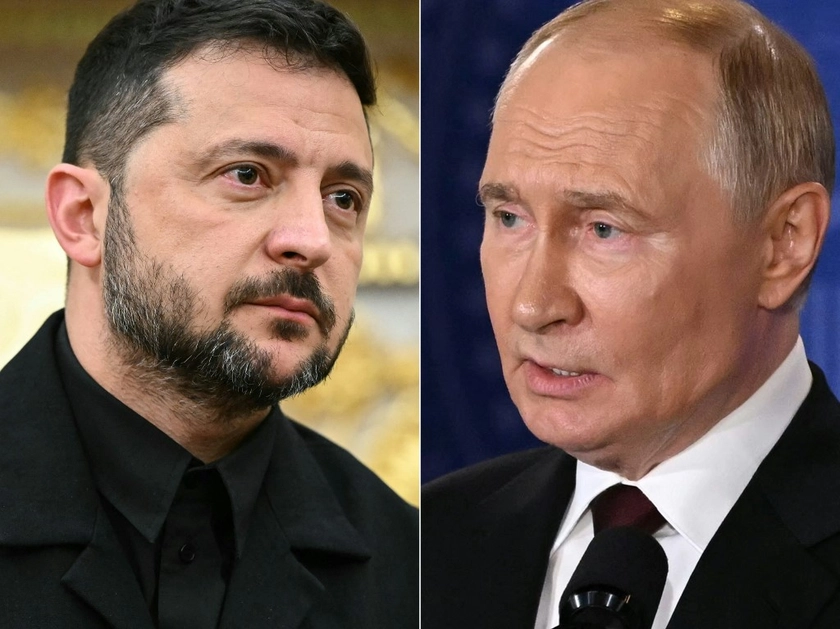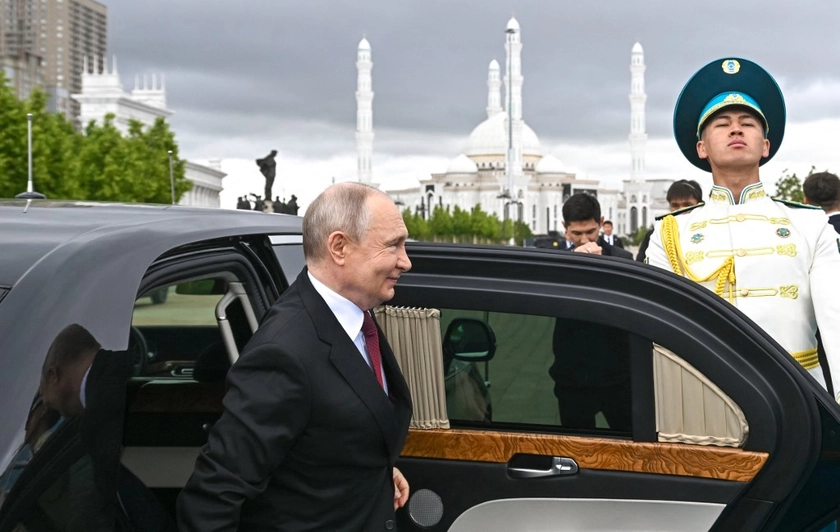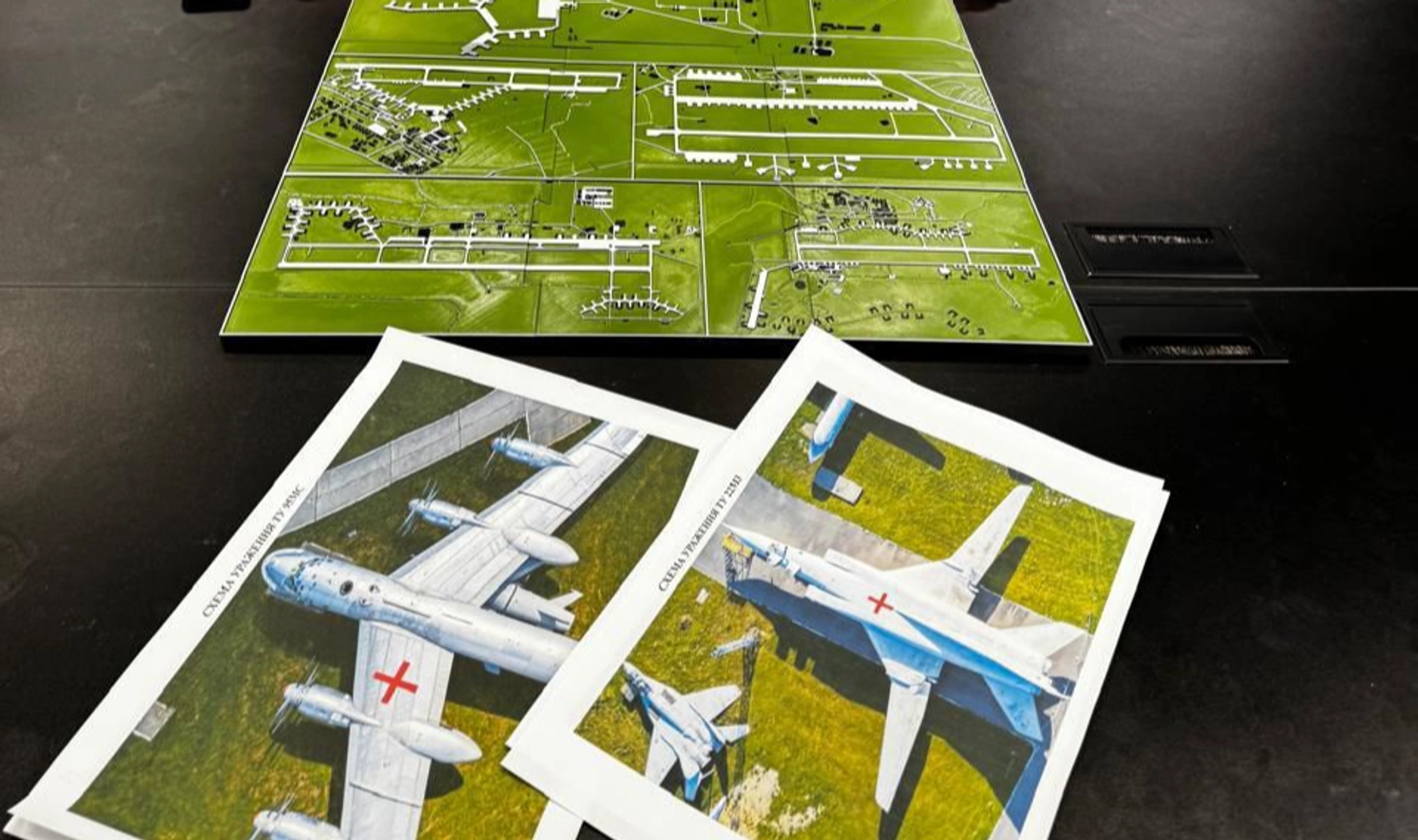
Ukraine’s Operation Spiderweb, the audacious and meticulously planned drone strike aimed at five airbases – Murmansk, Ivanovo, Ryazan, Irkutsk, and Amur, deep inside Russia – was proclaimed a resounding success by President Volodymyr Zelensky and Lt. Gen. Vasyl Malyuk, the head of Ukraine’s Security Service (SBU), whose agency implemented the attacks.
The artificial intelligence (AI) enhanced kamikaze drones smuggled into Russia and remotely deployed from cargo trucks caught the airfield defenders napping, as they were set up to intercept conventional aerial threats, not swarms of short-range UAVs.
JOIN US ON TELEGRAM
Follow our coverage of the war on the @Kyivpost_official.
How successful was Spiderweb?
Ukraine’s statements released in the immediate aftermath claimed to have destroyed and damaged more than 40 strategic aircraft including Tu-95, Tu-22 and other heavy bombers along with an A-50 airborne early warning and command (AEW&C) aircraft. This represented around a third of Russia’s strategic bomber fleet at a cost of more than $2 billion (some estimated as $7 billion).
Almost immediately Russian official statements and a plethora of analysts and milbloggers, both Russian and international, began to question the figures claimed by Kyiv. A typical response was voiced by John Helin of the Finnish-based open-source intelligence (OSINT) analysis Black Bird Group, who said in a Monday interview that visual and satellite evidence did not support the higher estimates, adding: “At this point, it looks like [only] around 10 bombers were lost.”
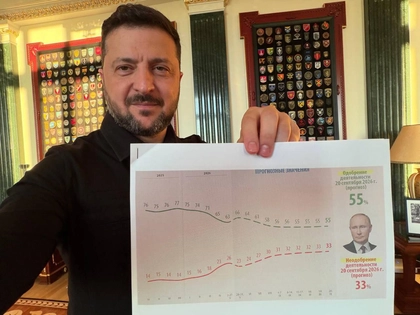
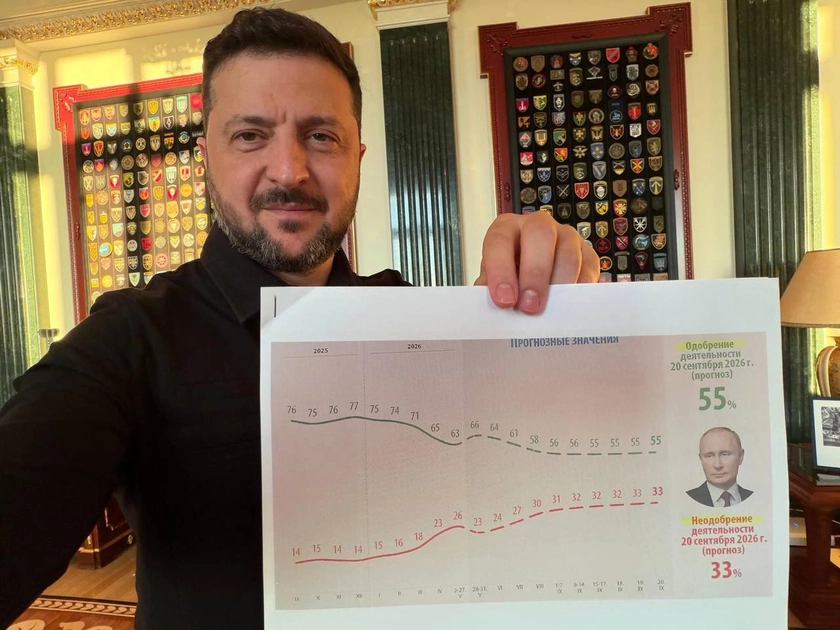
Zelensky Reveals Intercepted Intel from Putin’s Desk
In a Tuesday update by the Daily Telegraph, as open-source satellite images began to appear, the confirmed figure of destroyed aircraft was eight Tu-95s, four Tu-22s, and an An-23 at the Olenya and Belaya airfields.
It said that the jury was still out on whether the A-50 at the Ivanovo military transport air base had been hit and whether 10 explosions reported at the Dyagilevo strategic bomber force training center had hit anything. It added that information on strikes at Severomorsk, the main administrative base for Russia’s Northern Fleet was currently not forthcoming.
Speaking on June 2, Andriy Kovalenko, head of the Center for Combating Disinformation at the Council of National Security and Defense of Ukraine, seemed to confirm that “only” 13 Russian aircraft were completely destroyed but that damage had been inflicted on more than 40.
However, not all commentators had a fixation with the numbers game, they saw the operation as having wider strategic, political and tactical implications.
The political dimension
The night before the Spiderweb strike, Ukraine endured its heaviest ever aerial attack, when 472 drones and 7 ballistic and cruise missiles struck targets across the country and 12 Ukrainian soldiers died in a separate attack on a training base on Sunday.
This was the culmination of a week-long aerial onslaught which analysts put down to President Vladimir Putin attempting to put military pressure on Kyiv and its allies ahead of the planned second round of peace talks scheduled for Monday in Istanbul. Russia was in effect saying: “Sue for peace or else…”
However, the Kremlin was unprepared for Ukraine’s own riposte. Spiderweb had been preceded by strikes on Russia’s military logistics network, when transport bridges in the Russian regions of Bryansk and Kursk were blown up and a freight train carrying fuel was blown up in Ukraine’s Zaporizhzhia region.
Spiderweb was the “pièce de resistance.” Although it was planned for more than 18 months, Kyiv was no doubt waiting for the most opportune moment to initiate it. Sunday, June 1, on the eve of the Istanbul peace talks, was as good a day as any.
Not only was Zelensky laying down a marker of Ukraine’s ability to wage the war on its own terms if peace wasn’t achieved, but it was, coincidentally or not, the 29th anniversary of the final handover of its last nuclear warheads and strategic bombers under the auspices of the so-called Budapest Memorandum.
From the Russian perspective the operation brought the reality of the war to parts of Russia that were largely untouched by a war taking place hundreds and even thousands of kilometers away.
In doing so, as a Kyiv Post analysis noted, it undermined more than two decades of the Putin regime’s promoting Russia as “a global power fulfilling a neo-imperial destiny,” with much of Putin’s support among everyday Russians being based on his “strong country and strong man” posture.
Russia’s military and intelligence dimension
The Moscow Times, citing Katarzyna Zysk, a professor of international relations and contemporary history at the Norwegian Defense Academy, highlighted the timing of the attack on the eve of the Istanbul talks.
“Ukraine understands that the only way to compel Putin to take negotiations seriously is from a position of strength, when he has no choice but to do so,” Zysk said. “While Russia was gaining ground on the battlefield, Putin repeatedly dismissed the idea of negotiating, questioning why he would want to. Highlighting Russia’s weaknesses and vulnerabilities may influence the negotiation dynamics and strengthen its leverage at the negotiating table.”
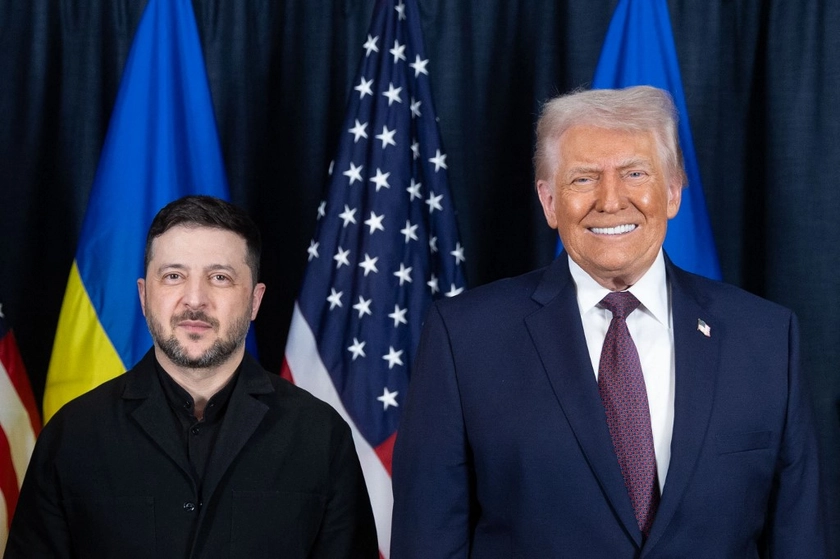
She added that in signaling its ability to take out valuable military assets, Ukraine was likely to be more successful in compelling Russia to engage in peace talks compared with the “softly, softly” diplomatic approach favored by the Trump administration.
At the same time pro-Kremlin milbloggers such as “Fighterbomber” and “Rybar” called the Ukrainian success as a “black day for [Russian] aviation” and a “very heavy blow” that highlighted “serious shortcomings” by Russian intelligence.
Clearly “rubbing salt into Russia’s wounds” Zelensky wrote on X that one of the premises used by the SBU in preparing the operation “was located directly next to FSB headquarters in one of their regions,” before adding that all Ukrainian agents had already returned safely home prior to the operation.
Dan Lomas (@sandbagger_01), a lecturer on intelligence and security issues at the University of Nottingham writing on X said “Ukraine’s audacious drone attack undermines the Russian security system itself just as much as it poses a military threat. The reality of the threat risks exposing the [Russian] security system as incompetent.”
In contrast, he told The Moscow Times that Ukraine’s security and intelligence services “have the skills, determination and, more importantly, the ability to strike all over Russia, and their growing success only adds to this paranoia.
He added: “Where will they operate next and how will they be able to operate on Russian territory, embarrassing the FSB and other internal security agencies?”
Lomas concluded: “Ukraine has an endless list of targets, while the FSB must constantly successfully defend its facilities. Ukraine has been able to attack everything from individuals to parts of the Russian strategic forces. The paranoia and psychological aspect for the FSB is what will happen next.”
The nuclear dimension
Gen. Mike Flynn, former National Security Advisor during President Donald Trump’s first administration and frequent commentator on RT, writing on X said the implications of Spiderweb being conducted without consulting the White House “isn’t simply a breach of protocol. It’s a geopolitical insult.” He said that carrying out such an operation without coordinating with the US had potentially wide-ranging strategic consequences.
While he seemed to applaud the ingenuity of the SBU operation, he pointed out that Zelensky had taken advantage of the fact that under the Strategic Arms Reduction Treaty (START) agreements, nuclear capable strategic bombers have to be kept outside or exposed to external viewing for verification purposes.
He then pointed out that the operation had implications for the US strategic bombers which are similarly vulnerable and could “be taken out in the same way by anyone with access to inexpensive drones, delivery trucks, explosives, and a bit of technical knowledge.”
He then went on to say that world leaders should realize that Ukraine’s operation “wasn’t a bold action, it was brash. Ukraine’s short-term win could be the world’s long-term loss.” Adding that “Russia will respond. Action, reaction, counteraction.”
Conclusion
The wider implications of Spiderweb and the latest attacks on Russian military infrastructure, as opposed to continuing indiscriminate attacks on Ukrainian civilian infrastructure and residential areas, was perhaps best summed up by Ukraine’s president speaking at the meeting of the leaders of the “Bucharest Nine” in Vilnius on Monday.
Zelensky said: “Our Operation Spiderweb yesterday proved that the Russian Federation must feel the importance of its losses. This is what will push it to diplomacy. And while it bears losses in this war, it becomes obvious to everyone that Ukraine maintains defense not only for itself, but also for the whole of Europe.”
No doubt in the coming days more will be revealed about the outcome of the Spiderweb operation, but whether 40 or 13 bombers have been lost to Moscow the implications that Ukraine has the ability to strike at the heart of Russia are potentially far reaching – and who knows how many other “cards” Zelensky, Malyuk and Kyrylo Budanov hold up their sleeves.
You can also highlight the text and press Ctrl + Enter

Putin’s Worst Nightmare