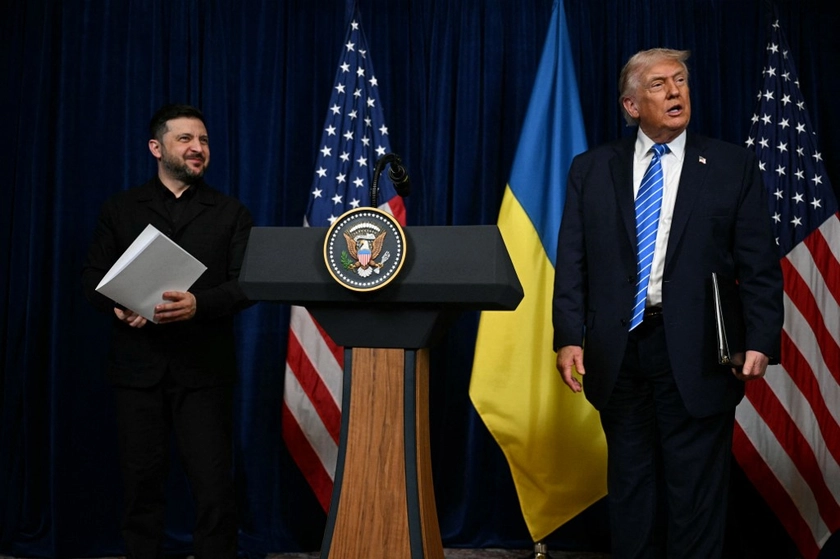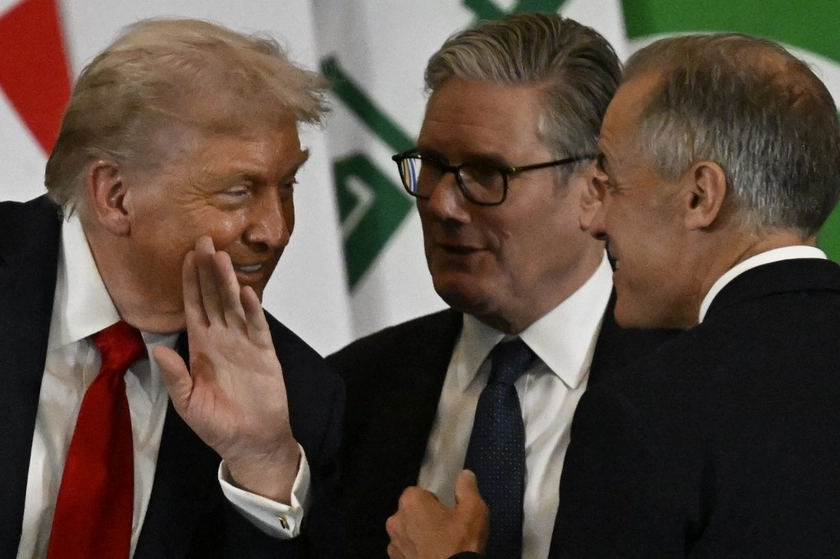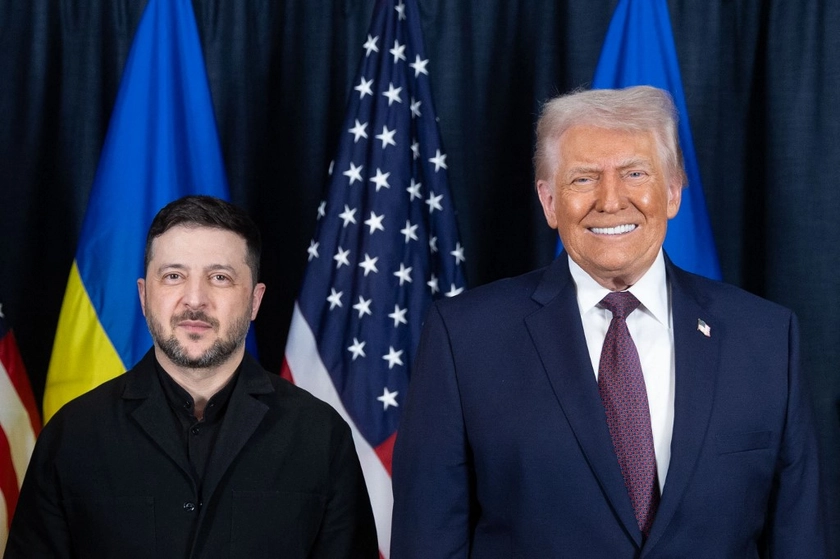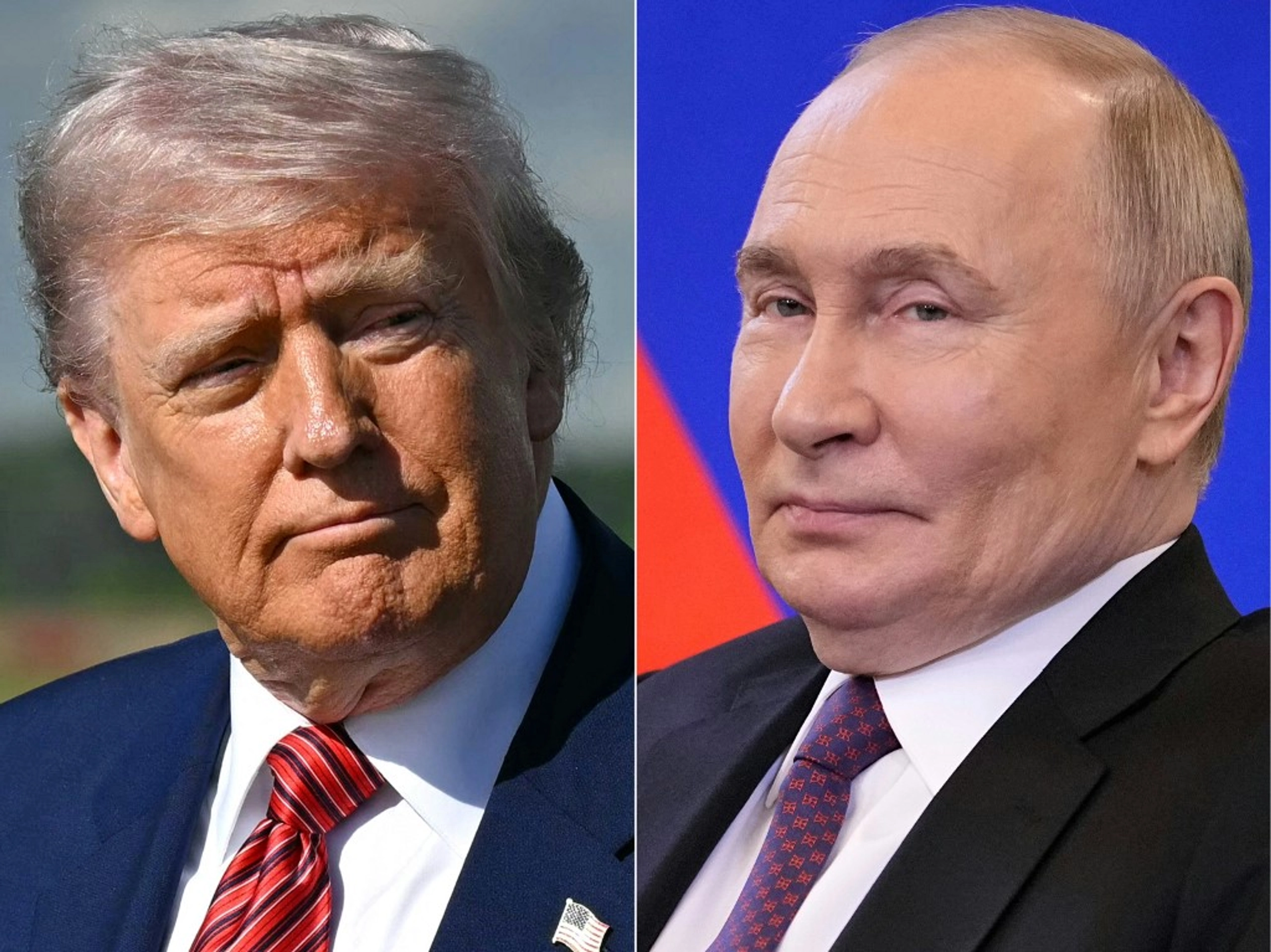
US President Donald Trump walked out of the G7 meeting in Ottawa without meeting Ukrainian President Volodymyr Zelensky, but it is unlikely that their meeting would have resulted in good news for Ukraine.
After all, Trump opposed labeling Russia as the aggressor in Ukraine at the G7 meeting last February; in Ottawa he declared that Russia should never have been expelled from the G8. Earlier, he opposed sanctions on Moscow. The larger problem – which an arrogant Trump apparently ignores – is Russia’s unfavorable perception of him and the United States. What that boils down to is that Russia will not reward Trump for his political concessions on Ukraine.
JOIN US ON TELEGRAM
Follow our coverage of the war on the @Kyivpost_official.
Russia has never trusted the US and remains hostile to it. When Trump said he trusted Russian leader Vladimir Putin the day before his contemptible televised spat with President Volodymyr Zelensky in the White House, Moscow responded that Russia did not trust America. Moscow merely hoped that the two countries could “move from confrontational to non-confrontational coexistence.” While Russia’s experienced Foreign Minister Sergey Lavrov claims that Washington and Moscow agree that foreign policy should be rooted in national interests, Russia has no illusions about the US penchant for performing U-turns. Is Trump aware of what Russia thinks of him and his country?
EU Unveils New Sanctions Hitting Russia’s War Economy, Propaganda Network
For his part, Trump has belatedly realized that Russia wants to seize even more Ukrainian territory than it controls as the price for peace and that Russia’s main aim is to conquer Ukraine. Not even Trump can endorse Russia’s aggression. Washington has affirmed that a cease-fire must precede negotiations and urged a diplomatic solution to the war.
Putin backed out of his own call for direct parleys with Zelensky in Istanbul on May 15. His talk about removing the root causes of the war really means that Ukraine should accept conquest by Russia. So meeting Zelensky would mean recognizing him as a sovereign Ukraine’s leader.
Initially, Trump compromised Ukraine’s territorial and legal status to persuade Russia to stop its war in Ukraine. Having accepted Moscow’s narrative of the war, he blamed Ukraine’s ambition to join NATO as the casus belli of Russia’s illegal assault on Ukraine.
Russia has rewarded Trump with complex criticism and by frustrating him. Russia believes that Trump will not remove all of America’s nuclear weapons or withdraw all US troops from Europe but will take them back to the levels that existed before it invaded Ukraine in February 2022.
At another level, Moscow welcomed Trump’s row with Zelensky in the Oval Office on Feb. 28 as evidence of Washington’s pragmatism. “Common sense is his motto,” Lavrov commented sarcastically, saying that Trump’s America aimed to be the number one country in the world and noted the president’s arrogance: “He has a new hat now: Trump Was Right about Everything.” That opinion about the United States and Trump threw a wrench in what might have been labeled “the trust and friendship works” plan.
What makes Trump’s concessionary diplomacy rare and significant? It is uncommon for a stronger power to concede the demands and echo the political narratives of a weaker power, but that is what Washington did even before Secretary of State Marco Rubio met Lavrov in Riyadh on Feb. 18. Then, having cut off military aid and intelligence to Ukraine, Trump supported Russia’s brutal missile and drone strike on Ukraine as “what anyone would do.” Lambasting Ukraine as the obstacle to peace, he suspended military aid to Ukraine. Only very recently did he ask Putin to stop shooting missiles into civilian areas. But that was not a rebuke, given that he added, after meeting Zelensky in Rome at the funeral of Pope Francis, that Kyiv was ready to give up Crimea.
Apparently Trump was indulging in doublespeak, which Moscow interpreted as implying that he would use US leverage over Ukraine in favor of Russia. That inspired Lavrov to affirm that “guarantees can only exist in the form of a directive coming from Washington to Zelensky and his team.” The pre-eminence of the United States as the sole superpower – which Russia views with jealousy and hostility – probably led Moscow to entertain such ideas when Washington seemed to have a chance to browbeat Kyiv. Such a ‘directive’ would reflect the fact that neither America nor Russia cares about Ukraine’s territorial integrity, although that is based on international law. Indeed, Trump has propped up Russia’s land-grabs and validated its seizure of Crimea and eastern Ukraine. For Moscow, they are non-negotiable parts of Russia and “not even up for discussion.”
Ukraine’s territorial sovereignty is the main issue for Moscow, Kyiv – and the international community. In March, Security Council Secretary Sergei Shoigu startlingly alleged that territorial integrity, enshrined in Ukraine’s constitution, was the main obstacle to peace. Again, this put the onus for peace on Ukraine, which is the victim of Russia’s aggression.
At first, Moscow and Washington were expediently silent on the fact that Article Four of Russia’s constitution says that “The Russian Federation shall ensure the integrity and inviolability of its territory.” At the very least, they are guilty of double standards when they oppose Ukraine doing likewise.
Russia recognized the inviolability of Ukraine’s international borders after the collapse of the former Soviet Union in 1991, and again conjointly with Western signatories to the Budapest Memorandum of 1994. Post-Soviet Russia signed border agreements with an equal and sovereign Ukraine in 1997 and 2003. But former President Bill Clinton, one of the signatories of the Budapest Memorandum, recalled that Putin never accepted the supposedly democratic President Boris Yeltsin’s agreement to respect Ukraine’s territorial boundaries. Therein lay the main explanation for Russia’s destructive attitude to agreements signed with Ukraine, the annexation of Crimea in 2014, and its ongoing attempt to conquer Ukraine.
Trump’s cavalier attitude to Ukraine’s territorial integrity has also shaped Russia’s
two-sided perception of contemporary Washington. On one side, Trump’s own high-handedness on territorial integrity, reflected in his declared readiness to use military force to take over Greenland, led Lavrov to note the new coincidence of interests between Russia and America in disregarding the principle. Washington, he claimed, understood Russia’s position on the Ukrainian territories it had annexed. Lavrov’s impression was that the Americans accepted “a comparison according to which Ukraine is much more important for Russia’s national security than Greenland is for US national security.”
On the other side, Moscow went on the offensive against Trump by signaling that Washington’s interest in Greenland could conflict with Russia’s determination to uphold its sovereignty and strategic interests and strengthen its military capability in the Arctic region. Since such strengthening would be directed against the United States, could Washington explain how this would advance Trump’s primary goal to make America great again?
Trump can only endorse a peace deal on Russia’s terms by bludgeoning Ukraine to make territorial concessions and stay out of NATO. Moscow remains adamant that no negotiations should enhance Ukraine’s “military potential” and insists on international recognition of Russia’s occupation of eastern Ukraine and Crimea.
Since Trump continues to stand by Putin, who is literally sticking to his guns, West Europe’s democracies must uphold the intertwined principles of international law and Ukraine’s territorial integrity, not only to deter Russia’s expansionism in Europe but also China’s in Southeast Asia.
They, if not Trump’s US, should side with Ukraine and other countries that perceive the benefits of a rules-based order against imperialist oppressors who make the world a more dangerous place. That will be much wiser than hoping for peace transactions with a deceitful Russia.
Above all, the victory of an independent Ukraine will enhance the security of Europe’s democracies against an essentially hostile, warmongering Russia.
The views expressed are the author’s and not necessarily those of Kyiv Post.
You can also highlight the text and press Ctrl + Enter