WASHINGTON DC – US President Donald Trump plans to travel to the Netherlands on Tuesday, June 24, for the NATO Summit to secure new commitments on increased defense spending and industrial production, a senior US administration official told reporters ahead of the scheduled trip.
On military spending, NATO has long been inching toward two percent of each member’s respective GDPs, but that is old news by now, as Trump is eyeing a new target: five percent.
JOIN US ON TELEGRAM
Follow our coverage of the war on the @Kyivpost_official.
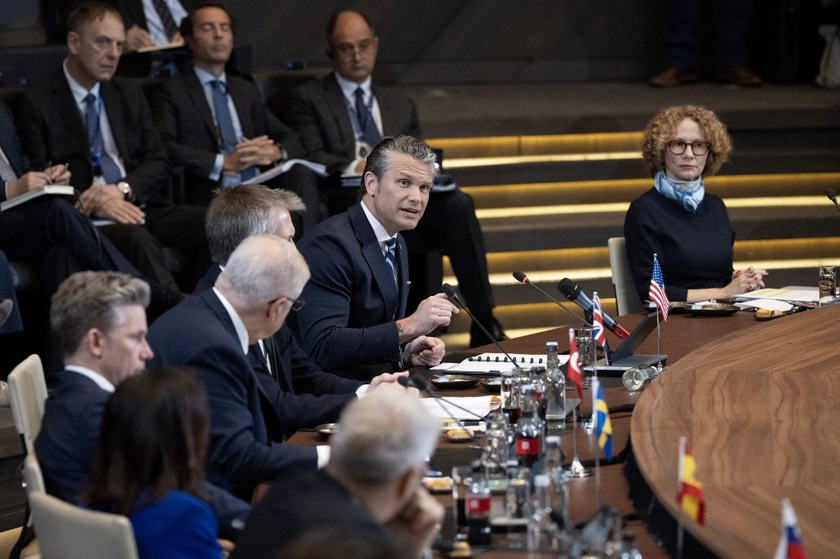
On Sunday, NATO members in principle agreed to meet the new goal: the deal calls for at least 3.5% of national GDP to be spent on core military needs, while an additional 1.5% could be allocated for related expenditures.
Spain had sought to block the measure but ultimately dropped its opposition after a deal was reached exempting Madrid. The leaders are expected to vote in favor of ramping up their spending this week.
Trump’s second goal is to urge alliance members to, as a senior US official put it, “revitalize their industrial capacities in order to create Western supply chains capable of producing the critical minerals infrastructure, weapons, and other products necessary for the security of America and her allies.”
In addition to attending the NATO plenary session, Trump intends to hold a few bilateral meetings and have a press conference before heading home Wednesday afternoon.
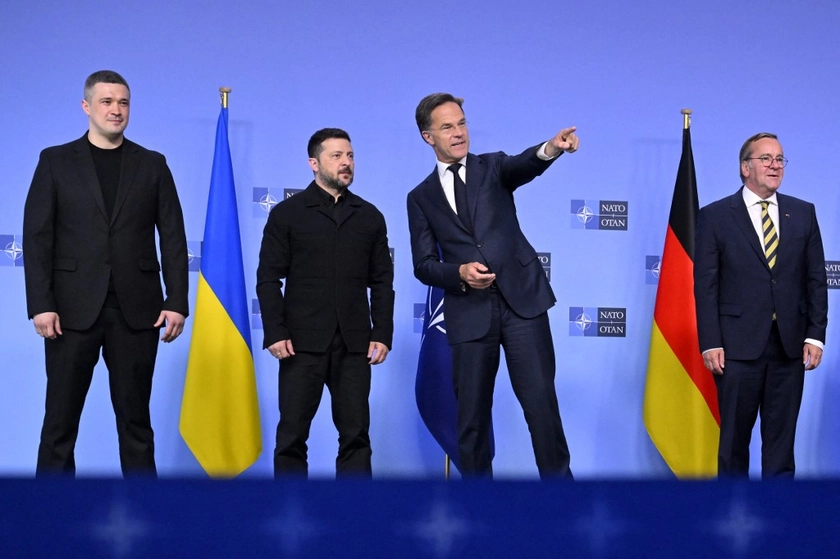
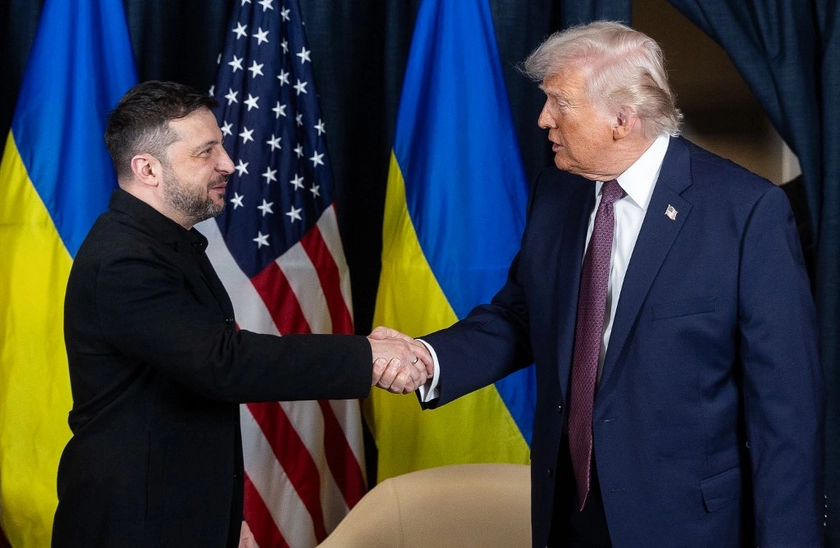
While Ukraine will not be Trump’s exclusive priority, Western officials do not exclude a potential meeting between Trump and Ukrainian President Volodymyr Zelensky, who will also be in the Hague.
US Reportedly Views Ukraine as Winner as New Frontline Proposals Emerge
The White House has yet to confirm the President’s one-on-one meetings.
Speaking to reporters Friday night, a US administration official said that Trump’s bilateral meetings with world leaders “will focus on issues of shared concern and reaffirm the United States’ strong ties with our allies and partners.”
As the spotlight on June 24-25 will mostly be on the US president, Western diplomats are holding their breath, mindful that Trump’s ambivalence toward NATO and America’s allies will loom over the aftermath of even an uneventful summit.
In that sense, one Western diplomat put it in an interview with Kyiv Post, “even with a very short meeting planned, no news out of The Hague will mean good news for NATO.”
To the Europeans, concerns about the future of US leadership in the Alliance alongside Russia’s intensifying invasion of Ukraine have long prompted them to look for ways to enhance their security without Washington.
However, the “elephant in the room” is whether and how the transatlantic alliance alone could adapt to the current geopolitical environment and ensure its long-term relevance.
“Frankly, one may hope the gatherings like this could only steady the Euro-Atlantic community in a geopolitical storm,” another diplomat said, adding, “Everyone is prepared for the possibility that Trump will continue to question NATO’s utility to America.”
For Seth Jones, president of the Defense and Security Department at the Center for Strategic and International Studies (CSIS), a Washington think-tank, what could rattle NATO countries is “sort of less about the NATO summit per se and more about US actions in areas like Ukraine.”
“A US decision that a peace deal [between Ukraine and Russia] is not likely, a US president that gets tired of negotiating and ends all US support to the Ukrainians and walks away, and then the result is Russian advances on the battlefield - that to me would be an example of something that would much more likely rattle European capitals than a range of these sort of summit issues,” Jones told reporters during CSIS media call.
Trump’s decision to join Israel’s military campaign to destroy Iran’s nuclear development infrastructure has injected new uncertainty into what the officials had hoped to tightly script.
But, as of Sunday, there were no formal plans to meet with allies to discuss the situation in the Middle East.
In the meantime, experts such as Kathleen McInnis, senior fellow in the CSIS, expect that the Israel-Iran conflict might affect the summit.
“This is not the first time that conflicts outside of NATO’s area of operations, or theater – the European theater, have become a subject of conversation at these summits? Think of 2014,” she said, reminding that, back then, the focus was initially about Crimea, but the rise of ISIS in the Middle East dominated the news headlines almost right before the summit.
“And so that became a space for NATO leaders to start thinking through how they were going to tackle the Islamic State,” she recalled.
You can also highlight the text and press Ctrl + Enter

Zelensky Reveals Intercepted Intel From Putin’s Desk