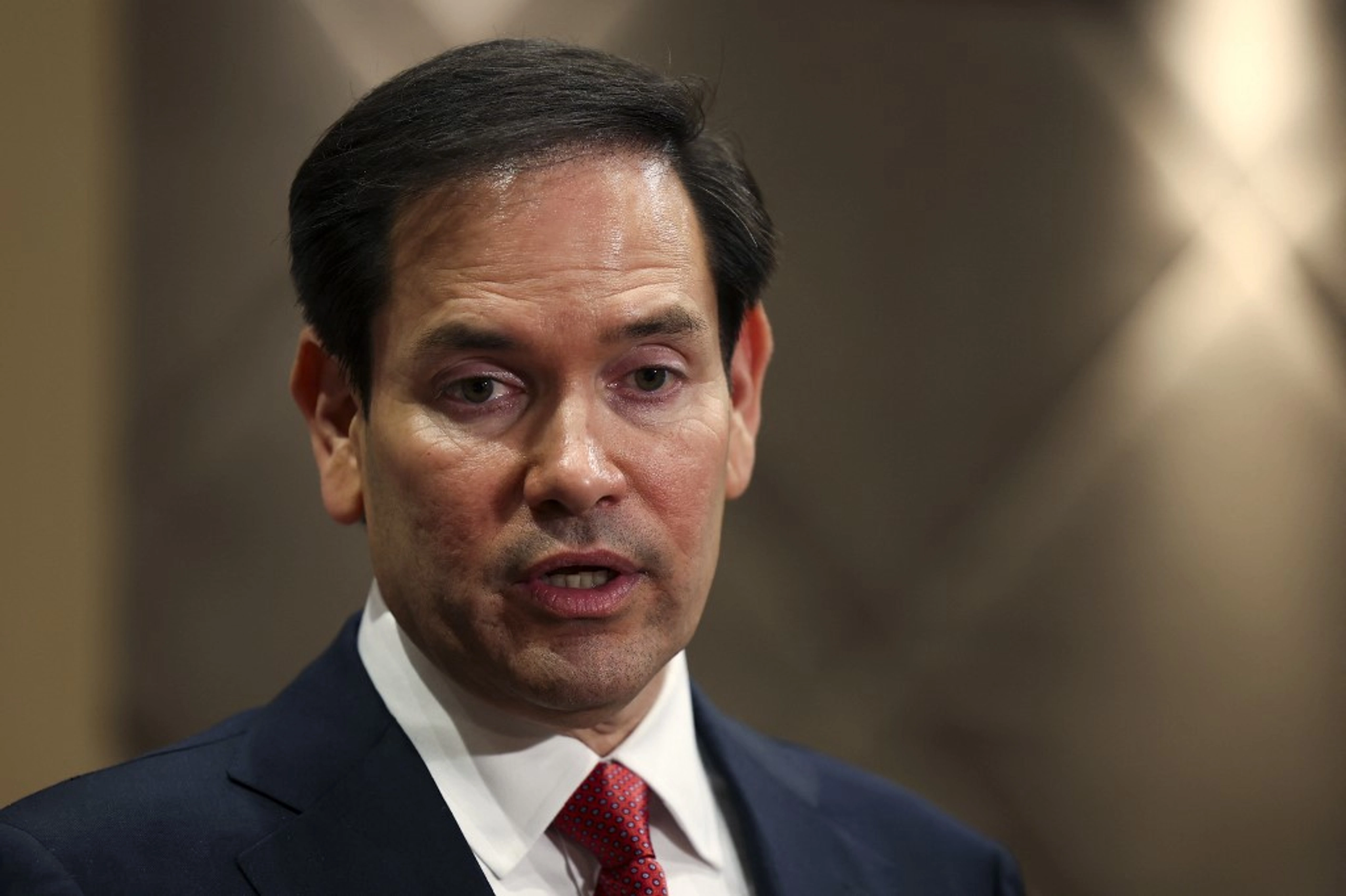
US State Secretary Marco Rubio defended Washington’s refusal to intensify sanctions on Moscow by saying they could push Russia away from ceasefire talks.
The US has been pushing for an unconditional ceasefire between Ukraine and Russia since March’s Saudi talks, which Moscow has continuously brushed off by naming new demands, including Kyiv’s withdrawal from multiple Ukrainian regions – demands that Kyiv has deemed non-starters.
JOIN US ON TELEGRAM
Follow our coverage of the war on the @Kyivpost_official.
Amidst growing European demands for Washington to step up the sanctions and force Moscow to implement a ceasefire, Rubio said he fears sanctions would alienate Moscow from engaging in ceasefire talks.
“If we did what everybody here wants us to do, and that is come in and crush them with more sanctions, we probably lose our ability to talk to them about the ceasefire, and then who’s talking to them?” Rubio told Politico, which reported on his comments Thursday, June 25.
Rubio added that Washington will “continue to engage” despite the lack of progress, contradicting his earlier statements that the US would walk away if no progress were made.
“We’re going to continue to engage,” he said. “In the sense that if there’s an opportunity for us to make a difference and get them to the table, we’re going to take it.”
However, he said US President Donald Trump will “know the right time and place” for more sanctions, and noted that Trump’s administration has not removed existing sanctions placed under the last administration.
Russian Troops Forced to Walk 30 km After Ukraine Hits Logistics, Minister Says
He added that Trump is working with Congress to ensure “flexibility” for fresh sanctions, and that the moment might come that the US will impose more sanctions and stop engaging in talks with Russia.
“We’ve talked to [Congress] about how to frame it, how to structure it, because ultimately, we think it needs to have enough flexibility for the president to be able to impose sanctions, and we haven’t taken off any of the sanctions that we have on,” he said.
Regarding Russia’s demands, Rubio said Washington does not believe Moscow can achieve those goals.
“Our sense of it is that the Russians are going to try to achieve in the battlefield what they’ve demanded in the negotiating table, which is certain territories [maintain] their administrative lines and the like,” he said.
“We think it’s going to be a lot harder for them to achieve that than they think it’s going to be.”
What happened?
Trump had vowed to end Russia’s invasion of Ukraine before his re-election and initiated multiple peace talks between Ukraine and Russia.
In March’s US-mediated talks in Saudi Arabia, Kyiv and Moscow said they agreed to a partial ceasefire on energy and the Black Sea, which fell apart without an explicit agreement between the parties, with both accusing each other of violations.
The West then called for intensified sanctions on Moscow if the latter failed to comply with an unconditional ceasefire by May 12, but later said Moscow had one week to show progress before proceeding with new sanctions.
Russian leader Vladimir Putin then proposed direct talks with Kyiv in Istanbul in response. These talks did not result in a ceasefire, although Putin later, in a phone call with Trump, proclaimed there had been a “memorandum” towards a ceasefire.
Another Istanbul meeting took place, also without a ceasefire.
Europe and the UK subsequently unveiled new sanction packages, but the US did not follow suit.
With no ceasefire in place, Moscow launched a major attack on Kyiv in late May, prompting Trump to say he is “very disappointed” with Moscow’s attacks. However, he said he would give Putin another two weeks before deciding how to respond – which did not result in a response after the two-week deadline lapsed.
Moscow’s attacks on Ukraine continue unabated, with some of the recent attacks resulting in a collapsed residential building in Kyiv and a civilian train hit near Dnipro, killing at least dozens and injuring hundreds of civilians.
NATO chief Mark Rutte on Tuesday criticized Russia for not taking recent peace talks with Ukraine seriously by sending a historian instead of a diplomat to the Istanbul negotiations.
You can also highlight the text and press Ctrl + Enter

Russia Hit by 660-Drone Overnight Barrage Targeting Moscow, Crimea and Key Military Sites