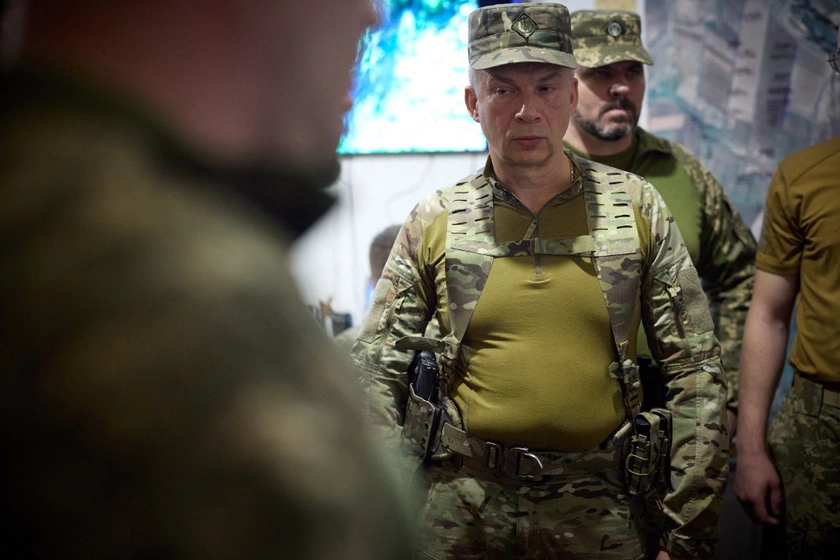
Moscow’s forces have been altering their invasion strategies over the past year to account for Ukraine’s blistering drone defenses: Russian units have been turning to motorcycles and other more nimble modes of bringing soldiers to the front to better evade swarms of UAVs.
In turn, Ukrainian defense forces have been altering their architecture for fortifications designed to slow them down: shorter defense lines and building low-rise strongpoints that are less visible to counter Russian drones.
JOIN US ON TELEGRAM
Follow our coverage of the war on the @Kyivpost_official.
But, as US news outlet Politico noted on Sunday, “the revamp is undermined by a chaotic approach to fortifying front lines, with very different approaches being used depending on local commanders. Tougher defense positions are also made much less effective by Ukraine’s chronic shortage of combat troops.”
Last month, the Institute for the Study of War (ISW) reported that a Ukraine-based open-source intelligence organization, Frontelligence Insight (FI), provided information about the tactical doctrine the Russian military is establishing for motorcycle usage. The group reported that Russian forces are mainly using motorcycles as a form of transport for attacking infantry to support diversion, reconnaissance, infiltration, and flanking support missions.
FI reported that Russian motorcyclists operate in squads of six to eight motorcycles with one or two riders on each motorcycle (between six and 16 personnel in total).
Drone Attack on Moscow Triggered Sharp Rise in Anti-War Views Across Russia
Ukraine is responding by building fortifications to defend against battalions of about 500 troops at most, to companies of about 100, and mostly for platoons of 20 to 50 soldiers each.
“Now we see that the most effective position is a maximum of one detachment. And these are mainly groups of trenches, even so-called foxholes, which make it impossible for the enemy to use strike drones. After all, now a drone, especially on fiber optics, can penetrate any hole,” Ukrainian Commander-in-Chief Oleksandr Syrskyi told journalists in Kyiv in June.
Previously, Politico noted, strong points used “extensive trench networks from two to five kilometers in length. The new system uses smaller strongpoints with trench networks 60 to 70 meters long and equipped with mandatory anti-drone cover.”
“These are harder to detect and are effective in carrying out tasks of defense, deterrence, and delivering firepower, including against FPV drones,” Ukraine’s Defense Minister Rustem Umerov said.
He added: “Fortification is not just about concrete and trenches — it is an adaptive engineering system that takes the enemy’s tactics into account and always serves one purpose: protecting our warriors.
“We monitor the process daily and reinforce the areas where it’s needed most,” Umerov said.
In other words, whereas in the past trenches would be dug in open terrain to block Russian attacks of large numbers of armored vehicles, now they are built around forest belts, which have better camouflage, they said.
You can also highlight the text and press Ctrl + Enter