On Monday, US President Donald Trump announced his new ultimatum for Russia – a ceasefire in 50 days, or face crushing 100% secondary tariffs.
Which raises the question – how much does the US import from Russia? And from that, how might the proposed tariffs hit Russia?
JOIN US ON TELEGRAM
Follow our coverage of the war on the @Kyivpost_official.
How much does the US import from Russia?
Very little.
In 2024, the US imported $3 billion in goods from Russia – and exported $526.1 million in goods.
The Office of the United States Trade Representative, which published the data, said imports from Russia decreased by 34.2%, amounting to $1.5 billion, compared to the previous year in 2023.
In comparison, US goods imported from Indonesia totaled $28.1 billion in 2024.
The data includes all goods imported into the US but excludes services. The values are determined by the declared values via the customs, and thus any tariffs are not taken into account.
Reduced trade after 2022
US trade with Russia – both import and export – have reduced drastically after 2022, when Moscow launched the full-scale invasion of Ukraine.
That said, there was a slight increase in March 2022 – a $200 million bump – a month after the full-scale invasion began, according to data from the US Bureau of Economic Analysis.

What the US-Iranian Ceasefire Agreement May Mean for Ukraine
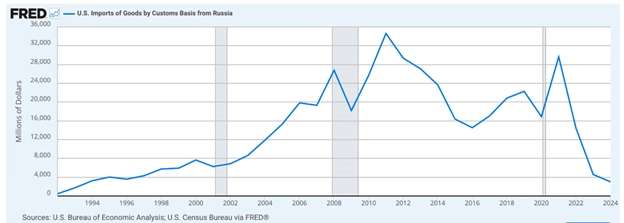
The same data also showed that since the 1990s, imports from Russia to the US peaked at $34 billion in 2011 and fluctuated in the decade that followed.
There is also a noticeable but insignificant dip after 2014, when Russia annexed Ukraine’s Crimea and prompted the Obama administration to impose sanctions on Moscow.
In 2021, Russia’s goods exports to the US totaled $29 billion.
What does Russia export to the US?
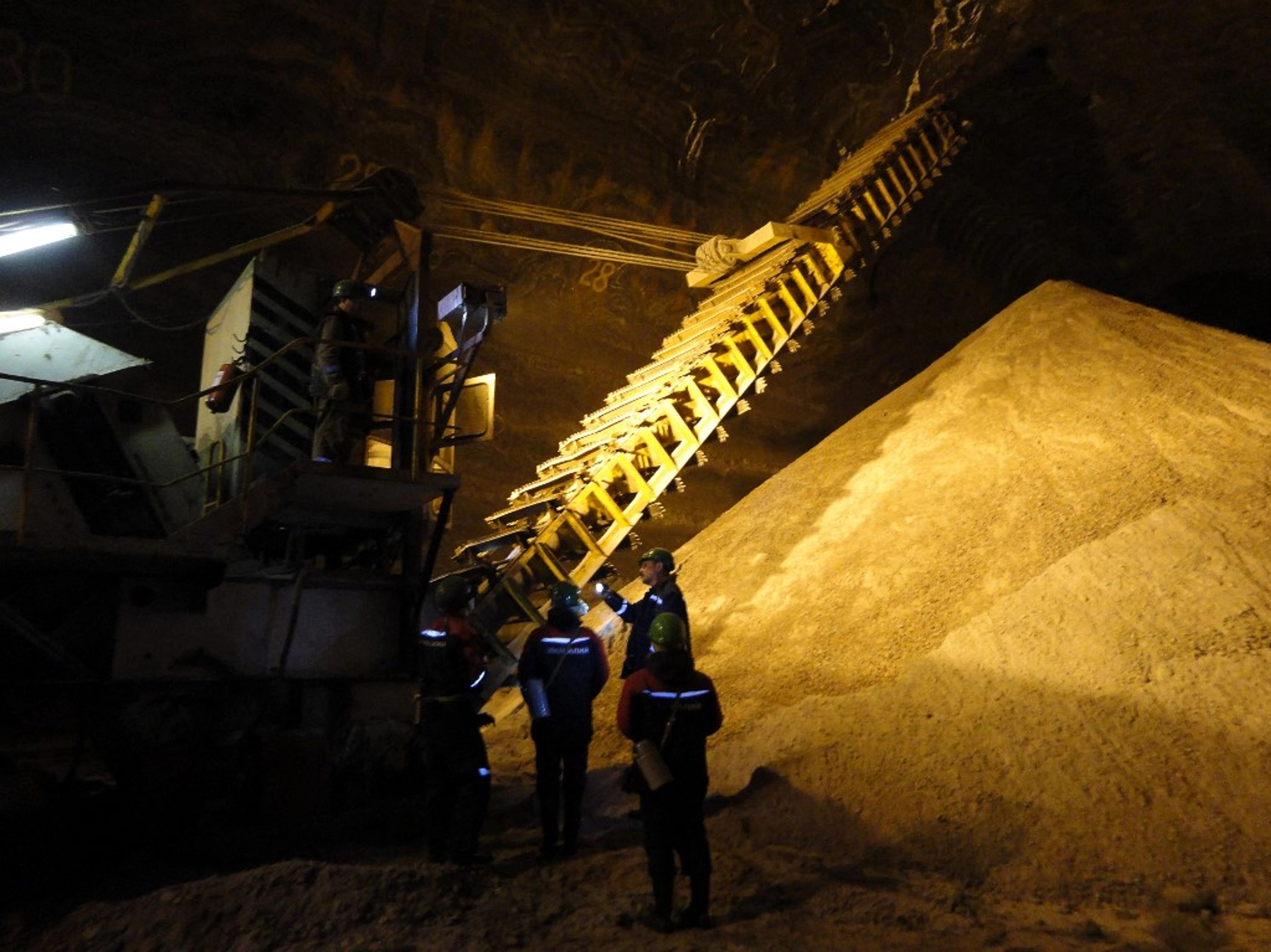
Mostly fertilizers, followed by various metals, then machinery.
Trading Economics, citing data from the United Nations COMTRADE database, noted that the US imported $3.27 billion worth of goods in 2024 – slightly higher than what the US data shows.
In 2024, the bulk of US imports from Russia consisted of fertilizers ($1.3 billion), followed by pearls, precious stones, and metals ($878.1 million), as well as inorganic chemicals, precious metal compounds and isotopes ($695.7 million).
Other notable imports included wood and wood products ($89.4 million), machinery and nuclear-related equipment ($80.8 million), residues and animal fodder from the food industry ($39.9 million), base metals not specified elsewhere ($37.3 million), and even aircraft and spacecraft components ($34.9 million).
Iron and steel ($13.2 million) also featured among the imports.
What do ‘secondary tariffs’ mean?
With so little left to sanction directly, the real leverage in Trump’s plan lies in the proposed secondary tariffs.
Trump’s plan is to push Moscow into complying with a ceasefire by imposing hefty tariffs on countries that continue to trade with Russia after the 50-day period expires.
“I think you’re going to see strong movement. I hope so. I hope so. You know, the secondary tariffs are very, very powerful,” Trump said on Monday.
While the mechanism’s function is being worked out, a White House official clarified that the plan entails 100% tariffs on Russia and secondary sanctions on countries that purchase oil from Russia, if a deal isn’t struck within 50 days.
That would, at present, exempt other Russian goods exports from sanctions and the planned secondary tariffs.
Whether the tariffs would apply to countries buying Russian oil indirectly – like Europe, which imports fuel refined in India using Russian crude – remains unclear.
It is also unclear if the secondary tariffs would apply to all oil products from Russia, or only specific ones such as crude oil and refined petroleum products.
Who is buying Russian oil directly?
At present, China, India, and Turkey are the largest importers of Russian energy sources in terms of monetary value, according to the Centre for Research on Energy and Clean Air (CERA), a Helsinki-based think tank.
Perhaps surprisingly, the EU comes in fourth due to its imports of Russian liquefied natural gas (LNG) as of June 2025; Last year, the EU paid €23 billion (almost $26 billion) for Russian energy despite reducing oil and gas imports and completely stopping coal imports since 2022.
Trading Economics, again citing data from the United Nations COMTRADE database, said China imported $95.2 billion worth of oil products from Russia in 2024, whereas India imported $59.5 billion worth the same year.
Turkey imported $32.2 billion worth of oil products from Russia in 2024.
Will the US impose hefty sanctions on these countries when the time comes? How will these countries react? And which specific oil products will be sanctioned?
Hopefully, it will not take 50 days to find out the answers to these questions.
You can also highlight the text and press Ctrl + Enter

Zelensky Reveals Intercepted Intel From Putin’s Desk
EXPLAINED: More and Better Western Assistance to Ukraine Announced This Week

EXPLAINED: What’s the Deal With Russia’s Frozen Assets in Europe? All You Need to Know