Russia’s officials insist everything is fine.
On paper, inflation is down. Arms factories are hiring. Soldiers are still getting paid – at least for now.
JOIN US ON TELEGRAM
Follow our coverage of the war on the @Kyivpost_official.
But behind the Kremlin’s confident numbers is a different story: Russia’s economy may be crumbling. Inflation expectations remain high, demand is overheated, and the country’s ability to continue massive cash payouts – especially to soldiers – is becoming harder to sustain.
Why the Kremlin’s numbers don’t add up
On July 17, the Russian Central Bank released its June 2025 report, showing a seasonally adjusted annual rate (SAAR) of inflation at 4% – precisely the target that Russian leader Vladimir Putin’s government has long cited as a marker of economic control.
Russian officials celebrated the 4% SAAR as proof that their wartime policies were working, with Bloomberg calling it an early inflation-fighting success.
But analysts from the Institute for the Study of War (ISW) warned this week that the short-term number is misleading. The official annual inflation rate remains above 9%, and even the Central Bank itself admits that a full correction may not arrive until sometime in 2026 – if current trends hold.
Ukraine Launches Drone Blitz on Russian Explosives Plants and Fuel Hubs
The SAAR drop, ISW noted, “is unlikely to positively impact the Russian economy in the long term.”
In a bid to curb price growth, the Central Bank has tightened lending conditions and projected a key interest rate below 18% for the next quarter.
At the same time, it continues to loosen monetary policy in other areas to stimulate short-term demand – even as fiscal spending on war wages, recruitment bonuses, and industrial subsidies spirals upward.
Russia is effectively burning the candle at both ends, ISW wrote, describing a war economy that’s being inflated on credit.
The strengthened ruble – a point of pride for Kremlin officials – may be temporarily softening the blow of sanctions by making imports cheaper.
As the Central Bank report explained, a stronger ruble reduces the local cost of key components like foreign machinery, helping industrial producers keep input costs down. But ISW warns that this effect is already beginning to fade, and that future inflationary pressure may return as early ruble gains wane.
At the same time, service costs are still rising, even as prices for credit-sensitive goods have stabilized – a divergence that signals mounting stress in the domestic labor market.
A distorted labor market
That labor market is being bent – and possibly broken – by Putin’s war strategy.
Since 2022, the Kremlin has relied on massive one-time bonuses to lure recruits into signing military contracts. Combined with soaring DIB investment, these payments have strained both federal and regional budgets.
The result is a distorted economy where average wages in the military and defense sectors are rising faster than in civilian industries, sparking inflation across the broader service sector and intensifying workforce shortages.
As ISW put it, “Russia’s unsustainably high payments to soldiers and the impacts of the resulting domestic labor shortage will likely further destabilize the Russian economy.”
The Kremlin’s approach is doubly self-defeating. The more money it spends to replace soldiers lost on the battlefield, the more inflation it fuels at home.
But reducing those payments risks triggering a collapse in military recruitment – especially as casualty rates remain high and public enthusiasm for the war appears to be waning.
ISW has repeatedly assessed that Russia cannot indefinitely replace its forces at current casualty levels without ordering a general mobilization – a step Putin has so far resisted. Nor, analysts say, can the Kremlin afford to keep increasing payouts to fill the gaps.
And then there’s the debt crisis quietly brewing in the banking sector.
Russian banks have already seen NPLs grow by 1.2% in 2025, bringing the total to 4% – and some analysts warn that could climb to 6-7% by 2026.
The implications are dangerous: a major bank failure could not only trigger liquidity problems but also publicly shatter the Kremlin’s core message that the war – and the sanctions that followed – have had minimal domestic impact.
So far, Central Bank Chair Elvira Nabiullina has dismissed the risk of systemic crisis, citing 8 trillion rubles in reserve capital. But behind the scenes, the Bank appears reluctant to acknowledge the full scope of the problem.
Instead of confronting the wave of bad loans head-on, it has advised lenders to restructure debt quietly and absorb losses internally – a tactic ISW describes as risky and contradictory.
Analysts suggest the Central Bank is likely unwilling to fund bailouts that would force banks to declare their losses publicly – or worse, collapse.
But that hesitance could itself spark a broader crisis. If even one major lender fails, it could set off a chain reaction that cracks the illusion of stability Putin has spent years cultivating.
The war comes home
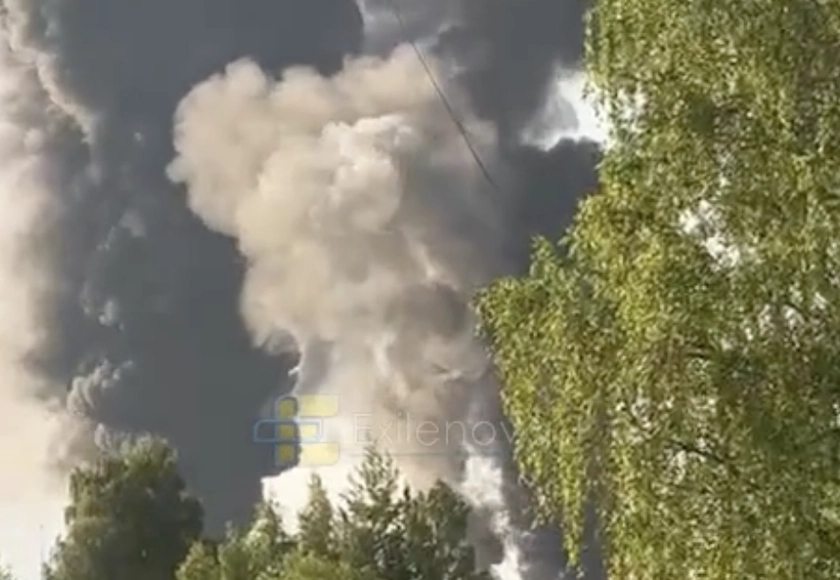
On July 16, Ukrainian drones struck multiple industrial facilities in Russia – including a major oil refinery in Novokuibyshevsk. Both sites are over 800 kilometers from the Ukrainian border and well beyond the previous range of confirmed Ukrainian drone operations.
Kyiv has not officially claimed responsibility, but Ukrainian drone developers have hinted at long-range capacity, and Russian authorities accused Ukraine directly.
As usual, Russia sought to inflate the threat: several Kremlin-linked channels reported that Ukrainian drones had also struck Moscow and Leningrad oblasts.
But there is no visual confirmation of explosions or damage in those regions – and analysts say it’s likely part of an ongoing disinformation campaign designed to paint Ukrainian strikes as indiscriminate.
In reality, Ukraine continues to focus its drone campaign on legitimate military and industrial targets: oil refineries, weapons production plants, transport logistics, and military airfields.
By contrast, Russia has spent the past week bombarding civilian cities across Ukraine, including Kharkiv, Dnipro, and Kryvyi Rih – sometimes with hundreds of missiles and drones in a single night.
But Russia’s broader military strategy may also be shifting.
A rare symbolic exchange took place this week: Russia returned the bodies of 1,000 Ukrainian soldiers killed in action, in what it claims is the first installment of a larger 3,000-body transfer. Ukraine returned just 19 Russian bodies in exchange.
The massive discrepancy raises questions. Russia may be inflating its own offer to appear magnanimous or to imply parity in losses.
Kyiv isn’t taking any chances. President Volodymyr Zelensky has publicly called for the US to help Ukraine produce 50% of its weapons domestically – a target that would reduce dependency on Western aid and help build a more sustainable defense industry.
That industry, however, remains a primary target for Russia.
And as Kyiv ramps up drone production, Moscow continues to burn through labor, capital, and credibility in a war it claims to be winning.
The Kremlin can spin economic optimism for a few more quarters, but the contradictions at the heart of Russia’s war economy – easy money, hard losses, and a system forced to pretend both can last – are growing harder to hide.
You can also highlight the text and press Ctrl + Enter