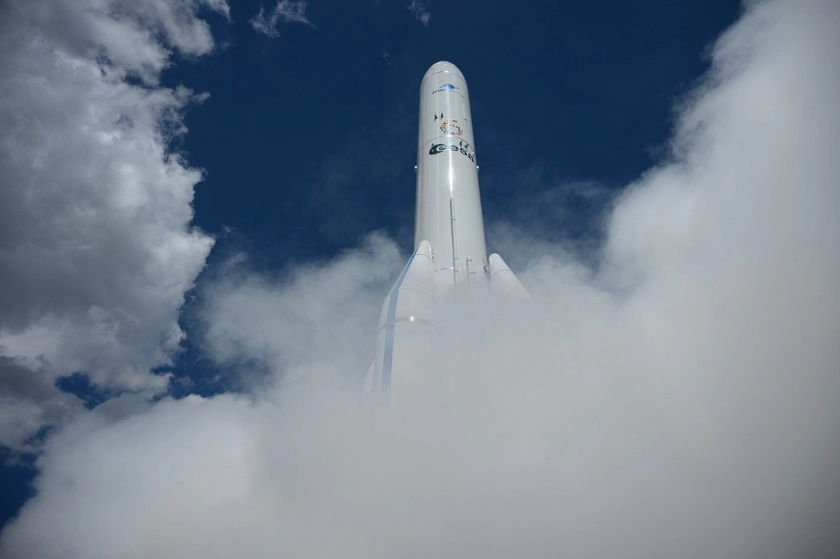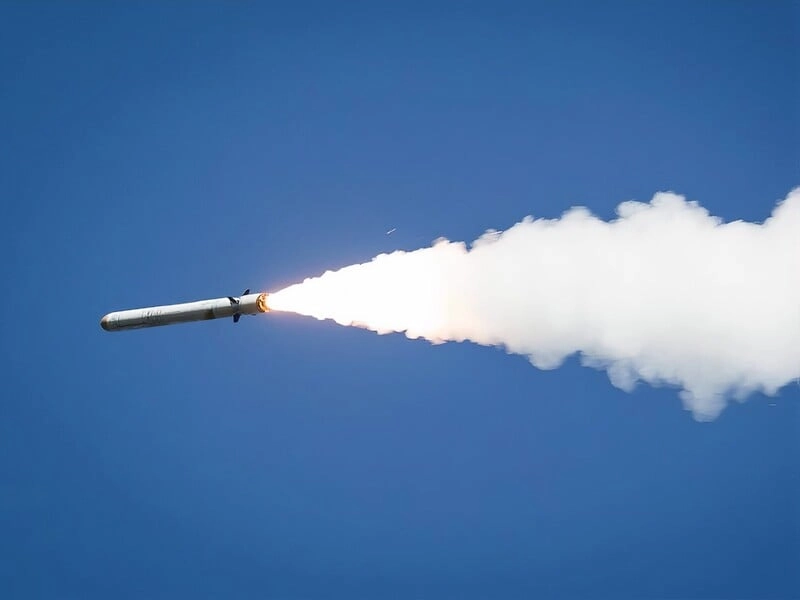
Russia has closed the airspace over the Kapustin Yar test range in Astrakhan Oblast. The move comes against the backdrop of the Russian Foreign Ministry’s statement on withdrawing from the Intermediate-Range Nuclear Forces (INF) Treaty restrictions, which may indicate preparations for testing intermediate- or shorter-range missiles, the Russian service of The Moscow Times reports.
Intermediate-Range and Shorter-Range Missiles (INF-class) are ground-launched ballistic and cruise missiles capable of covering distances from 500 to 5,500 kilometers (approximately 310 to 3,420 miles) and are typically designed to carry nuclear warheads. Their proximity to targets and short flight time are believed to potentially prevent the attacked side from mounting a retaliatory nuclear strike.
According to a NOTAM (Notice to Air Missions) issued by the Rostov Flight Information Region (FIR), airspace in the area will be restricted from 9:00 a.m. on Aug. 5 until 7:00 p.m. on Aug. 9. The restriction includes the Kapustin Yar range, known for testing intercontinental ballistic missiles (ICBMs).
Kapustin Yar has long been associated with ballistic missile development and nuclear-capable delivery systems.
The US Federal Aviation Administration (FAA) has also acknowledged the closure, publishing a corresponding notice based on Russian air navigation data.
The move comes shortly after the Russian Foreign Ministry declared that Moscow no longer considers itself bound by self-imposed restrictions on the deployment of land-based intermediate-range and shorter-range missiles (INF-class weapons), citing the West’s “destabilizing actions.”
Russia Disguises Fuel Trucks as Milk Tankers to Reach Crimea
In a notice published on Monday, it was also stated that the Kremlin would make decisions “based on specific parameters of response measures” depending on the development of “the situation in the field of international security and strategic stability.”
In a statement posted on X, Deputy Chairman of Russia’s Security Council Dmitry Medvedev called the withdrawal from the missile moratorium “the result of NATO countries’ anti-Russian policy.”
“This is a new reality all our opponents will have to reckon with,” Medvedev wrote. “Expect further steps.”
At the end of July, US President Donald Trump warned Medvedev about his bellicose rhetoric on social media. Trump wrote on his Truth Social channel: “tell Medvedev, the failed former President of Russia, who thinks he’s still President, to watch his words. He’s entering very dangerous territory!”
On Aug. 1 Trump ordered two nuclear submarines to be repositioned in striking distance of “appropriate regions” as a precaution in response to recent “inflammatory statements” from Kremlin officials.
You can also highlight the text and press Ctrl + Enter

Putin’s Worst Nightmare